
 EN
EN



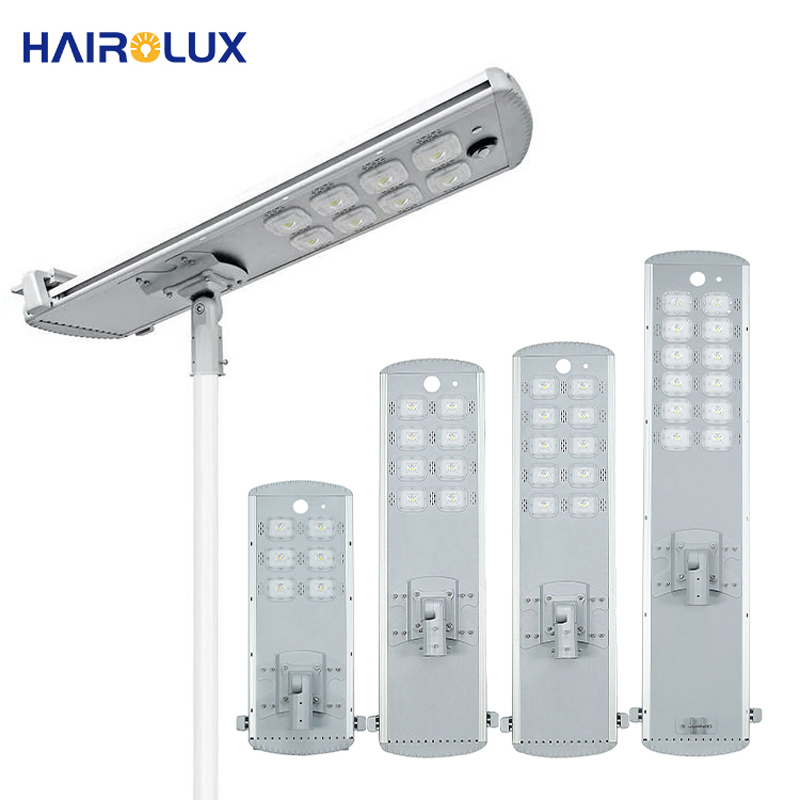
Why the Main Obstacle for Integrated Solar Street Light Systems is Battery Replacement
The battery is the main culprit of problems in the entire integrated solar street light systems. Integrated solar street light systems have many components that can last many years, such as solar panels and LED lights, however, the batteries are the weakest link. They can show signs of charging and discharging after about 5-7 years. Factors such as battery replacement, carry about 60 percent of the costs for light maintenance. Integrated solar street lights have 3 main problems when it comes to battery replacement:
1. Chemical changes of the battery caused by everyday charging and discharging
2. Internal thermal corrosion caused by extreme heat and cold
3. Problems with cloudy days when the batteries are fully discharged
The integrated systems design strategies makes it even worse. Unlike other systems, these sealed units require a full disassembly to get to the battery, which makes the disassembly and reassembly 3 times the amount of other types of batteries. Removing the battery can compromise the integrity of the weatherproof system. Batteries that require replacement are considered remote units, meaning that the replacement and transportation costs can be even 40 percent of the costs.
The replacement cycle, without strategic approaches, defeats the sustainability benefits of solar street lighting. Managing the batteries proactively becomes necessary to increase service intervals and sustain reliability.Durability, service life, and in-use replacement intervals in Integrated Solar Street Light Units
Cycle life, thermal tolerance, and in the field failure rates (2–5 years)
When looking at Lead and Lithium batteries, Lithium batteries have an average 2,000 - 6,000 charge cycle life, while Lead only has a 500 - 1,000 - which is a 4 to 6 difference in the number of cycles. Lithium batteries have also been proven to last longer than their Lead counterparts, and have also decreased and improved in performance over a wider temperature range compared to Lead counterparts. Lithium batteries also work and perform well in colder temperatures such as -20 degrees Celsius and even in hotter temperatures such as 60 degrees Celsius. Lead, in contrast, has a starting performance loss of about 20-50% in freezing temps, and can suffer a loss of performance and capacity in hotter temps - 25 degrees Celsius or higher. Lead batteries suffer severe degradation to the internal components of the cells. Most Lead battery systems suffer from internal sulphation and corrosion of the internal components resulting in replacement of the batteries every 2-3 years in warmer climates and 3-5 years in cooler climates. Opposingly, most Lithium installations retain at least 80% of the storage capacity after 5 years of service, and 7 out of 10 installations even after 10 years of service do not require maintenance and have a similar capacity retention.
It's no wonder that so many cities are adopting LiFePO4 for their street lighting systems, as these extended lifespans reduce maintenance costs by 40% to 60% compared to conventional lead-acid alternatives.
Integration of Smart BMS Technology: Predicting Malfunctioning & Optimizing Battery Durability in Combined Design Solar Street Lights
How Advanced BMS Technology reduces Battery Degradation by means of Voltage/Temperature Balancing & SOC Estimation
Current Battery Management Systems (BMS) in solar street lights strive to prevent premature battery deterioration by utilizing three means. One means involves voltage balancing, which involves preventing individual battery cells from being overcharged or undercharged (fully discharged); this single alteration can increase the lifespan of the entire battery pack by 30% or more. Secondly, there are temperature sensors that prevent the system from getting too hot, such as during the dreaded summer heatwaves, to help preserve the battery's full capacity. Finally, there are SOC (State of Charge) estimation algorithms that assess previous discharge patterns in order to predict if the battery's voltage supports operations in ranges that are deemed hazardous. Conceivably, the most remarkable feature of these BMS systems is their predictive functionalities concerning the likely occurrence of these issues. Predictive functionalities can detect small voltage irregularities or anomalous temperature patterns that can lead to system failure, thus allowing maintenance to prevent operational failure, and preserve the operational functionality of the system, which is valuable from an economic and operational perspective.
Modular BMS retrofitting: Overcoming design constraints of sealed integrated solar street light units
The retrofitting of integrated solar street light units with smart BMS solutions can be limited by the design of the enclosure. Older street lights are integrated into a sealed enclosure that does not have additional room for modifications or the incorporation of additional circuitry, leading to the need for retrofitting external BMS enclosure systems that are rated for outdoor use. However, the good news is that the connectors are typically compatible due to the availability of standard adapters that connect to the existing terminals, which will not require any modifications to the existing housing. For thermal management and heat sink integration, pads thermally conductive are put between the new components and the existing heat sink constituents. In more than 80% of cases, this field-tested retrofitting method is known to improve battery lifespan by 2 to 4 years. In this method, the weatherproof rating of the original to the silenced units is also preserved and designed. Many municipalities find it technically and economically feasible.
Methods to Replace Batteries for Maintenance of Integrated Solar Street Lights
Guided replacement list: Chemistry, voltage, and thermal interface
Use this protocol for simple replacement of batteries in integrated solar street lights.
Chemistry: Ensure charge controllers (existing) and batteries (new) are compatible—LiFePO4 and lead-acid have different voltage requirements.
Voltage: Measure the open-circuit voltage prior to installation. Any voltage outside of standard (±0.5V) is likely a factory defect.
Thermal interface: use thermal conductive paste 1.5 W/mK and replace the pads, if any, of the battery interface, to avoid overheating.
Weatherproof: After fitting the battery, and prior to closing, test the battery compartment for leaks by submerging it in 30cm for 10 minutes.
Repeat cycle: Perform 3 complete charge-discharge cycles, and do not exceed 80% depth of discharge for optimum battery cycle.
Following this process field technicians have 92% success. Compared to other replacement methods this reduces callbacks by 40%.
What is the FAQ?
Why do the batteries in the solar street lights degrade faster than the solar panels and LED lights?
The solar street lights batteries undergo deep discharges, temperature extremes, and daily charge/discharge cycles and this is why they degrade faster to the other components.
What advantages do LiFePO4 batteries hold over lead-acid batteries when used in solar street lights?
LiFePO4 batteries have a longer lifespan and better temperature performance, and lead-acid batteries need to be replaced more frequently, which increases maintenance costs by 40 to 60%.
In what ways do the Battery Management Systems contribute to longer lifespans of solar street light batteries?
In terms of the lifespan of the batteries, the Battery Management Systems delay the effects of battery deterioration and encourage the safe operation of the batteries. This can be achieved through balancing and/or equalization of battery modules in terms of their voltage and/or temperature; estimation of state of charge; and detection of problems before they lead to the failure of the battery management system.
What difficulties do you encounter when trying to incorporate modern Battery Management Systems into older solar street lights?
Solar street lights that are old typically have tight designs that are sealed on multiple sides, which necessitates the creation of external enclosures for the BMS, as well as the need to ensure that the connectors are compatible.