
 EN



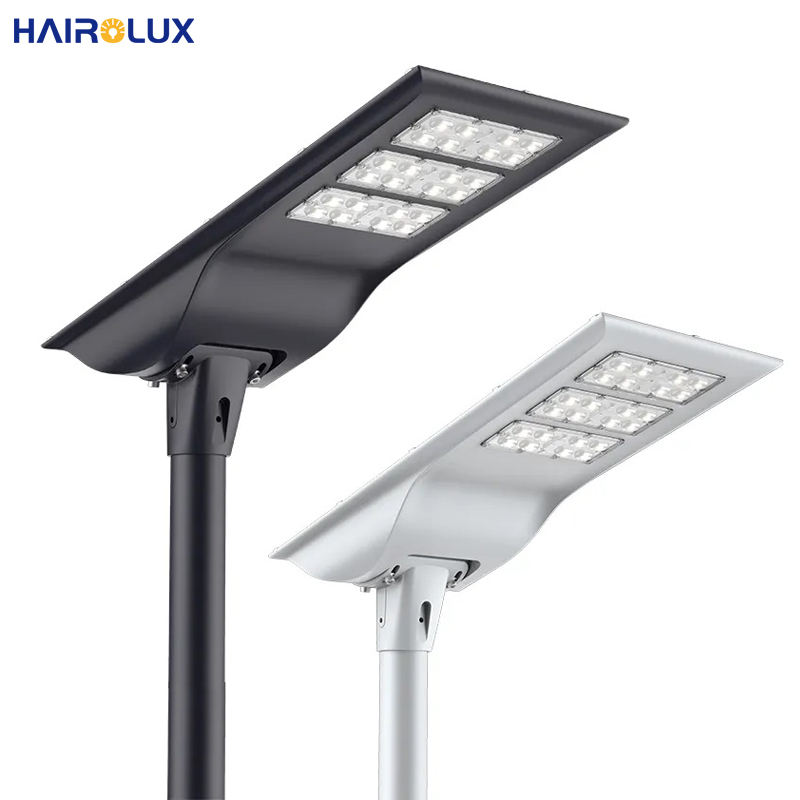
What Power Does an Urban Main Road Actually Need?
Selecting a led street light for an arterial corridor starts long before a wattage is written down. The road's job decides the power. Main roads carry fast mixed traffic at 50–80 km/h across wide carriageways, while secondary roads serve local access at lower speeds and narrower widths. Lane count, surface reflectance, and the presence of segregated cycle paths all shift the target. A four-lane arterial with dark asphalt needs more delivered light than a two-lane road with light stone, even at the same posted speed. Getting that split wrong is the root of most failed specifications, so the first step is always classification, not catalogue browsing.
What a 3000-Piece Government Road Job Taught Project Teams
A national road program in Indonesia called for more than 3000 units of a high-output led street light along arterial corridors, and a sister project in Grenada placed 2000+ pieces on coastal main roads. Both programs began with the same mistaken assumption: that a single wattage could cover every carriageway. Field teams soon learned that main roads demanded far higher maintained illuminance than the nearby collector streets, and each led street light on the corridor had to be re-evaluated against its actual position. That lesson now anchors every arterial specification Hairolux prepares. Engineers map traffic speed, lane count, and adjacent land use before proposing any led street light rating, because the road's function sets the power, not a shelf number. The right led street light for the job is the one sized to the class, not the one that looks impressive on paper.
The Hidden Cost of Dim Arterials
When an arterial led street light is specified too low, the road fails its maintained lux target and both pedestrian and driver visibility fall. Crashes climb on poorly lit curves and junctions, and municipalities then face public complaints plus retrofit expense. A poorly chosen led street light turns the cheaper bid into the expensive one. A dim main road also depresses commercial activity after dark, which is why the engineers behind Germany's outdoor road safety lighting program required verified photometric files rather than nameplate claims for every led street light they procured. Safety, not price, should set the floor on a public arterial.
Why Oversized Luminaires Waste Budget
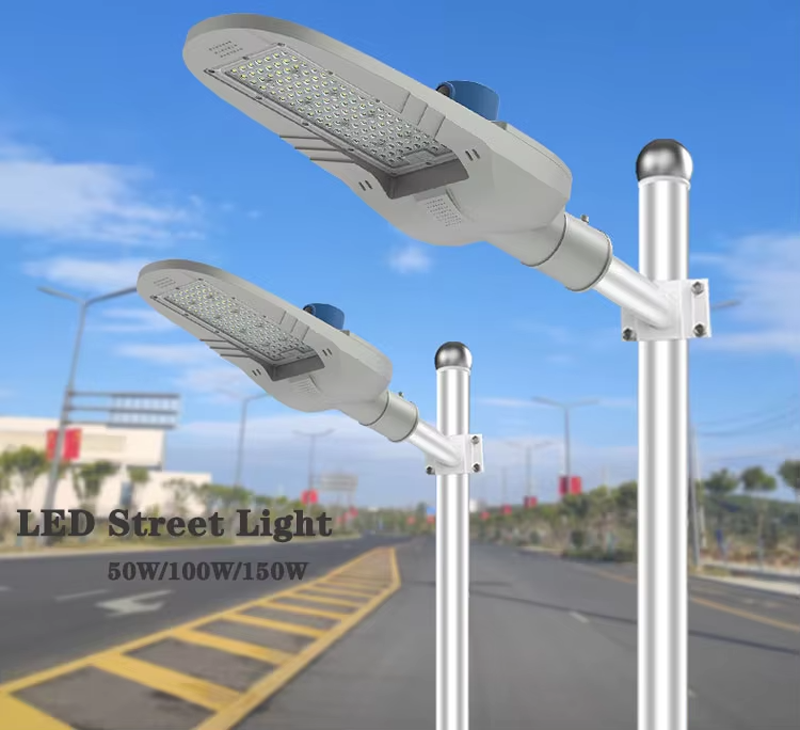
Oversizing is the quieter error. A 300 W led street light on a road that needed 180 W burns energy for a decade, and the surplus output spills into windows and skies as light pollution. Higher wattage also means heavier fixtures, larger brackets, and more thermal stress on drivers. In a Brazil community sports facility, a Dialux simulation revealed the original 40% over-spec could be trimmed without losing uniformity, and replacing a led street light later to fix glare costs more than sizing it correctly the first time. The objective is the correct led street light output, never the largest unit available.
How Road Class, Lux, and Pole Spacing Set the Wattage
Wattage is only a proxy for what matters: delivered light on the road surface. The technical work converts a road class into lumens, then lumens into a sensible wattage through efficacy and spacing.
Road Lighting Classes M1 to M5 Explained
European standard EN 13201 defines road lighting classes M1 through M5, with M1 the most demanding for bright, high-traffic arterials and M5 the lightest. Urban main roads usually sit at M1 or M2. Each class sets a maintained average luminance and uniformity ratio that a led street light must hold across its service life, not merely at installation. A main road at class M1 might target around 2.0 cd/m² average luminance with 0.4 uniformity, while M3 collector roads drop to roughly 1.0 cd/m². Every led street light carries a class obligation, so knowing the class converts a vague "make it bright" into a measurable, testable specification that inspectors can verify years later.
Matching Lumens, Efficacy, and Pole Distance
A modern led street light at 150 lm/W efficacy turns 200 W into about 30,000 lumens. Pole spacing then governs how those lumens spread: at 12 m mounting height, spacing of 30–36 m suits arterials while 25–30 m fits collectors. Tighter spacing or lower efficacy forces higher wattage. A dim led street light wastes watts if its beam never reaches the road, so specifiers should read the IESNA type II or III distribution curve on the luminaire, since a narrow beam loses output between poles while a wide one causes overlap glare. The led street light selected must pair beam shape with road width, because two fixtures with identical wattage can perform very differently once mounted.
A Worked Wattage Example for a 12 m Pole
Consider a 14 m wide arterial at class M2, poles at 12 m, spaced 32 m. A luminaire needs roughly 28,000–34,000 lumens to hold average illuminance near 20–25 lx with good uniformity. At 150 lm/W, that is a 190 W–230 W led street light per pole. If efficacy falls to 120 lm/W, the same road needs 240 W–280 W. The installed led street light should be chosen from a high-efficacy range so the wattage stays reasonable. Hairolux's high-lumen LED street lamp lines are built around this lumen-per-watt math, letting municipalities hit class targets without overbuying watts on a public road project.
Standards, Real Projects, and a Practical Selection Checklist
Credible specifications rest on published standards and on projects that already proved the numbers in the field.
Standards That Govern Street Lighting
ANSI/IES RP-8 guides roadway lighting practice in North America, while ANSI C136 covers led street light durability and photometric testing. The IES issues recommended practices, NFPA 70 (NEC) governs electrical wiring, and OSHA 29 CFR 1910 sets worker safety during installation and maintenance. ISO 9001 certifies the manufacturer's quality system — Hairolux holds ISO 9001 alongside CE, RoHS, TUV, and FCC marks. Grounding, surge protection, and ingress rating (IP65 or better) all trace back to these documents, so a certified led street light from a documented quality system reduces compliance risk on a public arterial. Real deployments confirm the approach: Bolivia's all-in-two solar road used 850 led street light units sized to arterial class targets, Kenya's village lighting program placed 600 units after a luminance-based design, Oman lit five stadium sport areas with high-mast LED flood units, and Brazil's community facility relied on Dialux simulation before ordering. Each project started from road function and class, then derived wattage — the same sequence any municipality should follow when specifying a led street light for a main corridor.
A Practical Selection and Maintenance Checklist
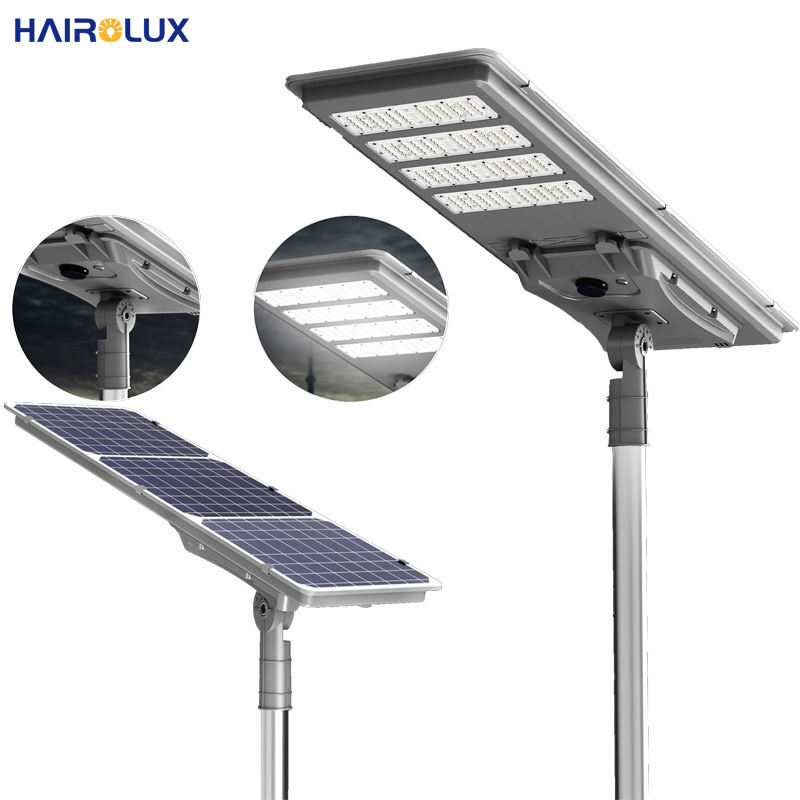
Begin by confirming the road class (M1/M2 for arterials) with the authority. Then size lumens from width, speed, and spacing, and choose a led street light whose efficacy keeps wattage sensible. Require photometric and IES files, IP65 rating, and surge protection. For smart districts, a LoRa or NEMA-connected led street light enables dimming and fault reporting that cuts energy and maintenance. Validate with a Dialux model before purchase, as Brazil's team did, and review the main road led street light layout for uniformity, not just average. After install, clean lenses yearly, log lumen depreciation, and audit controls every quarter to keep the led street light chosen performing at its class. Hairolux's smart-city IoT street light systems and Solutions templates support these workflows, and the solar vs grid comparison helps where grid power is unreliable.
Frequently Asked Questions
Question: How many watts should a led street light be for a main road?
Answer: Urban main roads at 10–12 m pole height typically need 150 W–250 W per luminaire to hold class M1/M2 targets, depending on road width, spacing, and luminaire efficacy. Wattage alone is less important than delivered lumens and beam distribution. A Dialux or IES-based calculation should confirm the exact rating before procurement to avoid under- or over-lighting the corridor and triggering a costly retrofit later.
Question: What lux level is required for urban arterial roads?
Answer: Main roads commonly target maintained average illuminance around 20–30 lx and average luminance near 1.5–2.0 cd/m² under EN 13201 class M1/M2. Uniformity ratios matter as much as the average value. Local standards may differ, so specifiers should confirm the authority's class and then select a led street light whose photometric file meets that maintained target across the full service life of the installation.
Question: How far apart should led street light poles be spaced?
Answer: For arterial roads at 12 m mounting height, pole spacing of 30–36 m is typical, while collectors use 25–30 m. Wider spacing demands higher luminaire output or better efficacy to keep uniformity acceptable. Beam type, such as IESNA type II or III, also affects spacing. A photometric layout should verify uniformity before fixing the spacing distance for any led street light installation project.
Question: Is a higher wattage led street light always better?
Answer: No. Higher wattage only helps if the road actually needs the output. Oversizing wastes energy, increases glare and light pollution, and stresses thermal parts. A 200 W led street light at 150 lm/W outperforms a 280 W unit at 110 lm/W on the same road. Right-sizing with efficacy and beam shape delivers the required class at lower lifetime cost and better comfort for nearby residents and drivers.
Question: Which standards apply to led street light specifications?
Answer: Key references include ANSI/IES RP-8 for roadway practice, ANSI C136 for luminaire durability, IES recommended practices, EN 13201 road classes, NFPA 70 (NEC) for wiring, and OSHA 29 CFR 1910 for install safety. ISO 9001 covers manufacturer quality. Specifiers should require photometric files and certifications such as CE, RoHS, TUV, or FCC on every led street light procurement to reduce compliance and performance risk.
Question: How does a smart led street light help main road management?
Answer: A smart led street light with LoRa or NEMA controls enables remote dimming, scheduling, and fault detection. On arterials this cuts night-time energy while keeping peak-hour safety, and it flags failures without manual patrols. Hairolux's IoT lines support these functions for municipal networks, turning a fixed-output luminaire into a managed asset that lowers operating cost across the whole road system.