
 EN



Lessons From a 5-Area Stadium Build
A sports complex in Oman needed lighting across five different activity zones, from a full football pitch to smaller training courts and a multipurpose hard court. A single generic fixture would have failed every zone, because each sport reads light differently. The football pitch wanted wide pole spacing and tight beam control, while the courts needed better uniformity at lower mounting heights. That job proved how specific a led stadium light specification must become once the sport on the ground changes.
The same pattern repeats on mixed-use sites, where a track, a warm-up court, or a pool each pull the design in different directions. A led stadium light plan should therefore start from a zone map, not a single wattage number.
What Oman and Brazil Taught Us About Sizing
The Oman brief covered five sport areas with mixed usage and broadcast ambitions for the main pitch. Engineers began from lux targets instead of a wattage guess. A 500W-class arena LED floodlight served the training courts, while the main pitch used higher-output high-mast units. The lesson for any facility manager is clear: start with the activity, then derive the led stadium light power from the required illuminance and the pole layout rather than from a catalog number.
The smaller courts needed tighter spacing and wider beams at lower height. Choosing a led stadium light by beam shape and mounting point, instead of by raw watts, kept the project inside budget while still hitting every zone target.
A community sports facility in Brazil avoided oversizing by running a Dialux simulation before purchase. The model mapped pole positions, beam angles, and target lux onto real field geometry. The study showed a moderate led stadium light configuration met tournament training levels without jumping to the largest wattage on the shelf. Simulation replaced a budget guess with a defensible spec.
The Brazil team then shared the Dialux file with the supplier so the led stadium light layout matched the model exactly during delivery. Tennis, basketball, and swimming venues can use the same method to choose the right led stadium light early, before concrete bases are poured. Catching a beam-angle error on screen costs nothing; fixing it after install costs a full rework.
The Cost of Wrong Wattage Choices
Choosing power without a plan creates two opposite failures. Too little light hurts play and safety; too much wastes capital and disturbs neighbors with sky glow. Both happen often because buyers match wattage to a budget line rather than to the sport being played on the field. A proper led stadium light study prevents both outcomes and keeps the project defensible.
Glare Risks on Fast-Paced Courts
On tennis and squash courts, a poorly aimed led stadium light produces glare that reaches players' eyes from low angles. Reflected bounce from a wet surface or a white line makes it worse. EN 12193 sets glare limits for recreational and competition play, and exceeding them slows reaction time. A fixture with the wrong beam angle, even at the correct wattage, can still fail a venue on comfort. The right led stadium light aims control where players look most.
A high-output led stadium light without shielding is not safer; it is simply brighter glare. Fast sports leave little time to recover from a blind spot, so the glare rating matters as much as raw lux. Designers should check the unified glare value in the report and confirm the led stadium light sits above the players' sightline, not across it.
Overspend When Power Runs High
Over-specifying is just as costly. A small training field lit like a broadcast arena may use 40% more energy with no real benefit to local players. The extra led stadium light wattage also raises heat, grows the bill of materials, and increases pole loading. Matching power to the actual use tier keeps both the install and the running cost reasonable.
The led stadium light count should follow the tier, not the supplier's largest SKU. A sports LED luminaire sized to the tier pays back through lower demand charges and a smaller cable run. Facilities that skip this step often discover the overspend only when the electricity bill arrives, long after the poles are set in concrete.
Sizing LED Stadium Light for Each Sport
Different sports need different vertical and horizontal illuminance, and mounting height changes the math. Pole height, beam angle, and uniformity together decide the final led stadium light count and wattage for the venue. The tiers below list typical training and competition values; treat them as starting points, then confirm with a model.
Football Fields: Poles, Beam Angle, Lux
A full 11-a-side pitch for club training often targets 200-300 lux with poles at 18-25 m. Competition climbs to 500-750 lux and beyond for broadcast. A narrow beam of 10-25 degrees from a tall mast concentrates the led stadium light onto the turf and limits spill to nearby roads. Select a led stadium light by beam, not by watts alone.
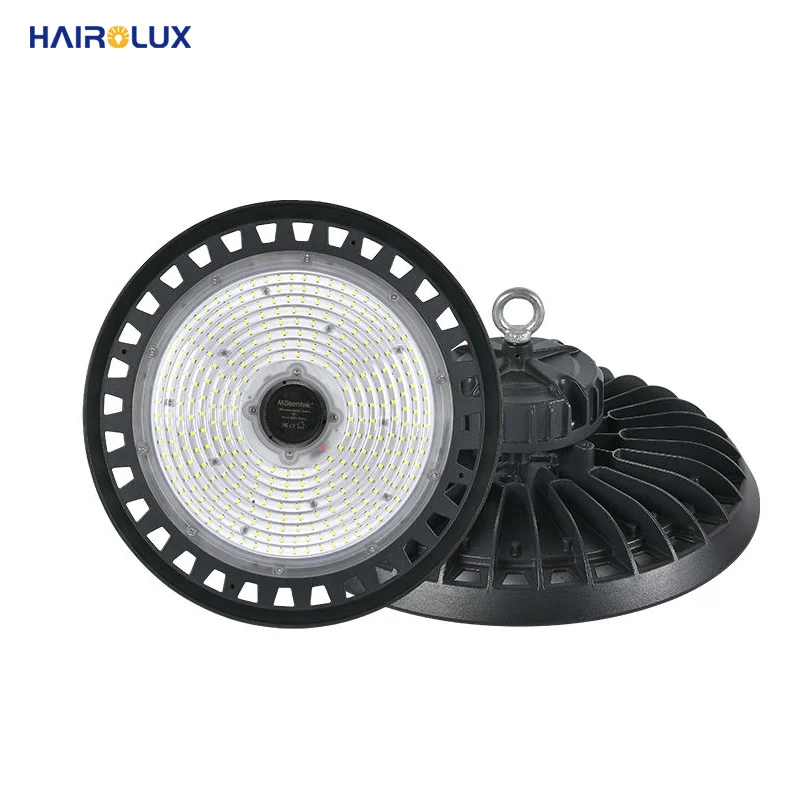
Hairolux 500W-1000W high-mast flood lights fit these spans, and the led stadium light optical-lens range supports football and parking layouts with controlled throw. Four-corner or six-pole arrangements spread load and improve uniformity. A led stadium light mounted too low floods the crowd instead of the grass, so pole height should lead the wattage decision, not follow it.
Basketball, Swimming and Tennis
Indoor basketball arenas benefit from vertical illuminance on the backboard and player faces, so a led stadium light with a 60-90 degree spread works better at 8-12 m mounting. Swimming pools need careful aiming because water reflects light back to spectators; lower-glare optics on a sports LED luminaire reduce bounce. A led stadium light at the right height fixes most pool-hall complaints before they reach the stands.
Tennis courts at club level sit near 300-500 lux with side poles around 8-10 m, and tight uniformity stops dark patches at the baseline where a led stadium light gap would show. Badminton and volleyball need similar care because the shuttle and ball move fast through the vertical plane. Across all three, the led stadium light should favor even spread over peak punch.
Standards and a Practical Upkeep Checklist
Sound specifications rest on published standards, not opinion. The numbers above trace back to European and North American documents that venues already follow for compliance and insurance. Pair those with a simple upkeep routine to protect the investment and keep the led stadium light performing year after year.
EN 12193, IES RP-8 and FIFA Targets
EN 12193 defines lighting classes for sports, while IES RP-8 covers North American outdoor and recreation lighting. FIFA and UEFA publish pitch illumination guidance for match and broadcast levels, and NFPA 70 (NEC) governs the electrical installation of the led stadium light system. OSHA 29 CFR 1910 matters for maintenance access on poles and catwalks where technicians work at height.
ISO 9001 certification, held by Hairolux, signals consistent process control behind each sports LED luminaire shipped to 203+ countries and used in 197+ government projects. The led stadium light must meet local electrical and photometric rules before sign-off, so keep the test reports and the Dialux file in the project folder from day one of the build.
Reading Dialux and Scheduling Maintenance
A Dialux report should show average lux, minimum lux, and the uniformity ratio. Aim for U1 above 0.4 and U2 near 0.6 for recreational play, higher for competition. After install, clean lenses every quarter and check fasteners annually; dust can cut a led stadium light output by 10-15% on dirty optics. Record each led stadium light location in a simple site map for future crews.
The Hairolux solutions library and the company about page list references such as Indonesia (3000+ units), Grenada (2000+), Kenya (600), and Germany road-safety lighting built around the led stadium light and smart controls. Reviewing those cases helps a committee defend a budget and choose a partner with field experience across climates and sports.
Frequently Asked Questions
Question: How many lux does a football pitch need?
Answer: A full 11-a-side pitch for club training typically targets 200-300 lux, while competition and broadcast tiers climb to 500-750 lux or above. The right led stadium light power follows from that target, the pole height, and the beam angle, not from a fixed wattage. Always confirm the local class with EN 12193 or the relevant federation guidance before finalizing the design and ordering fixtures.
Question: What beam angle works for a stadium floodlight?
Answer: Football and large fields suit a narrow 10-25 degree beam from tall masts to concentrate the led stadium light on the turf and limit spill. Indoor arenas and lower courts benefit from a wider 60-90 degree spread at 8-12 m. Beam angle, not raw watts, decides whether light lands where players need it, so match the optic to the mounting height first.
Question: How tall should stadium light poles be?
Answer: Pole height depends on the sport and the required uniformity. Football training pitches often use 18-25 m masts; broadcast arenas go higher. Basketball, tennis, and pool halls sit lower at roughly 8-12 m. A led stadium light mounted too low floods spectators and creates glare, so set the pole height before choosing the wattage for each zone.
Question: What uniformity ratio should a sports field hit?
Answer: For recreational play, aim for U1 above 0.4 and U2 near 0.6, with higher values for competition per EN 12193. Uniformity is the ratio of minimum to average lux across the playing surface. A led stadium light layout with poor uniformity leaves dark patches that hurt play, so verify the numbers in the Dialux report before approving the final fixture count.
Question: When is a Dialux simulation needed?
Answer: A Dialux simulation is worth running before any multi-pole or broadcast-tier project, and it pays off even for a single training pitch. The model maps pole positions, beam angles, and lux onto real geometry so the led stadium light count is right the first time. Brazil and Oman cases show simulation prevents both oversizing and uncomfortable glare before concrete is poured.
Question: How often should stadium lights be maintained?
Answer: Clean lenses every quarter and inspect fasteners, cabling, and brackets annually. Dust and bird residue can cut a led stadium light output by 10-15% on dirty optics, lowering lux below target. Keep a site map of each fixture and follow OSHA 29 CFR 1910 access rules for pole and catwalk work. Record readings yearly to track any drop in performance.
Table of Contents
- Lessons From a 5-Area Stadium Build
- The Cost of Wrong Wattage Choices
- Sizing LED Stadium Light for Each Sport
-
Standards and a Practical Upkeep Checklist
- EN 12193, IES RP-8 and FIFA Targets
- Reading Dialux and Scheduling Maintenance
- Frequently Asked Questions
- Question: How many lux does a football pitch need?
- Question: What beam angle works for a stadium floodlight?
- Question: How tall should stadium light poles be?
- Question: What uniformity ratio should a sports field hit?