
 EN



Lessons From Real Stadium Lighting Rollouts
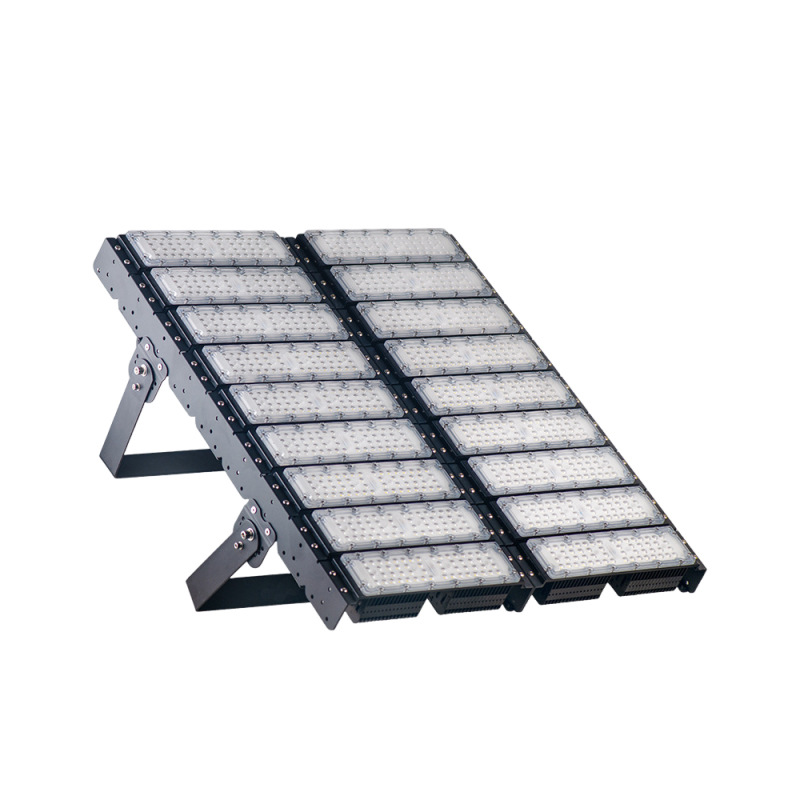
A stadium owner in Oman asked for five separate sport areas to share one lighting standard. The brief looked simple until pole heights and a nearby residential zone entered the plan. Hairolux engineers ran per-area photometric studies and selected high-mast arena LED floodlights tuned to different beam angles, because a football pitch and a training court do not carry the same lux target. That project shows why a single "bright enough" number never works for a professional led stadium light. Lumen count sells fixtures, but lux on the grass decides whether play is safe and broadcast-ready. A professional led stadium light earns its rating only after accounting for pole height, beam spread and the surface below it.
Oman: Five Sport Areas, One Standard
The Oman rollout covered football, basketball, tennis and multi-use courts. Each zone received its own calculation instead of a copied layout. Training-level lux near 200 average worked for casual play, while the main pitch needed far more for visiting league matches. Using the same luminaire family kept spare parts simple across all five areas and made future led stadium light upgrades predictable. Hairolux also supplied spare drivers matched to each zone, so a failed led stadium light returns to full output within hours rather than weeks.
Brazil: Dialux Before Purchase
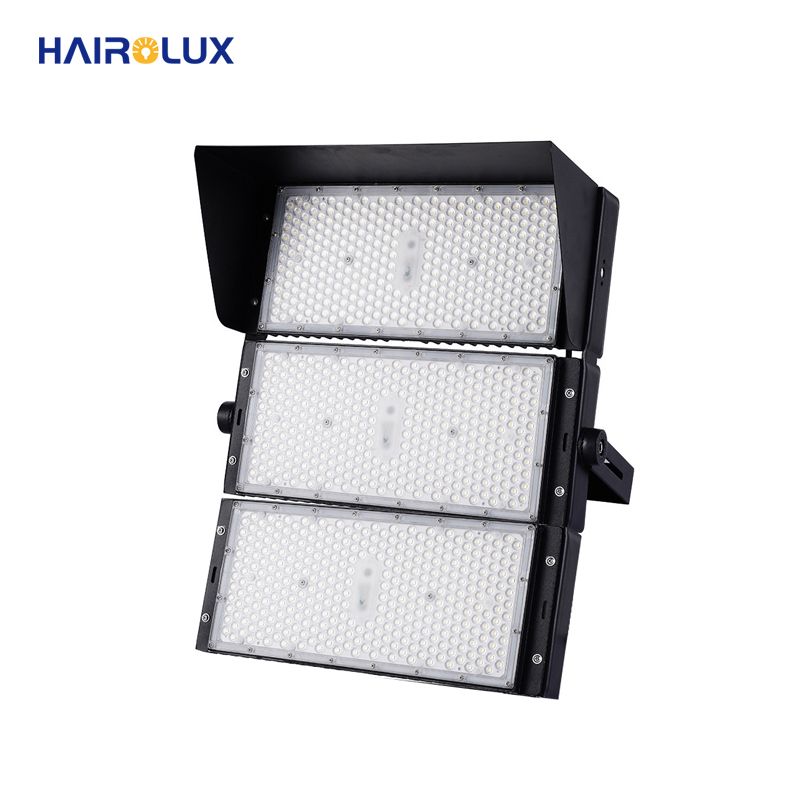
A community sports facility in Brazil avoided costly rework by requesting a Dialux simulation before buying. The simulation exposed two dark corners that raw wattage estimates had missed. Adjusting aiming angles and adding two extra sports LED luminaires solved the problem on paper, saving a second shipment. Hairolux delivered the plan with IES file support so the local installer could verify placement and trust the led stadium light performance. The local crew later reported that the simulated layout matched the installed result within 5 percent, proof that planning a led stadium light project on paper first pays off.
Why Guessing Lumens Is a Costly Risk
Picking lumen output by feel creates two failure modes, and both surface after commissioning when fixes cost more than the design. Neither error shows up on a supplier's spec sheet, which is why a professional led stadium light decision needs a photometric plan, not a guess.
Over-Lighting Wastes Energy and Budget
Specifying 1000 lux where 500 lux satisfies the standard doubles energy draw and heat. High-mast fixtures running hotter age faster, and the electricity bill climbs for a decade. EN 12193 sets sport-specific averages, so exceeding them returns no sporting benefit while raising the carbon load and the led stadium light cooling demand. Some buyers over-specify because they fear complaints, yet a well-aimed led stadium light at the correct lux beats a brute-force array every time. Lower GR also means less spilled light into homes, a planning rule tied to CIE and EN 13201 that a careful led stadium light design respects. The saved watts fund other facility upgrades.
Under-Lighting Fails Broadcast and Safety
A community ground that later hosted regional broadcast learned this the hard way. Cameras need stricter uniformity and color than the human eye. Missing the FIFA/UEFA guidance for televised play forces expensive retrofits or cancelled coverage. Worse, dim training areas raise trip and collision risk under OSHA 29 CFR 1910 workplace lighting expectations, a compliance gap no led stadium light specification should ignore. Trainers often accept dimmer sessions, but once a led stadium light fails TV spec the venue loses rental income from broadcasts and tournaments. A dim led stadium light also shortens usable evening hours, cutting revenue from paid bookings and community programs that depend on safe, even light. Electrical planning matters too; NFPA 70 NEC and OSHA 29 CFR 1910 shape how a led stadium light connects safely to the grid.
How Many Lumens Does a Professional LED Stadium Light Need?
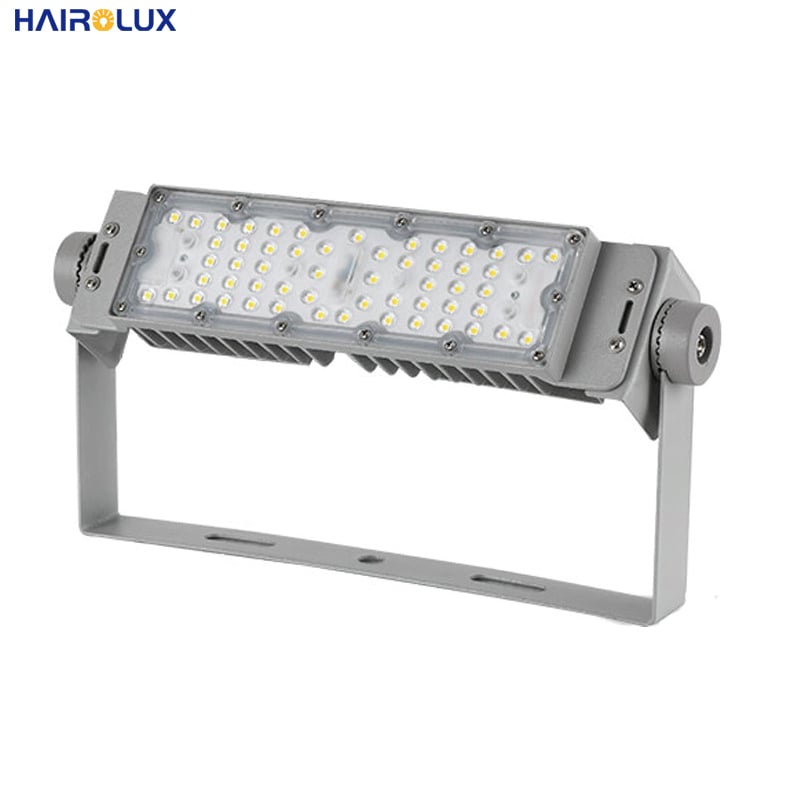
The honest answer depends on the sport, the level of play, and whether cameras are present. EN 12193 and IES guidance give the bands; the facility chooses where it sits. A professional led stadium light plan starts from the strictest event the venue hopes to host. Below are the typical bands facilities actually use when planning a professional led stadium light installation.
Training Versus Broadcast Light Levels
Recreational training usually sits near 200 to 300 average lux with 0.5 uniformity. Club and semi-pro matches climb to 500 lux. Continental broadcast asks for 1000 to 1500 lux average with 0.7 uniformity, while FIFA-grade finals reach 2000 to 2500 lux. A professional led stadium light must be selected against the highest intended use, not the current one, because upgrading poles later costs more than sizing correctly now. These figures are average maintained lux, not initial. A new led stadium light reads higher on day one, then settles, so design to the maintained number the standard cites. EN 12193 classifies sport lighting into classes, and a professional led stadium light should target at least Class II for club competition before any camera arrives.
CRI, Glare, Uniformity and Flicker
Color rendering index should stay at 80 plus for training and 90 plus for broadcast, with TLCI above 85 so HD cameras reproduce skin tones. Glare rating, or GR, per EN 13201 and CIE guidance must stay below 50 for players and below 55 for spectators. Uniformity ratios of 0.5 to 0.7 prevent pool-of-light effects. HDTV demands flicker-free drivers above 3000 Hz to avoid banding, a detail a basic led stadium light quote often omits. Many buyers chase raw lumens and forget GR, yet a glary led stadium light earns complaints from players even when lux is perfect. Uniformity is calculated as the minimum divided by the average lux across the grid, so a led stadium light with tight beam control lifts the minimum without wasting lumens. Optical shielding and correct aiming solve glare.
How to Choose, Inspect and Maintain Stadium Fixtures
Buying on lumen count alone hides real performance. A structured selection and care plan protects the investment and keeps the led stadium light output stable for years. Treat the led stadium light as a system, not a bulb.
Calculate Lumens Per Fixture
Start from the maintained lux target, multiply by the play area in square metres, then divide by fixture count and a 0.8 luminaire depreciation factor. A 7000 square metre pitch at 500 maintained lux needs about 4.4 million lumens total; eight 500W to 1000W high-mast units from the LED stadium light range cover it with margin. Always confirm the quoted lumen figure is output after the lens, not bare LED bin value. Round up rather than down, because a slightly over-built led stadium light dims gracefully over time while an under-built one never recovers. For a smaller 2000 square metre training court at 300 lux, four led stadium light units from the range deliver roughly 1.2 million lumens with comfortable margin.
Inspection and Maintenance Routine
Commission with a lux meter grid to verify uniformity before sign-off. Re-test every 12 months, because lens dust and driver drift quietly cut output. Clean optical lenses with a non-abrasive cloth, and log each fixture serial for spare planning. Facilities built on ISO 9001 manufacturing supply photometric reports that make these checks straightforward and keep every led stadium light accountable to its rated curve. Document the baseline at handover, because without it no one can prove a led stadium light has lost output until the pitch looks obviously dim.
Hairolux, a China national high-tech enterprise with 13 plus years in LED outdoor lighting, supports 197 plus government projects across 203 plus countries and regions, holding ISO 9001, CE, RoHS, TUV and FCC certifications. The company's track record spans Indonesia road lighting with 3000 plus units, Grenada with 2000 plus, Kenya villages with 600, and Germany outdoor road safety programs. Every certified led stadium light Hairolux ships carries CE, RoHS, TUV and FCC marks, so import and compliance across 203 plus regions stays smooth. Explore the sport solutions or review the company profile for full project references before specifying your next led stadium light.
Frequently Asked Questions
Question: How many lumens does a professional led stadium light produce per fixture?
Answer: A 500W to 1000W high-mast arena fixture typically delivers 60,000 to 150,000 lumens out of the lens after optical loss. Exact output depends on LED efficacy and beam control. Always ask for the maintained lumen figure at the target beam angle, not the bare chip rating, because lens and driver losses can reach 10 to 15 percent in real installations.
Question: What lux level is required for televised football matches?
Answer: Continental broadcast usually requires 1000 to 1500 average lux with 0.7 uniformity, while FIFA-grade finals reach 2000 to 2500 lux. FIFA and UEFA lighting guidance also sets strict color and glare limits. A facility planning any camera coverage should size the led stadium light system to broadcast level from the start to avoid expensive later retrofits.
Question: Why does CRI matter for stadium lighting?
Answer: CRI, or color rendering index, shows how accurately light reveals true colors. Training areas work at CRI 80 plus, but broadcast needs 90 plus with TLCI above 85 so HD cameras capture natural skin tones. Low CRI makes grass and uniforms look flat on screen, which is why a professional led stadium light for televised play must meet both metrics.
Question: What is glare rating GR and why keep it low?
Answer: Glare rating, GR, measures discomfort glare for players and spectators per EN 13201 and CIE guidance. Keep GR below 50 for players and below 55 for spectators to protect vision and comfort. Poor optical control or wrong aiming raises GR, so the led stadium light must use shielded lenses and correct pole geometry during the design phase.
Question: How is flicker controlled for HDTV broadcast?
Answer: Cameras shutter faster than the human eye, so a led stadium light must use flicker-free drivers running well above 3000 Hz to prevent screen banding. Request driver specification and independent test reports before purchase. Cheap drivers with low frequency cause visible strobing on broadcast, forcing reshoots or coverage cancellation at major events.
Question: Which standards guide professional stadium lighting design?
Answer: Core references include EN 12193 for sports lighting, ANSI/IES RP-8 and IES recommendations, plus FIFA and UEFA broadcast guidance. Glare follows EN 13201 and CIE, while electrical safety uses NFPA 70 NEC and OSHA 29 CFR 1910. ISO 9001 covers manufacturing quality. A qualified led stadium light supplier aligns every fixture to these documents.