 ×
×
Solar street lights address the core limitations of traditional grid-connected street lights in specific scenarios. As a renewable energy solution, they offer greater economic and environmental benefits with lower maintenance costs, making them one of the most popular lighting options on the market.
What are the advantages of solar street lights compared to grid-connected street lights?
1. Grid-connected lights rely on electricity, and power costs can be high in some areas. In regions without grid coverage or with unstable power supply, traditional streetlights cannot be installed or incur extremely high operating costs. Solar streetlights operate completely off-grid, eliminating the need for municipal grid connection and effectively eliminating electricity bills.
2. High cable installation costs: Laying cables in remote areas, wilderness, or newly constructed roads incurs substantial engineering expenses. Solar street lights require no wiring, enabling quick and simple installation that significantly reduces initial investment.
3. Reduced carbon footprint: Solar energy is a clean source that replaces fossil fuel-based power generation, lowering greenhouse gas emissions and aligning with carbon neutrality goals.
4. Energy Efficiency and Environmental Protection: Equipped with high-efficiency LED light sources and intelligent controls (such as motion sensors and dimming), these lights consume minimal energy, further conserving resources.
5. Lighting for Off-Grid Areas: In remote regions like rural villages, mountainous areas, islands, grasslands, and border highways, solar street lights are the only viable lighting solution.
6. Flexible Deployment: Can be installed independently, suitable for temporary construction sites, festive events, tourist camps, parking lots, and other locations requiring rapid lighting deployment where wiring is impractical.
7. Mitigates Power Outage Impact: In areas with unstable power grids, traditional streetlights may frequently go out, compromising nighttime safety. Solar streetlights incorporate built-in energy storage systems to ensure continuous illumination.
8 Low-voltage DC power supply: Typically 12V or 24V DC systems eliminate leakage risks for enhanced safety, particularly suited for rainy and high-humidity environments.
9. Reduced operational costs: While initial investment may be higher, long-term savings on electricity bills and cable maintenance can result in lower overall lifecycle costs (LCOE)
10. Smart Remote Management: Modern solar streetlights integrate IoT modules for remote power monitoring, brightness adjustment, and fault alerts, enhancing management efficiency.
11. Rural and Remote Area Development: Illuminates rural roads, improves nighttime travel conditions, enhances public safety, and stimulates rural nighttime economies and social activities.
12. Public Safety Enhancement: Provides secure lighting in public spaces like parks, trails, and campuses, reducing accidents and crime.
13. Emergency Preparedness and Disaster Response: Serves as an emergency lighting system during natural disasters (e.g., earthquakes, floods) that cause grid failures.
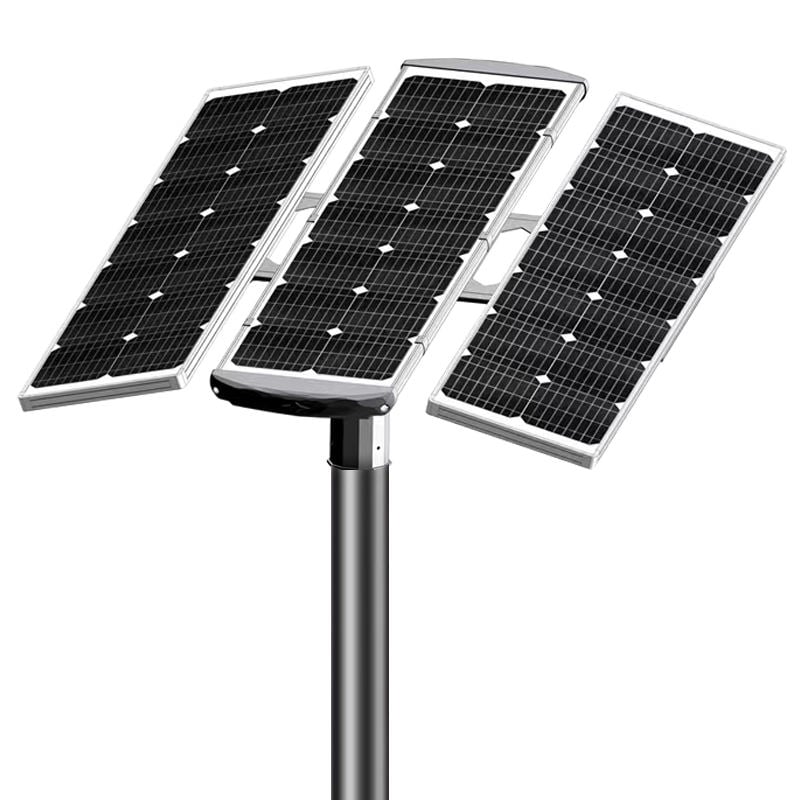
Limitations of Solar Street Lights:
It is not merely a “light,” but a distributed, off-grid green energy microsystem. At its core, it addresses the challenge of achieving reliable, sustainable public lighting with lower overall costs and reduced environmental impact in specific scenarios, particularly suited for:
- Areas without electricity or with limited power supply
- New construction or temporary projects
- Government or corporate initiatives prioritizing environmental sustainability and long-term operational costs
- Emergency scenarios requiring rapid deployment

 EN
EN

