
 EN



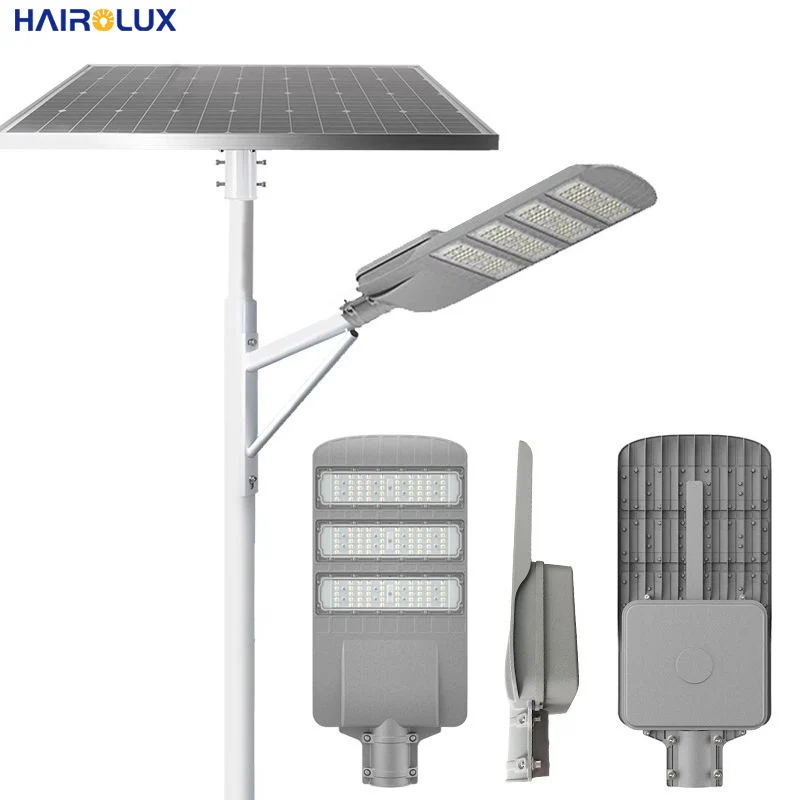
Which LED Street Light Survives a Real Municipal Rollout?
A street lighting buyer rarely chooses one lamp. Municipal programs tend to arrive as tenders for hundreds or thousands of units, and the question stops being "which model is brightest" and becomes "which led street light will still report its status three years from now." Selecting for the long run matters more than a single spec sheet.
Hairolux shipped an all-in-two solar road project to Bolivia—850 pieces—where the brief was simple: keep a rural corridor lit without a stable grid. The led street light there had to accept a solar source and a controller that a remote operator could reach. A led street light that cannot be reached remotely is just a better bulb, not a smart asset.
Indonesia tells a denser story. A government road-lighting program took more than 3000 pieces across a mix of urban arterials and provincial roads. The led street light in that program needed a sealed driver, a photocell-ready head, and a management layer that local crews could learn in a day. For every one of these programs, the led street light had to pass both a photometric and a connectivity test before shipment.
Grenada added 2000+ pieces for government roads, and Kenya brought 600 pieces to village lighting where grid power was the exception. Each program shared one trait: the led street light was not bought as a light. It was bought as a node on a network that a city operations team would monitor long after the installer left. A led street light locked to one vendor app ages badly once that vendor changes its pricing.
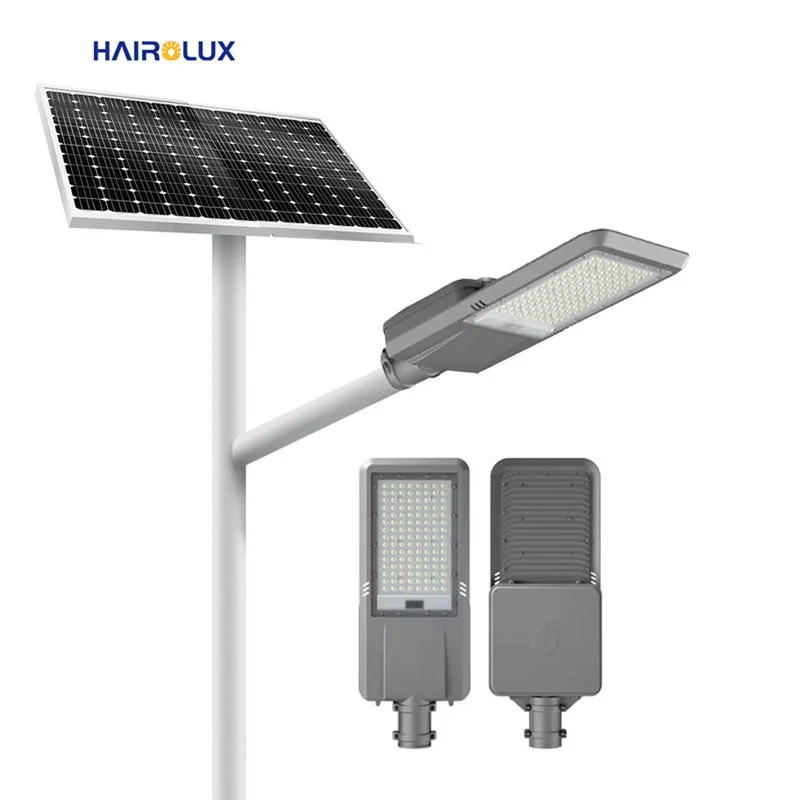
Bolivia and Indonesia: Two Different Grids, One Requirement
Bolivia ran on solar storage; Indonesia ran on grid feed with backup. Different energy paths, same demand—the led street light had to expose a standard interface so the control system could attach without a custom harness. The led street light that passed was the one with the open socket, not the cheapest sealed unit.
Germany Road Safety and the Cost of a Wrong Guess
A German outdoor road-safety lighting job cared less about remote dashboards and more about uniform light on a curve. The led street light there needed precise optical control and a glare rating that satisfied local auditors. The led street light selected there carried a tight beam and a low glare class, which an auditor could verify on paper.
What Goes Wrong Without the Right Interfaces?
Specifying a led street light by lumen number alone invites trouble. A led street light purchased only on price often hides this risk until the control vendor arrives. The first failure mode is the dead socket: a luminaire arrives with a proprietary driver, and the smart controller has nowhere to plug in. Retrofitting means cutting the head open or buying a new batch.
The second failure is the silent fleet. A led street light without a reporting channel looks healthy until half the corridor dims from a failed driver. Nobody knows until a resident complains. The third is the interoperability trap—two vendors, two apps, two login portals, and no single view of the street. An LED roadway luminaire that cannot speak to the city platform becomes a stranded cost.
NEMA vs Zhaga: Two Sockets, Two Philosophies
NEMA 7-pin sockets dominate North American retrofits because they are simple and field-swappable. Zhaga Book 18 became the twist-lock standard for newer luminaires, smaller and weather-rated for sealed designs. A led street light with a NEMA base lets a crew swap a node on a bucket truck; Zhaga favors factory-sealed, lower-profile assemblies that resist water ingress. A led street light specified without a socket decision forces a redo at the worst moment—after poles are already up.
LoRa, NB-IoT and the Quiet Network Behind Dimming
LoRa rides unlicensed spectrum and suits wide, low-power municipal spreads. NB-IoT uses the cellular network and fits dense urban corridors with good coverage. Both let a led street light dim by schedule, by ambient light, or by calendar—and report energy draw back to a dashboard that an operator checks from an office. A led street light on LoRa costs less to connect per pole, which matters across a 3000-piece corridor.
How Smart-City Controls Actually Talk to a Luminaire
A led street light becomes "smart" the moment a controller can read and command it. The controller usually sits in the NEMA or Zhaga socket and speaks a protocol—often DALI or a vendor's RESTful layer—up to a gateway. A led street light wired for DALI responds in under a second, which keeps adaptive dimming smooth at a junction.
Dimming follows a 0–10V or DALI curve; the management system maps each led street light to a GPS coordinate and a maintenance record. Remote management also opens the door to grouping. A residential street drops early while a road near a hospital stays brighter later. The logic lives in software, not wiring, which is why the socket standard matters more than the lamp brand.
Remote Management Is Where the Money Saves
Energy is the obvious saving. A led street light dimmed to 70% after midnight on a quiet residential street can cut consumption meaningfully across a large program. A led street light on a schedule pays back faster than one left at full output all night, and the gap compounds yearly.
The quieter saving is truck rolls: a fault that once needed a night patrol now shows as a red pin, and a crew drives straight to it instead of hunting poles. An outdoor LED luminaire that reports its own failure turns maintenance from guesswork into a routed task list.
Standards That Keep a Street Light Installation Safe and Legal
Compliance is not paperwork—it is what keeps an installation approved and a crew safe. ANSI/IES RP-8 sets recommended practice for road lighting, including uniformity and glare limits. ANSI C136 covers roadway lighting equipment, including the NEMA socket interface that makes a led street light field-upgradable. A led street light outside EN 13201 class fails audit in Europe, regardless of how bright it measures on a bench.
NFPA 70 (NEC) governs electrical wiring in the United States; OSHA 29 CFR 1910 covers worker safety during installation and service. ISO 9001 is the quality-management baseline a manufacturer should hold before a government tender is even opened. HAIROLUX holds ISO 9001, CE, RoHS, TUV and FCC marks and has supported 197+ government projects across 203+ countries and regions, which is the kind of track record a planner checks before issuing a bid.
Inspection Checklist Before You Sign Off
Confirm the led street light exposes a NEMA or Zhaga socket, not a sealed proprietary driver. Verify dimming type (0–10V or DALI) matches the controller you plan to deploy. A led street light missing its cert file stalls the bid, so request CE, RoHS, TUV, FCC copies and the ISO 9001 scope certificate up front. Check the photometric report against ANSI/IES RP-8 uniformity for the road class. Confirm the management portal shows each luminaire by location, not by serial only. Validate ingress rating for the local climate; IP65 outdoor is a common minimum for a led street light.
Maintenance That Keeps the Lumens Where They Belong
A led street light degrades slowly, so schedule optical cleaning per site dust load and log driver temperature trends. Replace nodes through the socket rather than the whole head where the design allows. A led street light cleaned yearly holds its output far better than one left to accumulate road film. Keep a spare-count plan tied to fleet size—600 pieces and 3000 pieces need different buffer math, and a delayed spare can leave a dark intersection for weeks.
For planners comparing energy paths, a separate guide on solar versus grid trade-offs helps frame the choice before a socket decision is made. The smart-city IoT street light from Hairolux pairs a NEMA-ready luminaire with LoRa remote control and an IP65 outdoor rating. More program examples sit on the Solutions page, and the company background is on the About us page.
Frequently Asked Questions
Question: What does a smart-city ready led street light need?
Answer: A smart-city ready luminaire needs a standard control socket—NEMA 7-pin or Zhaga Book 18—so a wireless node can attach in the field. It should support dimming over 0–10V or DALI and report status to a management portal by location. Without that socket, the led street light stays a standalone fixture and cannot join a city network or accept remote schedules and fault alerts.
Question: Is NEMA or Zhaga better for street lighting?
Answer: NEMA 7-pin suits North American retrofits because crews swap nodes from a bucket truck. Zhaga Book 18 fits newer, factory-sealed luminaires with a lower profile and strong ingress protection. The better choice depends on whether the led street light will be serviced in the field or replaced as a sealed unit. Both keep the control layer separate from the lamp and protect future upgrades.
Question: How do LoRa and NB-IoT differ for outdoor luminaires?
Answer: LoRa uses unlicensed spectrum and fits wide, low-power municipal spreads where cellular coverage is weak. NB-IoT rides the cellular network and suits dense urban corridors with strong signal. Both let a led street light dim by schedule or ambient light and report energy use. Coverage at each pole should decide the radio, not the catalogue headline or a single demo site.
Question: Which standard governs road lighting uniformity?
Answer: ANSI/IES RP-8 sets the recommended practice for road lighting, covering uniformity, glare and placement for safe roads. In Europe, EN 13201 drives photometric class choices for each led street light. ANSI C136 covers roadway equipment including the NEMA socket. Planners should check the local standard before specifying optics, since a bench-bright lamp can still fail a field audit.
Question: How much can dimming actually save on a program?
Answer: A led street light dimmed to around 70% on quiet residential streets after midnight trims consumption across the whole fleet, and the saving compounds yearly. The larger gain is fewer truck rolls: faults appear as located pins instead of night patrols. On a 3000-piece program, schedule-based dimming plus fault reporting often outweighs the lamp's upfront efficiency alone by a wide margin.
Question: What should an inspection checklist include before sign-off?
Answer: Confirm the led street light exposes a NEMA or Zhaga socket, not a sealed driver. Verify dimming type matches the controller, and check the photometric report against ANSI/IES RP-8 for the road class. Require certification copies—CE, RoHS, TUV, FCC—and the ISO 9001 scope certificate. Validate ingress rating for the climate, and confirm the portal maps each luminaire by location, not only by serial number.