
 EN
EN



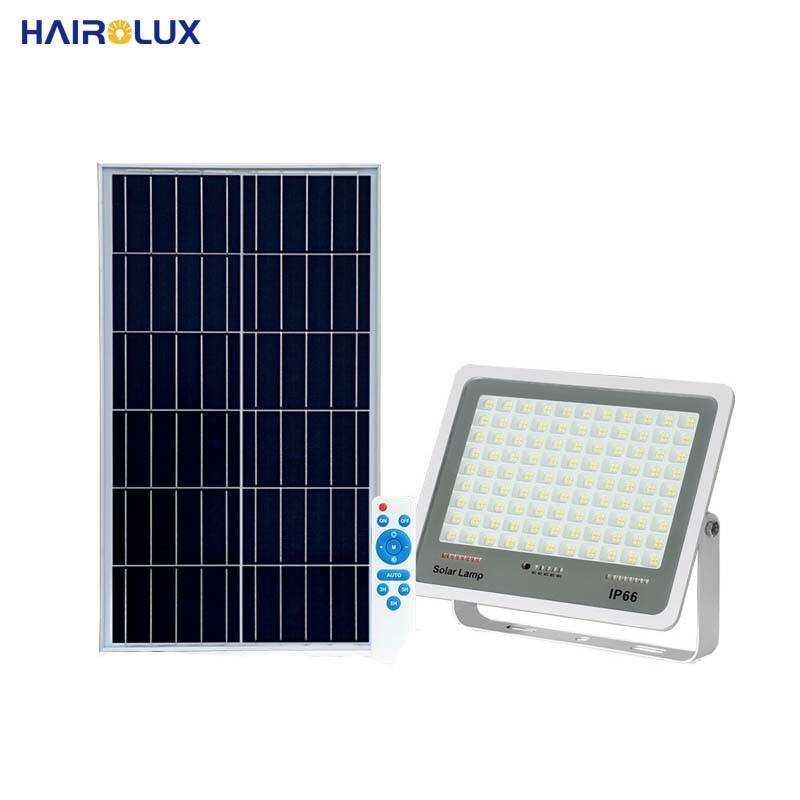
Mountain Road Solar Streetlight Selection: Reliable Illumination for Remote Terrain
Installing grid-powered lighting along mountain roads is prohibitively expensive — trenching through rock, spanning valleys with overhead lines, and maintaining transformers in inaccessible locations pushes costs beyond what most municipal and rural electrification budgets can absorb. A solar streetlight eliminates the grid dependency entirely, but mountain environments introduce challenges that flat-terrain installations never face: steep solar angles, rapid temperature swings, snow loading, and limited maintenance access. Selecting the right system configuration for these conditions determines whether the lights operate reliably or become stranded assets within two winters.
Terrain-Specific Design Requirements
Solar Panel Orientation and Tilt
Mountain roads rarely run east-west along ridgelines where panels receive optimal exposure. North-facing switchbacks may receive only 2–3 hours of useful irradiance in winter. Panel tilt must be adjusted from the standard formula to compensate for slope aspect.
On north-facing slopes in the Northern Hemisphere, panels may need extended arms above the road cut to capture southern exposure, or steeper tilt to collect reflected irradiance from snow. Each installation point requires individual assessment.
A rural electrification project in the Nepalese Himalayas deployed 180 solar street lights along a 12-kilometer mountain access road connecting three villages. The initial design used a uniform 30° panel tilt, but lights on north-facing sections failed to maintain charge through December and January. The project team, working with Haisiou Lighting, modified the mounting brackets on 40 affected units to increase tilt to 50° and repositioned panels on extended arms where slope aspect blocked direct sun. The adjustments restored full-night operation across the entire installation.
Temperature Extremes and Battery Performance
Mountain environments cycle through temperature swings that stress battery chemistry. LiFePO4 batteries, while superior to lead-acid in cycle life, experience reduced charge acceptance below 0°C. Charging a lithium battery when the cell temperature is below freezing causes lithium plating on the anode — a permanent capacity loss that accumulates with each cold-weather charge cycle.
The solution is a battery management system with low-temperature charge cutoff and integrated self-heating. When the BMS detects cell temperature below 0°C, it diverts charging current to a heating element until the pack reaches 5°C. This consumes roughly 5–10% of daily charging energy — worthwhile for preventing permanent capacity loss.
Structural Loading from Snow and Ice
Mountain installations should specify poles rated for 120 km/h wind and a snow load per local building code. The panel frame must handle the additional static load, and hydrophobic coating encourages snow and ice to slide off.
Pole Height and Light Distribution
Mountain roads with variable grades create unusual lighting geometry. A pole positioned at the outside edge of a curve may leave the inside lane in shadow if the mounting height and beam angle are not coordinated. Wider beam angles — 140° or greater — combined with mounting heights proportional to the road width ensure consistent illuminance across both lanes. Standard 6–8 meter poles suffice for two-lane mountain roads up to 7 meters wide; wider sections require 9-meter poles or supplementary fixtures.
For mountain road applications, specify monocrystalline panels with individually assessed tilt angles, LiFePO4 batteries with low-temperature charge protection, MPPT controllers, and poles rated for snow and ice loading. Haisiou Lighting provides solar street lights with these features in all-in-one and split configurations suitable for remote terrain.
Frequently Asked Questions
Can solar street lights work on shaded mountain roads?
Partial shading dramatically reduces output. Each installation point must be individually assessed for direct sunlight hours. In heavily shaded sections, consider mounting panels on extended arms above the road cut, relocating panels to the nearest sunny clearing with a cable run to the light pole, or using split-system lights where the panel and luminaire are physically separated.
How does altitude affect solar panel performance?
Higher altitudes receive greater solar irradiance due to thinner atmosphere — roughly 5–8% more per 1,000 meters of elevation gain. However, lower ambient temperatures at altitude also increase panel voltage, which can push the array voltage above the charge controller's maximum input rating in cold, sunny conditions. Verify the charge controller's voltage window accounts for the cold-temperature voltage rise.
What battery type works best in cold mountain environments?
LiFePO4 batteries with integrated low-temperature charge protection and self-heating functionality. Standard lithium batteries should not be charged below 0°C. Lead-acid batteries tolerate cold charging better but have shorter cycle life and lower energy density, requiring larger, heavier battery boxes that complicate mountain installation logistics.
How should solar panels be angled on mountain roads?
Panel tilt should equal the site's latitude plus 10–15° for winter optimization in mountain environments where winter daylight is the limiting factor. Azimuth should face true south in the Northern Hemisphere, adjusted for the specific slope aspect. Each installation point requires individual assessment. Haisiou Lighting's solar street lights use adjustable mounting brackets to accommodate varied terrain angles.
Do mountain solar street lights need snow removal?
In regions with heavy snowfall, panels mounted at steeper angles (50° or greater) allow most snow to slide off naturally. Hydrophobic panel coatings accelerate snow shedding. For critical installations, specify panels with self-heating capability triggered by the BMS when snow accumulation is detected through reduced charging current during daylight hours.
What pole height is appropriate for mountain road lighting?
Standard 6–8 meter poles suit two-lane roads up to 7 meters wide. Wider roads, sharp curves, or sections where the pole must be set back from the road edge require 9-meter poles with wider beam distribution. Pole height should be at least equal to the road width for uniform illuminance across both lanes.