
 EN
EN



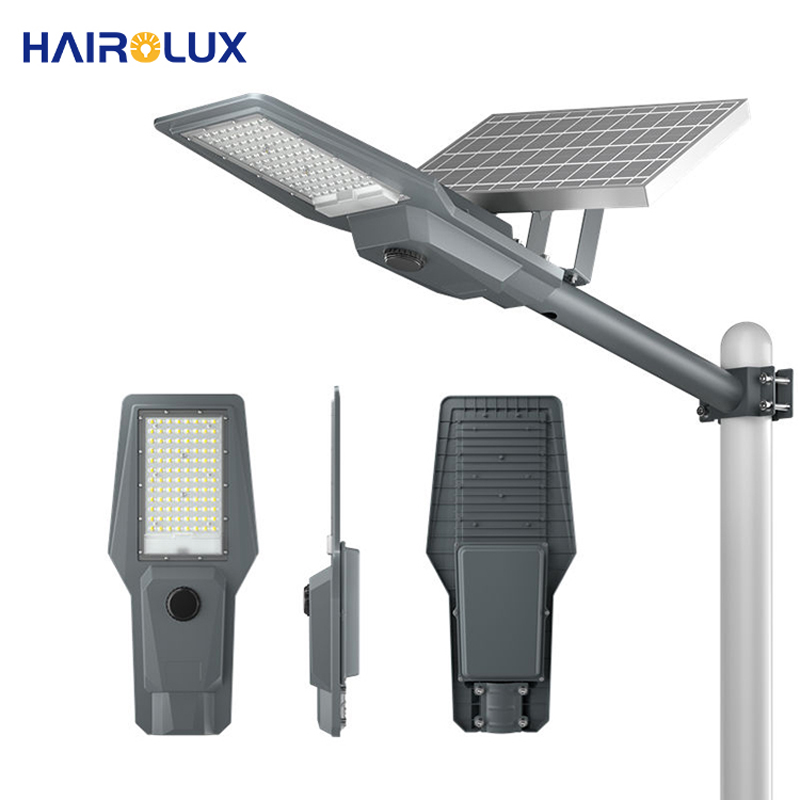
The Low-Maintenance Advantage of Integrated Outdoor Solar Street Light Systems
Municipal lighting departments and facility managers evaluating outdoor solar street light options consistently rank maintenance burden as a top concern — often above initial purchase price. Every maintenance visit to a street light requires a bucket truck, a two-person crew, traffic control measures, and the associated liability exposure. An integrated solar street light design that reduces the frequency and complexity of these visits delivers lifecycle cost savings that dwarf any upfront price difference between competing products.
How Integrated Design Reduces Failure Points
Fewer External Connections
A split-type solar street light system routes DC power from a remote solar panel through outdoor-rated cable to a ground-level or pole-mounted battery enclosure, then up to the luminaire at the pole top. Each connection point — panel junction box, inline fuse holder, battery terminal block, and luminaire driver input — creates a potential failure site. Water ingress at any of these points causes corrosion, increased resistance, and eventual open-circuit failure.
An integrated outdoor solar street light eliminates external DC wiring by housing the solar panel, battery, charge controller, and LED driver within a single sealed enclosure. The only external connections are the pole mounting bracket and, in some designs, a remote control antenna connector. Reducing the connection count from a typical 8–12 points in a split system to 1–2 points in an integrated design proportionally reduces the failure probability.
A facilities contractor maintaining 600 solar street lights across a university campus tracked maintenance tickets over a three-year period. Split-system lights averaged 2.1 unscheduled maintenance visits per unit per year — predominantly for corroded panel connectors and animal-damaged cables. Integrated units from Haisiou Lighting averaged 0.3 visits per year, with nearly all callouts traced to physical impact damage from landscaping equipment rather than component failure.
Sealed Battery Protection
Split systems place batteries in enclosures at the pole base or on an external mounting bracket. Ground-level enclosures accumulate water from irrigation spray and rainfall runoff. Rodents chew through cable insulation to access the warmth of the battery compartment. Theft of accessible battery packs is a documented problem in installations without surveillance.
An integrated outdoor solar street light keeps the battery inside the sealed luminaire housing, typically 4–8 meters above ground level. This provides natural protection against flooding, animal intrusion, and casual theft. The elevated position also reduces the battery's exposure to ground-level temperature extremes — the aluminum housing acts as a heat sink during daytime hours, moderating the peak internal temperature compared to a ground-level enclosure in direct sun.
Maintenance Procedures for Integrated Systems
Annual Inspection Protocol
Maintenance of integrated outdoor solar street lights follows a predictable annual cycle. The inspection verifies four conditions: panel cleanliness — accumulated dust or bird droppings reduce charging current by 5–15% and should be cleaned with water and a soft cloth; physical integrity — check for impact damage, loose mounting bolts, and cracked housing seals; LED function — verify full nighttime operation and check for individual LED failures visible as dark spots in the array; and battery health — measure charging current during peak sun hours and compare to the panel's rated output to detect degradation.
Predictive Failure Detection
Integrated lights with MPPT charge controllers can log operational data including daily charge energy, nightly discharge energy, and minimum battery voltage reached. A battery that now reaches full charge with far less energy than when new is approaching the capacity threshold where replacement should be scheduled on the next visit rather than waiting for an outage.
For facility managers seeking low-maintenance outdoor lighting, integrated solar street lights reduce field service requirements by eliminating external wiring and protecting the battery within the luminaire housing. Haisiou Lighting manufactures integrated outdoor solar street lights with aluminum housings rated IP65/IP66, LiFePO4 batteries, and MPPT controllers designed for minimal maintenance across years of continuous outdoor service.
Frequently Asked Questions
How often do integrated solar street lights need maintenance?
A properly specified integrated solar street light requires one scheduled maintenance visit per year for panel cleaning and visual inspection. Unscheduled maintenance events average well under one per unit per year over a 5-year service period, compared to 2+ events annually for split-type systems with external wiring and ground-level battery enclosures.
Can the battery in an integrated light be replaced?
Yes. Integrated solar street lights are designed with a serviceable battery compartment accessible by removing a sealed cover plate, typically secured with tamper-resistant fasteners. The replacement procedure takes approximately 15–20 minutes with the luminaire on a workbench — no field-level battery replacement is typically required during the 5–8 year service life.
What causes an integrated solar street light to stop working?
The most common causes: physical impact damage, panel contamination reducing charge below minimum threshold, battery capacity degradation, and water ingress. Proper pole placement and annual cleaning prevent most failures. Haisiou Lighting uses impact-resistant aluminum housings.
Do integrated solar street lights need cleaning?
Yes. Dust, pollen, and bird droppings accumulate on the solar panel surface and reduce charging current by 5–15%. Annual cleaning with water and a soft cloth restores full output. Installations near agricultural areas or unpaved roads may require semi-annual cleaning during dry seasons when airborne dust is highest.
How are integrated lights protected from theft?
The integrated design places the battery and all valuable components inside a sealed housing mounted 4–8 meters above ground, accessible only with a bucket truck or ladder. Tamper-resistant fasteners secure all access panels. This provides far better theft protection than split systems with ground-level battery enclosures that can be opened with basic hand tools.
What is the typical warranty period for integrated solar street lights?
Quality manufacturers provide 3 years on the complete system, with the LED array typically covered for 5 years. The battery is prorated based on cycle count. Verify that the warranty terms specify coverage for both materials and the labor cost of component replacement. Haisiou Lighting provides a standard 3-year warranty on integrated solar street light systems.