
 EN
EN



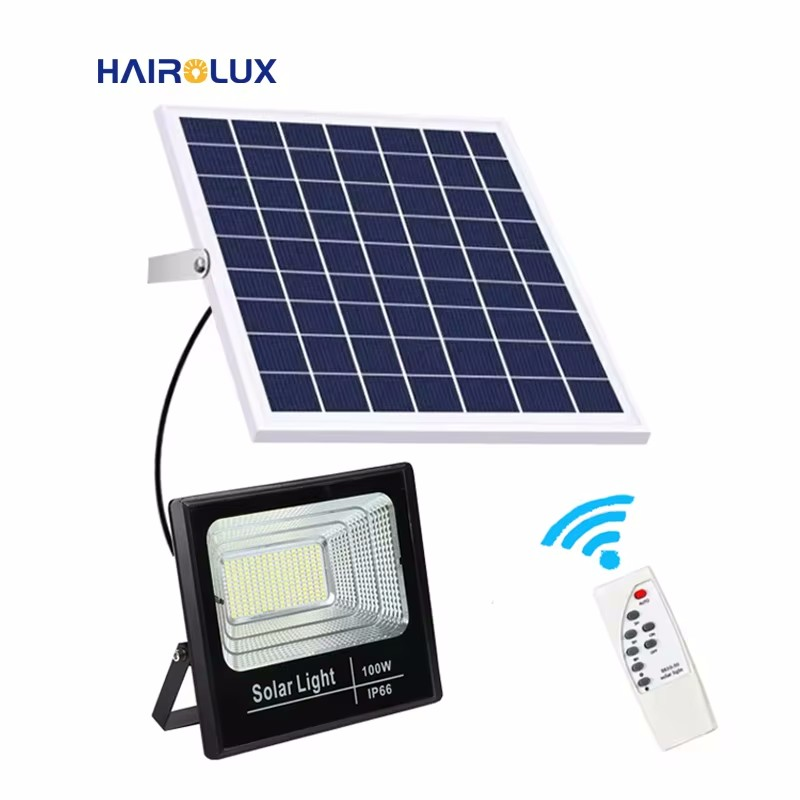
Evaluating Integrated Solar Streetlight Value: A Practical Buyer's Guide
The market for solar streetlight products has expanded rapidly as component costs have fallen and solar panel efficiency has improved. A procurement manager facing a dozen supplier quotes with widely varying prices needs a framework for evaluating value beyond the headline wattage number. The cheapest unit often becomes the most expensive after factoring in battery replacement, lumen depreciation, and installation complexity. Understanding the components that drive both upfront cost and lifetime performance separates a smart purchase from an expensive mistake.
The Components That Determine True Cost
Solar Panel Quality and Real-World Output
The solar panel specification sheet states wattage under Standard Test Conditions — 1,000 W/m² irradiance at 25°C cell temperature. Real-world conditions rarely match this. A panel rated at 100 watts under STC might deliver 70–80 watts on a typical sunny day after accounting for operating temperature derating, dust accumulation, and the angle of incidence. Monocrystalline silicon panels, with conversion efficiency around 23%, outperform polycrystalline panels by 3–5 percentage points — a meaningful difference that accumulates over 365 days of charging.
Panel degradation matters for long-term cost. Tier-1 monocrystalline panels typically lose 2–3% output in the first year and 0.5–0.7% per year thereafter. Cheaper panels degrade faster, delivering progressively less charging current each year until the battery can no longer reach full charge during the available sunlight hours. At that point, the light either dims prematurely or fails to operate through the night.
Battery Chemistry and Cycle Life
The battery represents the largest single component cost in an integrated solar streetlight and the component most likely to fail first. Lithium iron phosphate (LiFePO4) batteries dominate quality solar street lights because they offer 2,000–3,000 charge-discharge cycles at 80% depth of discharge, compared to 500–800 cycles for lead-acid and 800–1,200 for standard lithium-ion. At one cycle per night, a LiFePO4 battery delivers 5–8 years of service before capacity drops below 80% of the original rating.
A resort developer in the Caribbean replaced 150 standalone solar street lights after the original lead-acid batteries failed within 18 months of installation — the combination of high ambient temperatures and deep daily discharge cycles had degraded the plates beyond recovery. The replacement lights, using integrated solar streetlights with LiFePO4 batteries and MPPT charge controllers, were supplied by Haisiou Lighting and achieved full-night operation through three consecutive rainy seasons without a reported battery failure.
Evaluating the Specification Sheet
Real Lumen Output vs. Marketing Claims
Solar street light wattage ratings require scrutiny. A 100-watt integrated fixture should deliver approximately 15,000 lumens at an efficacy of 150 lm/W. If the price seems too low for this math to work, the actual LED output or driver efficiency is likely below the stated specification. Request independent photometric test reports (IES files) rather than relying on catalog claims. The IES file contains measured lumen output, beam distribution, and glare ratings — objective data that cannot be fabricated.
Charge Controller Type
PWM (Pulse Width Modulation) charge controllers cost less but waste 20–30% of the panel's potential output because they cannot operate the panel at its maximum power point. MPPT (Maximum Power Point Tracking) controllers continuously adjust the electrical operating point of the solar panel to extract maximum power under varying irradiance and temperature conditions, improving charging efficiency by 15–25%. The incremental cost of an MPPT controller — typically a small fraction of the total system cost — pays back through faster charging and extended battery life.
For cost-effective procurement, specify monocrystalline panels, LiFePO4 batteries, MPPT charge controllers, and request IES photometric files. Haisiou Lighting manufactures integrated solar street lights meeting these specifications with aluminum housing rated IP65/IP66 for outdoor durability.
Frequently Asked Questions
How long does an integrated solar streetlight last?
A quality integrated solar street light lasts 5–8 years before the battery requires replacement. The LED array itself typically lasts 50,000+ hours (12+ years at 12 hours per night). The limiting component is the LiFePO4 battery, which degrades to 80% capacity after 2,000–3,000 cycles. Haisiou Lighting uses LiFePO4 batteries in their integrated solar street light products.
What is the difference between all-in-one and split solar street lights?
All-in-one designs integrate the solar panel, battery, LED, and controller into a single housing, simplifying installation and reducing wiring. Split systems place the solar panel separately on the pole top with the battery in a ground-level or pole-mounted box — this allows larger panels and batteries but increases installation complexity and theft risk.
How do I calculate the right solar panel size for my location?
Determine the required nightly energy consumption (LED wattage × operating hours). Divide by the average daily peak sun hours for your location, then multiply by 1.3 to account for system losses. For example, a 60W light operating 12 hours needs 720Wh per night. In a location with 4 peak sun hours, the minimum panel capacity is (720 ÷ 4) × 1.3 = 234W.
Why does my solar street light dim after a few hours?
Dimming after several hours of operation typically indicates the battery is reaching its programmed low-voltage cutoff — either because the solar panel is undersized for the location, the battery capacity has degraded, or consecutive cloudy days have depleted the charge. An MPPT controller helps by maximizing charge acceptance during limited sunlight periods.
Can solar street lights work in cloudy weather?
Yes, but the system must be sized for the location's worst-month solar insolation, not the annual average. A properly sized system stores enough energy during sunny periods to operate through 3–5 consecutive overcast days. Locations with extended monsoon seasons may require larger panels and batteries, or supplemental grid charging capability.
What certifications should a solar street light have?
Look for IEC 61215 or IEC 61730 for solar panel safety, IEC 62133 or UN 38.3 for battery safety, and IEC 60598 for luminaire safety. IP65 or IP66 ingress protection rating confirms weather resistance. CE marking and RoHS compliance indicate conformity with European standards for products exported to those markets.