
 EN
EN



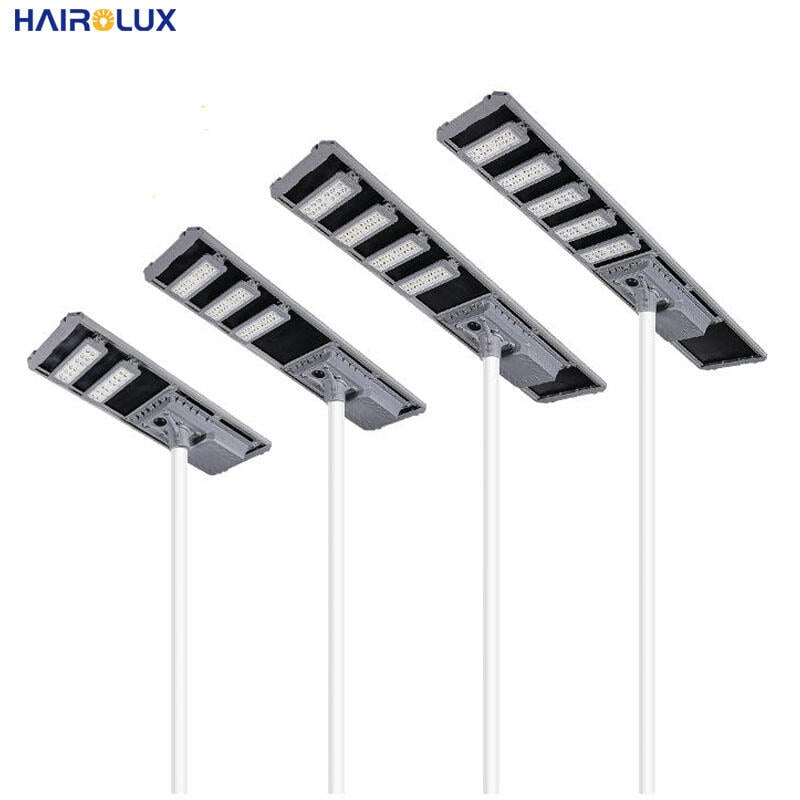
Smart City Street Light Integration: Choosing Connected Fixtures for Urban Infrastructure
Cities worldwide are replacing legacy high-pressure sodium and metal halide luminaires with connected LED street light systems that do more than illuminate roadways. A modern smart street light serves as a node in an urban sensor network — collecting traffic data, monitoring air quality, and adjusting brightness in response to real-time conditions. For municipal procurement teams and infrastructure planners, understanding which street light architectures support these capabilities determines whether today's investment remains relevant a decade from now.
The Architecture of a Connected Street Light
Communication Protocols and Control Layers
A smart street light operates across three functional layers. The luminaire layer includes the LED engine, driver, and any integrated sensors such as passive infrared occupancy detectors or ambient light photocells. The communication layer handles data exchange — typically through NB-IoT, LoRaWAN, or 4G/5G cellular modules embedded in each fixture or in a segment controller managing 50–200 lights. The management layer is the cloud-based or on-premise software platform where operators view dashboards, adjust schedules, and receive fault alerts.
The protocol choice carries long-term implications. NB-IoT leverages existing cellular infrastructure and suits dense urban deployments, while LoRaWAN operates in unlicensed spectrum with lower per-node costs and better building penetration — making it appropriate for suburban and campus-scale installations. The street light housing must accommodate the communication module, either through a standardized Zhaga Book 18 socket on top of the luminaire or an internal compartment with adequate thermal isolation from the LED heat sink.
Adaptive Lighting and Energy Optimization
The most immediate return on smart street light investment comes from adaptive dimming. A fixture that operates at full brightness from dusk to dawn wastes energy during low-traffic hours between midnight and 4 a.m. Adaptive lighting uses either a pre-programmed schedule or real-time sensor inputs to reduce output to 20–40% during quiet periods, cutting annual energy consumption by 40–60% compared to always-on operation.
A municipality in southern Europe deployed 2,400 connected LED street lights across a mixed residential-commercial district, programming corridor dimming profiles that reduced output to 30% between 11 p.m. and 5 a.m. on residential streets while maintaining 70% brightness on arterial roads. The system used radar sensors at key intersections to detect approaching vehicles and momentarily raise brightness to full output, then return to the dimmed state. Annual electricity costs dropped 52% in the first year of operation.
Luminaire Specifications for Smart Integration
LED Engine and Driver Compatibility
The LED engine must support 0–10V or DALI-2 dimming protocols to interface with the smart controller. Drivers conforming to the DALI-2 standard (IEC 62386) enable bidirectional communication — the controller can both command the driver and read back diagnostics including LED temperature, driver runtime hours, and fault conditions. This diagnostic feedback loop allows maintenance crews to replace failing drivers before the light goes dark, shifting from reactive repair to predictive maintenance.
Physical and Environmental Requirements
The luminaire housing must protect internal electronics across the full outdoor temperature range. Aluminum die-cast housings with IP65 or IP66 ingress protection ratings prevent moisture and dust intrusion while providing adequate heat dissipation for the LED array and communication electronics. The housing should include a dedicated compartment for the smart controller, thermally separated from the LED heat sink — electronics operating above 70°C experience accelerated failure rates that undercut the reliability gains smart systems are supposed to deliver.
For selecting street light luminaires suitable for smart city integration, evaluate the communication protocol support, dimming interface compatibility, and whether the housing provides a standardized smart controller mounting interface. Haisiou Lighting, a professional LED outdoor lighting manufacturer, offers street light solutions with aluminum housing rated IP65/IP66 and compatibility with multiple control system architectures.
Frequently Asked Questions
What is a smart street light?
A smart street light is an LED luminaire equipped with sensors and communication hardware that enables remote monitoring, adaptive dimming, and integration with urban management platforms. Unlike conventional lights that simply turn on and off, smart street lights adjust brightness based on time, traffic, or ambient conditions and report their operational status to a central management system.
How much energy can smart street lights save?
Adaptive dimming and scheduling typically reduce energy consumption by 40–60% compared to conventional always-on operation. Additional savings come from the inherent efficiency of LED technology over legacy HPS lamps, and from reduced maintenance costs through predictive fault detection. Haisiou Lighting's LED street lights achieve lumen efficiency exceeding 150 lm/W.
What communication protocol should smart street lights use?
The choice depends on deployment density and existing infrastructure. NB-IoT suits dense urban areas with cellular coverage. LoRaWAN offers lower per-node costs and better range for suburban or campus deployments. Some systems use power line communication through existing street light wiring, eliminating the need for wireless modules entirely.
Can existing street lights be upgraded to smart systems?
Yes, if the luminaire housing supports a Zhaga Book 18 or NEMA ANSI C136.41 standardized socket for attaching smart controllers. Retrofitting requires compatible dimming drivers — legacy magnetic ballasts cannot support smart dimming and must be replaced with LED drivers supporting 0–10V or DALI-2 protocols.
How do smart street lights improve public safety?
Adaptive lighting maintains higher brightness levels when pedestrian or vehicle activity is detected, improving visibility during critical moments. Integrated cameras or acoustic sensors can detect traffic incidents or gunshots and alert emergency responders. The consistent illumination quality of LED technology also improves CCTV footage clarity compared to sodium-vapor lighting.
What maintenance benefits do connected street lights offer?
Connected street lights report driver failures, LED degradation, and communication faults to the management platform automatically. Maintenance crews receive work orders for specific fixtures with known fault conditions, eliminating nighttime inspection patrols. Haisiou Lighting's luminaires support diagnostic data feedback through DALI-2 compatible drivers.