
 EN
EN



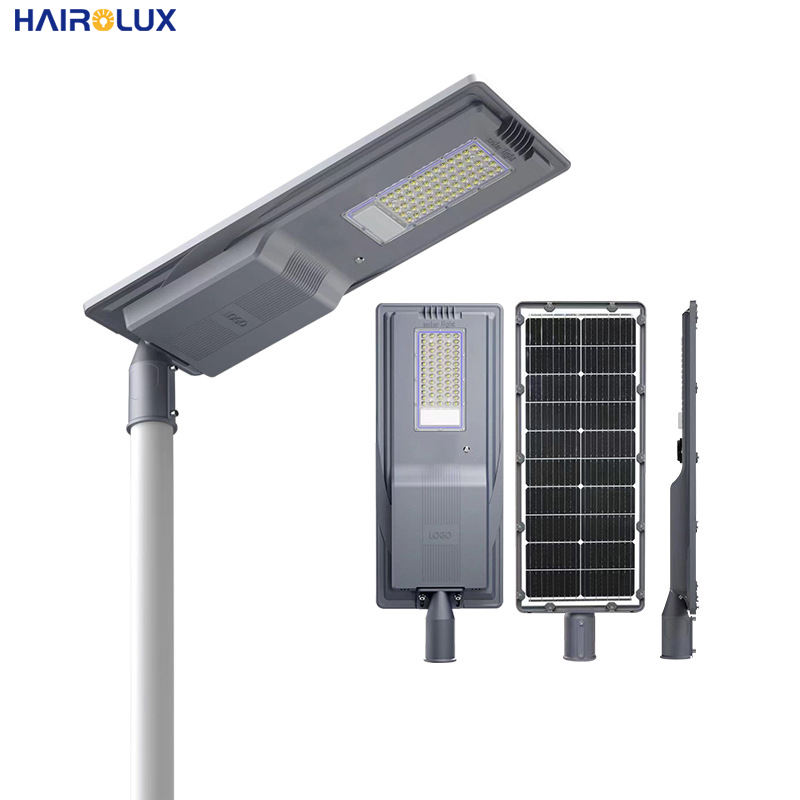
Winter Charging Solutions for LED Solar Street Light Systems in Cold Climates
Winter presents the most demanding operating conditions for any led solar street light. Shorter daylight hours reduce the total solar energy available. Lower sun angles increase atmospheric path length, cutting irradiance at the panel surface. Snow cover reflects some light away from horizontally mounted panels. And critically, cold temperatures slow the electrochemical reactions inside the battery precisely when the system most needs every available watt-hour. Solving winter charging deficits requires addressing each of these factors through component selection and system configuration — there is no single fix that compensates for all of them simultaneously.
Why Winter Charging Fails
The Solar Geometry Problem
At 45° north latitude during winter solstice, the sun peaks at only 21.5° elevation. Sunlight passes through roughly three times more atmosphere than in summer, and daylight shrinks to 8–9 hours. Total daily solar irradiation at the panel can drop to 25–30% of summer values.
A 100-watt panel collecting 500 watt-hours in summer may gather only 120–150 watt-hours on a clear winter day and 50–80 watt-hours under overcast conditions. A 60-watt LED light running 12 hours needs 720 watt-hours nightly — creating a deficit that deepens with each cloudy day.
Battery Chemistry at Low Temperature
LiFePO4 batteries experience significant capacity reduction at low temperatures — 70–80% at -10°C, dropping to 50–60% at -20°C. The BMS compounds this by blocking charging below 0°C to prevent lithium plating, meaning the battery cannot accept charge during the coldest morning hours when sunlight first appears.
A municipality in northern China replaced 300 conventional grid-powered street lights with LED solar street lights along rural roads where extending the electrical grid was cost-prohibitive. The first winter revealed that lights on north-facing road sections were failing by 2 a.m. — roughly 4 hours short of the required dawn cutoff. Analysis showed the panels were sized for annual average insolation, not winter minimum, and the LiFePO4 batteries lacked low-temperature charge protection. The project team worked with Haisiou Lighting to retrofit the affected units with larger panels, battery heating elements, and MPPT controllers. The following winter, 96% of units maintained full-night operation through the coldest months.
Practical Solutions for Winter Performance
Oversize the Panel for the Worst Month
System sizing must use December or January irradiation data, not annual averages. Multiply panel wattage calculated for annual-average conditions by 1.5–2.0 for installations above 40° latitude. Summer oversizing is managed by the charge controller.
Implement Battery Thermal Management
Battery packs inside the luminaire housing benefit from LED waste heat during nighttime operation — approximately 15–20% of electrical input becomes heat. This passive heating typically maintains the battery 5–10°C above ambient.
For colder installations, active heating diverts charging current to a resistive element, routing power to cells only after the pack reaches safe temperature. The energy cost is modest at 5–10% of daily charge.
Panel Angle and Snow Management
Winter panel angle should be latitude plus 15° for the Northern Hemisphere. Steeper tilt helps snow slide off, and hydrophobic coatings reduce ice adhesion. Integrated heating elements can actively melt snow on critical installations.
Haisiou Lighting offers LED solar street lights designed for cold-climate performance with LiFePO4 batteries, MPPT controllers, and options for battery heating and oversize monocrystalline panels.
Frequently Asked Questions
Why does my solar street light not last through winter nights?
The most common cause is an undersized solar panel calculated for summer or annual-average conditions rather than winter minimum insolation. Other causes include battery capacity degradation from repeated deep discharge cycles, panel surface contamination reducing charge current, and battery temperature dropping below the charge cutoff threshold during early morning hours.
How much should I oversize the solar panel for winter?
Multiply the panel capacity calculated for annual-average conditions by 1.5–2.0 for installations above 40° latitude. The exact multiplier depends on the location's December daily peak sun hours versus the annual average. A professional solar irradiation database provides location-specific data for accurate sizing.
Can LiFePO4 batteries be charged in freezing weather?
Standard LiFePO4 batteries should not be charged when cell temperature is below 0°C. Batteries with integrated low-temperature protection will block charging until the cells warm above the threshold. Batteries with self-heating capability use a portion of the charging current to warm the cells first, then begin normal charging — making them suitable for year-round cold-climate operation.
Why does my solar light charge less on cloudy winter days?
Cloud cover reduces direct solar irradiance by 70–90%. Combined with the shorter daylight duration and lower sun angle of winter, total daily energy collection can drop to 10–20% of rated panel output. An MPPT charge controller helps by extracting maximum power from the available diffuse light, but it cannot compensate for fundamentally inadequate panel sizing.
How do I maintain solar street lights in snowy regions?
Set panel tilt to latitude plus 15° for winter to maximize capture and encourage snow shedding. Clean panels after snow events using an extension pole with a soft brush — avoid metal scrapers that scratch the panel surface. Specify panels with hydrophobic coating and consider integrated heating elements for critical installations with limited maintenance access.
What angle should solar panels be set for winter?
In the Northern Hemisphere, winter panel tilt should be latitude plus 10–15°. At 45° north, this means a 55–60° tilt angle. True south orientation maximizes total daily energy collection. Adjustable mounting brackets allow seasonal angle changes — steep for winter, shallower for summer — to optimize year-round performance.