
 EN
EN



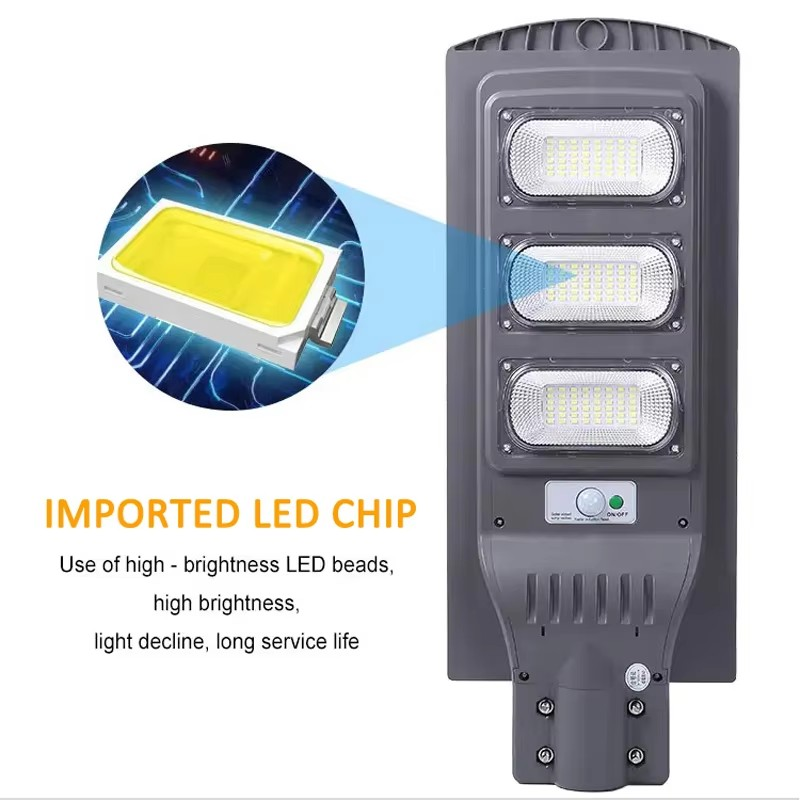
Performance Assessment of Solar Street Light and Site Evaluation
Conducting on-site evaluations of shading, topography, and lighting
A successful installation of solar street lights begins with an on-site evaluation. The first step is to check shading and assess the annual shading on the panels by the buildings and the surrounding trees. (Obstructions can decrease solar panel efficiency by roughly 50%, according to NREL 2023). Assess the landscape for changes to prioritize where lights will be installed. If additional lighting is needed to satisfy the needs of visibility, assess the lighting with a lux meter.
Maintaining Illumination Objectives with the IESNA: The Criteria of Uniformity, Glare, and Vertical Illuminance
A solar street light installation is required to meet the Illuminating Engineering Society of North America (IESNA) RP-8 standards of roadway lighting. Those standards suggest that when assessing the maximum of 10 to 20 lux for average illuminance of roads, target lower and upper range ratio of bright spots be approximately 4:1. The use of cutoff optics implements glare that set the upper range of the IESNA glare standards of 0.3 for vertical illuminace. There are requirements for vertical illuminace of 3 lux to be exceed in pedestrian light which can be obtained through the use of photometric assessments.
Integrating Environmental and Climatic Factors to Enhance the Longevity of Solar Street Lights
To meet the requirements of zoning ordinances for coastal regions, the salt marine grade aluminum poles and the IP68 rated housing will equate to the requirements. In high desert regions, changes to control dust and dry venting will be required. The use of heating and lithium iron phosphate batteries to assist with cold (-30deg) aid to the high desert. In hot tropical installations, there are insulative requirements that aid LED drivers. After 5 years of these adaptations m, the loss of lumen output will be > 90%.
Strategic Design and Solar Panel Placement for Optimizing Coverage of Solar Street Lights
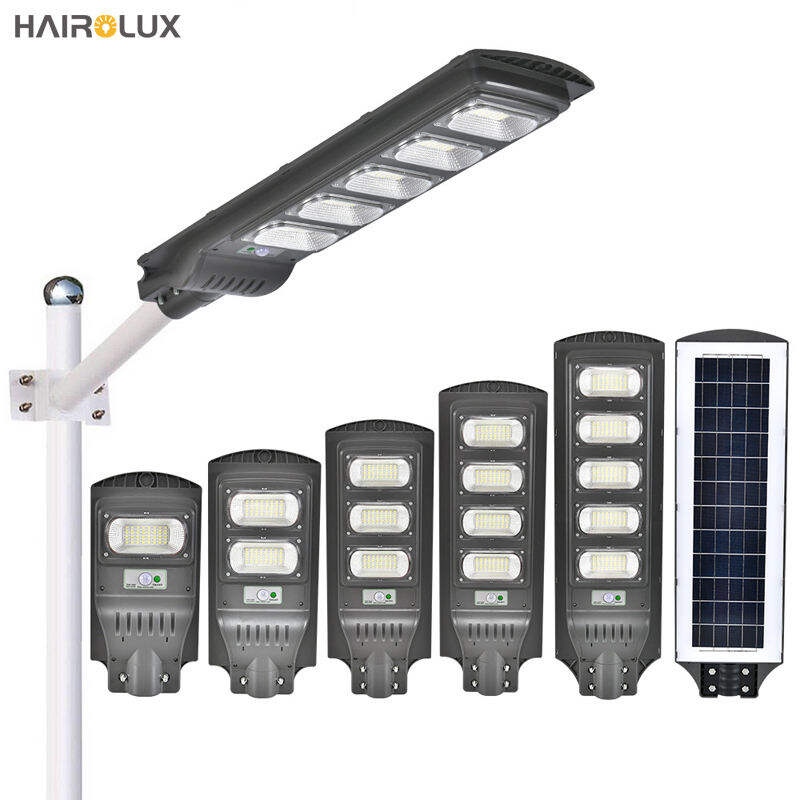
Optimized placement for poles, height, and alignment using road class and light projection
Performance is proportional to design and technology. As classified road poles, photometric modeling design software, determines the 'typical' distance for spacing poles with consideration for spacing at 2.5-4 times the height of poles for arterial roads and at 3-5 times the height of poles for residential roads. For example, to achieve IESNA recommended uniformity, poles having height of 10 meters spacing on the poles of the highway would be 25-40 meters. It is also important when determining orientation to achieve the maximize southern tilt for poles at an angle of 15°-30° improving net for collection by 18% in the temperate. The structural count factors include the road curvature, the road width, and the traffic density, determining the illumination ceiling.
Using integration design for LED optics: beam angle, and light distribution for illumination
Integration of pole design and optics achieves an optimal light distribution and illumination balance. For the 60° x 120° Batwing distribution for thin sidewalks, fixture overlap is optimally 25% for maintaining uniformity at 15 lux. For increased height maximum spacing of poles for the same width road is 8-12 meters. The use of advanced micro-prismatic lenses is to achieve cutoff classification ratings (from the G6 to the B0 range in the EN 13201 standard) which reduces light trespass by 40% in reflector systems. The main design count variables are are inclusive of beam angle which is used for light control, and spill light control through the use of an asymmetric light distribution on the poles.
The approach integration is taking consideration of direction of design to guarantee the use of every watts of design count while providing freedom from glare safety for usage and reducing the overall design count.
Design Recommendations for Solar Street Lighting Application
All-in-One vs. Split-System Solar Street Lighting: System Design, Component Cooling, and Ease of Component Replacement
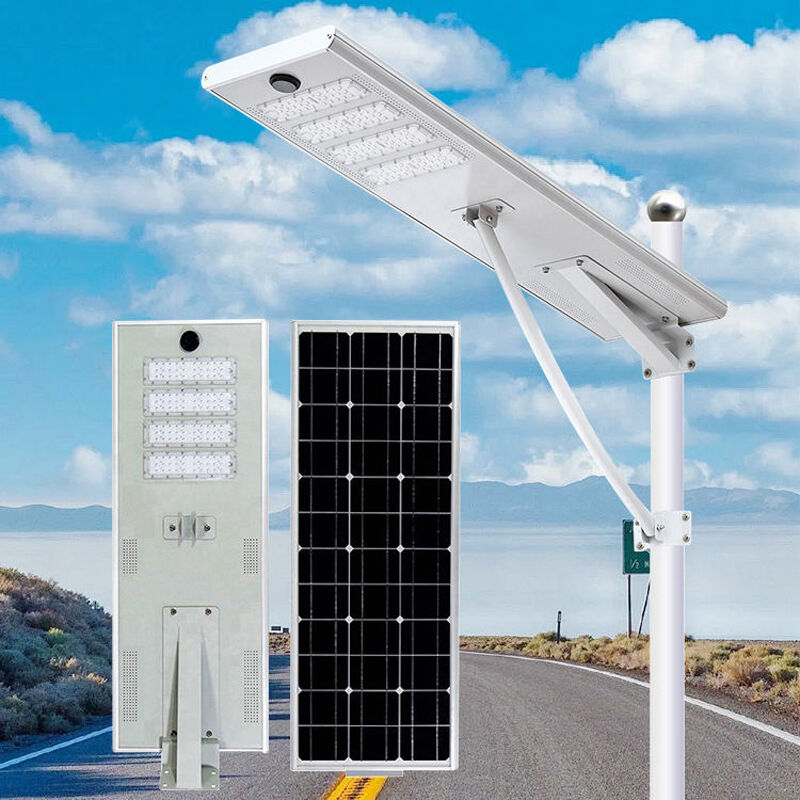
Assessing the integration of all-in-one units vs. split-system units hinges on the combination of cost, function, and design criteria. Integrated all-in-one units combine solar PV, batteries and LEDs for the separate system components. The product design eliminates wiring, and reduces on-site system assembly and construction time by 40%. However, due to lack of design for passive and/or active convection cooling, heat dissipation negatively impacting increased temperature accelerating degradation of lithium-ion batteries. Separate, or split PV battery and LED systems, allow solar PV panels to be mounted to optimize their angle of exposure to the sun. The battery and LED controllers, which allow for adequate ventilation and cooling, are installed subsurface (below ground level). Split systems allow for component change out even if subsurface temperatures of the environment exceed 45 degrees Celsius, in which case, the time and configurations of maintenance, regardless of the constrained environment, would be split for isolated battery replacement in approximately 15 minutes or removal of the entire all-in-one unit. Use all-in-one systems for rapid municipal development, and split systems for extreme climates of isolating validation requirements for maintenance.
Installation Siting for Solar Street Light?
Ingress Protection, Battery Protection, and International Electrotechnical Commission (IEC) and Underwriters Laboratories (UL) Compliance
Ventilation and the combination of thermal and battery protection requirements are direct results of the degradation of lithium iron phosphate (LiFePO4) batteries. The enclosure systems should be designed to an IP67 rating, which protects against water and dust. Best practices for electrical safety per IEC and UL are double-insulating the DC cable and using polarized and waterproof junction boxes with a sealed ground. The absence of short circuits, which are the primary cause of 23% of all system failures in renewable energy safety audits, are addressed through the use of over-current protection devices (OCPD) that trip and interrupt the fault within less than 0.1 second. Grounding systems is a vital aspect of electrical system design, as it is the most effective way to direct the energy of a lightning strike to the ground and dissipate it.
Wind Uplift Resistance Foundation Engineering: Concrete Depth, Reinforcement, and Soil Bearing Determinations
Foundation design determines some wind load resilience. For example, the foundational design of an 8-meter pole with wind of 33 m/sec results in the following:
Factor Requirement Calculation Basis
Concrete depth 1.2-1.8 meters 1/6 pole height + frost depth
Reinforcement 16mm rebar grid at 200mm spacing ASTM A615 Tensile Strength
Soil bearing capacity ≥ 150 kN/m² ASTM D1586 penetration test
To stop wind uplift, mass calculations of the foundation based on the ASCE 7-22 Building Code, say that soil type determines the size of the base. For example, sandy soil requires bases 30% wider than clay. Curing from 7-28 days allows for the concrete to attain 25 mPa compressive strength thereby avoiding tilt or collapse during a Category 3 storm, as a base.
FAQs
What makes a field workout so important for the installation of a solar street light?
Anecdotal fieldwork basically gets the right angles for the solar panels and lights, prepares the various conditions for shading, measures and evaluates the safe and ideal topographical ambient luminous levels.
What are some of the effects of photometric modeling on pole placement?
Photometric modeling bolsters road detailing for spacing pole placement.
What is the outcome of the various climate-based adaptations for the design of solar street lights?
Most adaptations like those of the IP6 sept and dust-proof mechanisms with variable ventilation, coupled, with some thermal management as well, allow lights to function uniformly across diverse environmental conditions.
What are some of the other effects of split-type street light systems?
Split systems are very beneficial for thermal management and general maintenance to easily achieve designs that are built to last in, extreme and other unforeseen environments.
What are the most important safety considerations when installing solar street lights?
The most important measures involve making electrical connections that comply with UL or IEC standards, using IP67+ rated protective housings, and establishing stable foundations that are resistant to wind and other weather conditions.