
 EN
EN



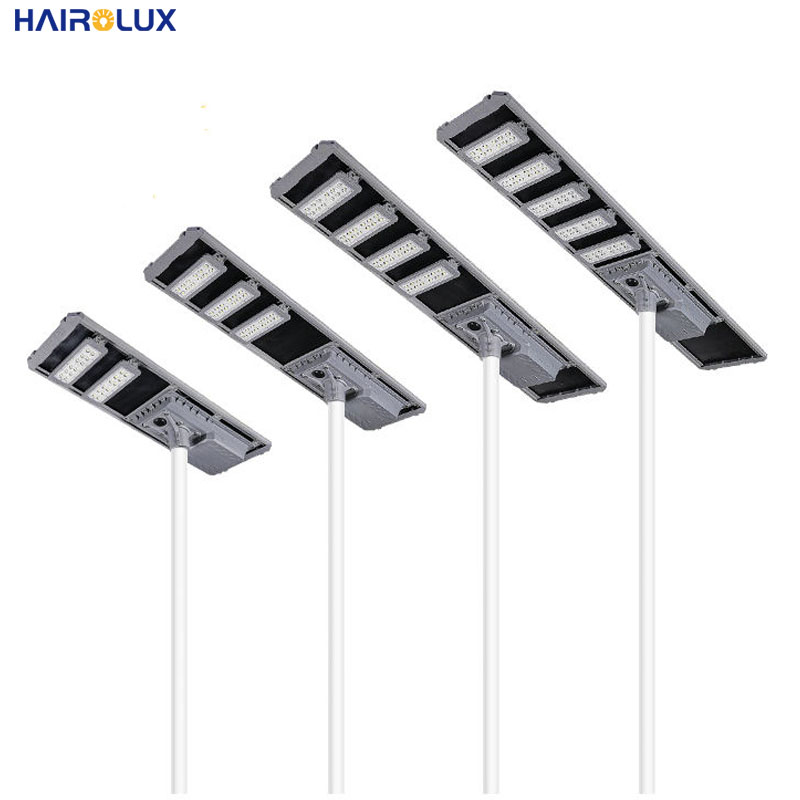
Optimize Solar Panel Position and Tilt for Maximum Solar Power Energy Production
Tilt = Latitude + Seasonal Position of the Sun
The importance of the correct positioning of solar panels for the effective operation of LED solar street lights cannot be overstated. The panels are most often set to an angle that corresponds to longitude of the mounting location of the panels. In other words the panels should be set to an angle so that they are perpendicular to the sun’s position at the zenith during the centre of the summer months. If we consider the location at 35 degrees North Latitude, panels set at 35 degrees to the horizontal will produce good results, but outperforming those results would come from making adjustments to the panel angle based on the season. During the winter months setting the panel(s) to an increased angle of 10 to 15 degrees (closer to vertical) will allow the panels to capture a larger proportion of the solar energy from the low position of the sun. Summer months are the opposite, the panel’s angle should be set to a lower angle to avoid overheating of the panels and to reduce the capture of solar energy to prevent overheating. Lowering the angle by that same amount (10 to 15 degrees) from the vertical position is referred to as summer set. Research indicates that by making these adjustments based on season, energy capture losses (up to 20%) associated with the misalignment of the panel(s) are avoided. The stored energy in battery systems would be reliable all year round, including the summer months and winter months.
Dynamic Tilt Optimization: Case Study in Rajasthan
Dynamic tilt optimization of solar panels was tested as a field study in Rajasthan. Previous field studies have shown that even with seasonal tilt adjustments, fixed panels positioned at a 27 degree angle produce less energy (approximately 4.2 kWh each day) than adjustable panels. In this test, tilt adjustable motors with specified seasonal positions (winter tilt at 42 degrees, summer tilt at 12 degrees) were added. The result was an up to 5.8 kWh increase in energy production. Because of this, households in the region experienced 2.5 hours of additional evening lighting which was previously dependent on a nonrenewable, electricity source. The system payed its cost of $220 (per solar unit) in less than 14 months due to decreased reliance on the main electricity grid. The adjustable panels, as predicted, demonstrated a high return on investment due to the seasonal shifts in relative sun position.
Lead-Acid Charging Inefficiency Below 0°C
Lead acid batteries are still a common feature in low-cost solar lighting systems, but their performance is highly compromised in sub-zero temperatures. As the temperature hits 0 degrees Celsius, these batteries provide only 70 to 80 percent of the energy they are designed to deliver. And even at -10 degrees Celsius, the energy delivered is often less than half of what is expected. This is primarily caused by the viscous nature of the electrolyte, which impairs the flow of ions. As a result, the battery is not fully recharged and the rate at which sulfate crystals form on the battery plates is accelerated. As a result, solar-powered street lights become inoperable during winter. This not only puts the safety of drivers at risk by creating dark streets, but also poses a severe risk to pedestrians.
LiFePO₄ Advantages: –20°C Operation and 95% Coulombic Efficiency
With cold weather being an issue for many systems, LiFePO₄ technology is a breath of fresh air. The olivine crystals allow them to operate safely and efficiently even in below freezing conditions. They even reach 95% efficiency in –20°C conditions. This is a huge factor for cold cloudy winter days where energy input and output matters. The range of conditions that lead-acid batteries can operate in is severely limited, and the batteries quickly reach the low-voltage cut-off, completely discharging the battery, and losing overall capacity as time goes by. In winter days, even if the batteries are deeply discharged, the battery recovery is much better when compared to lead-acid batteries. LiFePO₄ batteries easily recover from the discharge and charge cycle and last at least six times longer than lead-acid batteries. Cities are finding that moving to this battery technology when performing large scale rollouts of solar street lighting creates a massive improvement to the overall reliability and operability of the solar lighting strategy in colder months when compared to other battery chemistries.
Maximize Low-Light Energy Capture by Deploying MPPT Smart Charge Controllers
PWM vs MPPT: 25–35% Charging Gains in Dusk, Dawn, and Cloudy Weather
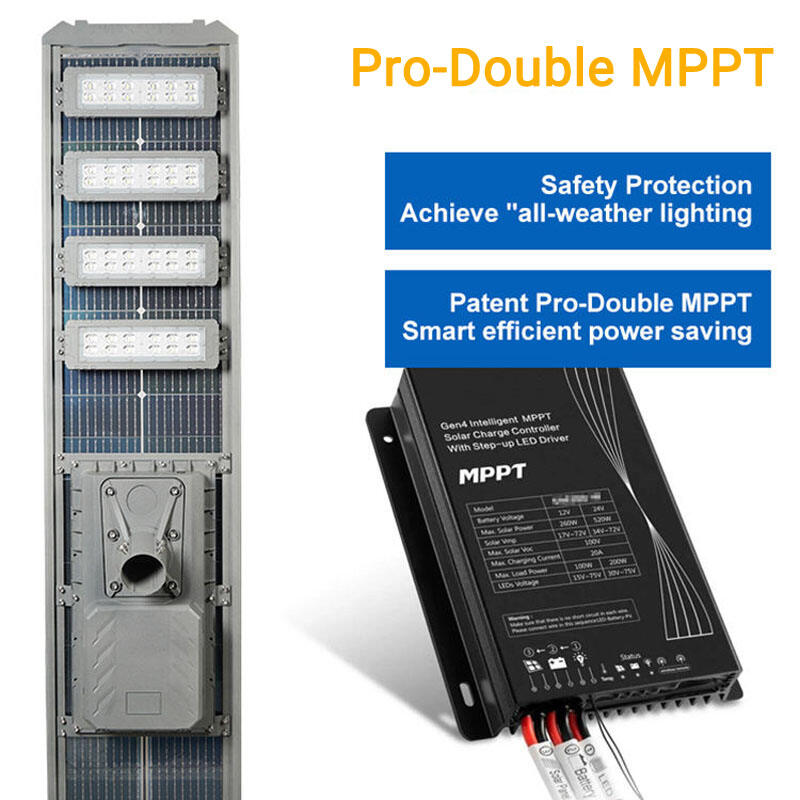
MPPT (Maximum Power Point Tracking) charge controllers outperform basic PWMs (Pulse Wave Modulated) in all aspects, including early morning, late evening, and cloudy situations, when LED solar street lights need a power kick. While PWM controllers limit charge voltage and current, MPPT controllers adjust charge voltage and current to maximize solar power intake, regardless of changing cloud cover. An MPPT charge controller's charge efficiency can be 25-35% better than a PWM in cloudy, partially shaded, or scattered light conditions. Because of this, batteries have extended life and lights stay on longer. In off-grid applications, MPPT systems capture 15-30% more energy in low light conditions than PWM. This explains the preference for MPPTs in off-grid light systems.
Developing Hybrid Charging Techniques for Year-Round Dependability
Solar + Micro-Wind or Grid-Assist: Uptime Proven 99.2% in Real-World Use
By (solar + micro-wind) or (solar + smart grid), dependence on weather risks is eliminated. Micro-wind turbines supply energy on windy nights, cloudy days, or weeks. cloudy days. Smart grid only draws power when the battery is at 20% or lower, minimizing depletion of the main grid. Cities in Northern Europe are using these technologies with proven success. The average on/off cycles are 99.2% with winter days (solar) performing 12 points worse. Compared to (solar + micro wind), town managers are experiencing a decrease in failure repairs of 30%. That is probably why municipalities are installing them on major roads, pedestrian pathways, and bus lanes.
FAQ
What is the best angle to set the solar panels depending on latitude?
The best angle for installation is approximately the same value as the latitude for installation. For example, the tilt can be adjusted vertically for the winter months for more energy drawn.
Why do some prefer to use LiFePO₄ batteries in adverse climates?
In adverse environments, LiFePO₄ batteries work perfectly at -20 degrees Celsius. Additionally, they operate at approximately 95% efficiency. And, on the contrary, lead-acid batteries drop to complete inefficiency and operate at 0 degrees Celsius.
How is solar charging improved with MPPT technology?
MPPT technology can optimize the charging process in solar panels due to the ability to change various characteristics and maintain the charge and discharge process in the maximum possible efficiency. For example, in unfavorable lighting conditions, 25 to 35 percent efficiency is achieved compared to PWM controllers.
What are the advantages of hybrid charging systems?
The integration of solar energy with micro-wind charging systems makes the operation of street lights reliable, as hybrid systems can provide 99.2% uptime in adverse climatic conditions.