
 EN
EN



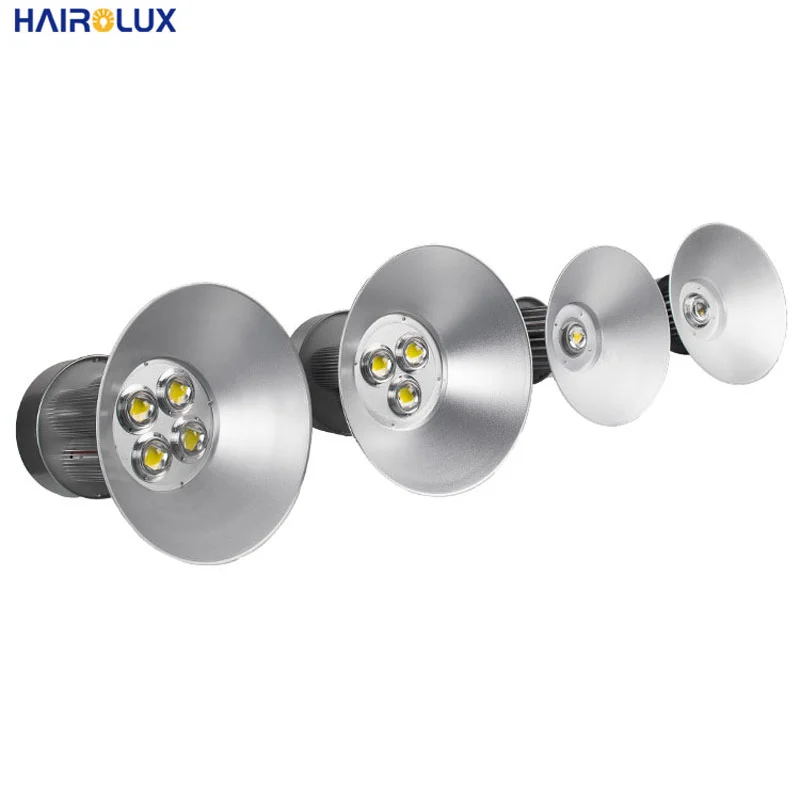
A Fabrication Shop That Tamed the Glare
The Complaints Before the Change
A metal fabrication shop in southern China ran 400 W metal halide high bays on a six-meter ceiling. Operators near the press brake squinted at scribed lines, and the quality bench flagged more miscuts after afternoon shift changes. The led high bay light was not on the table yet because the owner read the upfront price as the whole story, while the monthly meter told a different one that nobody tracked. Halide restrike time also left the bay dark for minutes after a trip, which the crew simply worked around.
What the New Layout Did
The shop swapped to a led high bay light tuned to a narrow beam and a 5000 K tone, then aimed each unit at a work cell instead of the floor. Glare complaints stopped within a week, and the quality bench miscut rate fell because the scribe lines read true. The same led high bay light drew less than half the watts of the halide it replaced, and the plant saw the saving on the next utility bill rather than in a brochure. Instant restrike meant a tripped breaker no longer stalled the line. The crew trained on the new aim points in a single morning, and the led high bay light layout doubled as a safety win because the aisle shadows that hid a trailing cable simply disappeared.
Where High Bay Lighting Goes Wrong
Glare, Uniformity and Ceiling Heat
A bare high bay throws light straight down and into eyes, which is the glare that earns complaints, while the dark lane between fixtures forms a uniformity gap. A led high bay light solves both with a lens that spreads the beam and a layout planned to the cells. Higher ceilings need tighter beams or the light scatters before the bench, and heat gathers at the driver, so a vented head on a warm floor outruns a sealed one. Matching the unit to the real ceiling beats chasing watts alone.
Color and the Inspection Bench
Inspectors read surface flaws by color, and a poor CRI hides a scratch that an 80-plus rated led high bay light would show. The same unit that pleases the aisle can fail the bench if the tone drifts, so the inspection station earns a slightly higher CRI than the storage bay. Picking one rating for every task trades the bench's needs against the aisle's, and the bench loses. IES RP-7 keeps the discomfort and uniformity targets honest across the floor.
What Makes a Good LED High Bay Light
Efficacy, CRI and Beam Angle
Efficacy in lumens per watt tells the energy story, but only with a beam angle matched to the ceiling. A led high bay light at 150 lm/W with a 60-degree lens on a low line pools light under the fixture and starves the next bay. IES LM-79 measures the real output and distribution, so the spec sheet that quotes lm/W without the beam and the test method hides the number that matters on the floor. Read the full photometric report, not the headline. A led high bay light that publishes the LM-79 file by an accredited lab proves the beam and output, while a unit quoting only a catalog number asks the buyer to trust the print. The difference shows up on the floor the first time a bench sits in a dim pocket the drawing said was bright.
LM-80 and Driver Quality
IES LM-80 reports how the diodes hold output, and TM-21 projects the curve to a rated life, but the driver still decides the early failure. A led high bay light with a name-brand driver and a labeled cover lets the maintenance team keep a spare on the shelf. UL 1598 and IEC 60598 cover the housing safety, and a unit that passes both survives the vibration of a press bay that lighter fixtures never meet. The driver label is the difference between a ten-minute swap and a teardown.
Select, Mount and Maintain for the Line
Sizing by Ceiling and Task
Pick the led high bay light by ceiling height first: roughly 100 to 150 lumens per square meter suits an assembly aisle, while a fine inspection bench wants more and a tighter beam. Map the cells, not the square footage, because a line with dense stations needs light where hands work, not where forklifts pass. A layout drawing before purchase prevents the "too dim between fixtures" call that follows a blind buy, and it also sizes the circuit without a mid-run overload. Where OSHA 1910.212 machine guarding shares the space, keep the led high bay light beam off the guard face so operators are not blinded by reflected glare while feeding stock. The two rules, layout and aim, decide whether the line reads as well lit or merely bright.
Mounting, Aim and Upkeep
Hang the led high bay light on a rated hook, aim it at the cell, and lock the angle so a bump from a lifted load does not swing the beam. A six-month wipe of the lens restores output that dust on a welding bay steals fast, and a yearly torque check on the hanger keeps the head from drifting. Suppliers such as Hairolux mark the driver and lens part numbers on the led high bay light, so a bench swap needs no teardown of the whole fixture during a busy run, and NFPA 70 wiring rules keep the disconnect within reach.
Frequently Asked Questions
Question: What ceiling height suits a LED high bay light?
Answer: A led high bay light commonly serves ceilings from four to twelve meters, with a tighter beam as height grows so light reaches the bench instead of pooling below the fixture. Low bays near four meters use wide lenses, while ten-meter lines need narrow beams. Match the unit to the actual ceiling, not just the wattage on the box.
Question: What CRI should a production line need?
Answer: Most aisles read fine at CRI 70 to 80, but an inspection bench that judges surface flaws wants 80 or higher so scratches and color shifts show true. A led high bay light rated too low on CRI hides the very defect the bench exists to catch, so split the spec by task rather than buying one rating for the whole floor.
Question: How does a LED high bay light cut glare?
Answer: Glare drops with a lens that spreads the beam and a layout that spaces fixtures for even coverage, keeping the UGR discomfort index low where operators look up. A bare bulb pointed at the floor still hits eyes, so aim each led high bay light at the work cell. IES RP-7 guides the uniformity and glare targets for the space.
Question: How long does a LED high bay light last?
Answer: Diodes tested under IES LM-80 often hold useful output past fifty thousand hours, but the driver sets the real service life, commonly four to seven years in a warm bay. Keep a matched spare driver for the led high bay light and the floor stays lit through a ten-minute swap instead of a full fixture change.
Question: Can a LED high bay light dim with the line?
Answer: Yes, with a driver built for 0 to 10 V or DALI control, a led high bay light dims for low-traffic shifts and brightens for detail work. Dimming cuts watts when the bay is idle and extends driver life. Confirm the control type at purchase, because a fixed-output unit cannot join a building lighting schedule later.
Question: What ingress rating fits a welding bay?
Answer: A led high bay light in a dusty or splash-prone bay earns at least IP65 under IEC 60529, with IP66 where wash-down occurs. The rating only holds if the lens gasket and conduit gland stay seated, so the six-month service includes the seal, not just a lens wipe. A lower rating in a dirty bay fails the seam first.