
 EN
EN



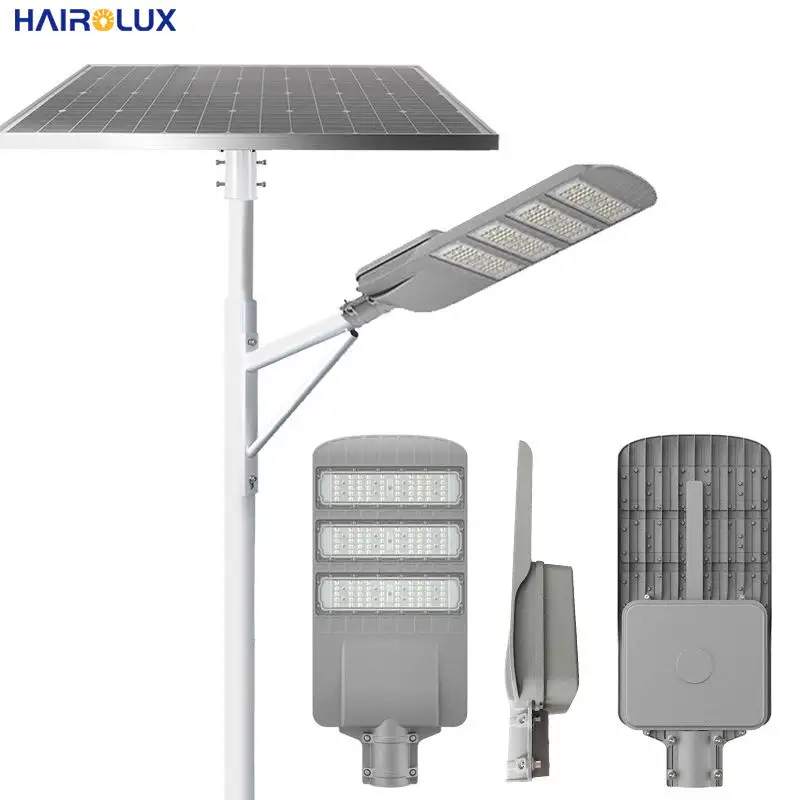
The Rural Lighting Challenge
Rural roadways, village squares, and farm paths share a common problem: grid extension costs are prohibitive. Running a new utility line to a remote lighting point can cost $5,000 to $15,000 per kilometer in trenching, cable, and transformer upgrades. Solar lights outdoor bypass this entirely — each fixture is a self-contained power and storage system requiring only a mounting pole and concrete foundation. No trenching, no utility connection fees, no ongoing electricity bills.
The Economics of Off-Grid Lighting
The total cost comparison favors solar for any installation more than 50 meters from an existing power source over a 10-year lifecycle. Grid-connected lighting incurs ongoing electricity charges regardless of fixture efficiency. Solar lights outdoor incur zero electricity cost after installation — energy is generated on-site during daylight and stored in the battery for nighttime use.
Rural electrification programs across Southeast Asia and Africa have documented 30 to 50 percent total cost savings when solar replaces grid extension for village road lighting. The savings come from eliminated trenching, reduced transformer loading, and zero monthly energy bills. Maintenance cost shifts favorably too — grid lights require utility crew dispatch for faults, while solar lights outdoor can be serviced by locally trained technicians.
Energy Independence and Reliability
Grid power in rural areas is often unreliable. Voltage fluctuations from long distribution lines can reduce LED driver lifespan significantly. Power outages during monsoon seasons leave grid-connected roads unlit for days. Solar lights outdoor operate independently of grid conditions, activating automatically at dusk regardless of utility network state. Modern fixtures incorporate dusk-to-dawn photocell control that eliminates timer programming — important for installations where maintenance visits happen only every three to six months.
Technology Making Solar Viable for Rural Use
Panel Efficiency and Battery Storage
Monocrystalline photovoltaic panels have improved from approximately 15 percent to over 22 percent efficiency in the past decade. For a rural road light requiring 40 watts for 10 hours nightly, this means the panel area can shrink by roughly 30 percent — reducing wind loading on poles and improving aesthetics.
Lithium iron phosphate batteries have replaced lead-acid in quality solar lights outdoor. LiFePO4 offers 3,000 to 5,000 charge cycles versus 500 to 800 for lead-acid — 8 to 12 years of service versus 2 to 3 years. The 30 to 40 percent higher upfront cost is recovered through reduced battery replacement labor, which for a rural installation may require a 100-kilometer round trip.
LED Output and Optics
Contemporary solar lights outdoor use mid-power LEDs achieving 150 to 180 lumens per watt, compared to 80 to 100 lumens per watt five years ago. A 40-watt fixture delivers 6,000 to 7,200 lumens — sufficient for rural road lighting meeting CIE S 004 standards at 6-meter mounting height. Precision lens arrays direct light in Type III distribution parallel to the road, reducing light trespass into adjacent fields and homes.
A Practical Case: Village Road Lighting in Rural Thailand
A municipality in northeastern Thailand sought to install road lighting along 8 kilometers of unpaved village connector roads. The initial plan specified utility-connected LED fixtures with underground cabling costing 3.2 million Thai baht — 60 percent over budget.
The municipality redesigned around solar lights outdoor from Hairolux, specifying 40-watt fixtures with LiFePO4 batteries and monocrystalline panels on 6-meter poles at 20-meter spacing. Total cost was 1.8 million baht — 44 percent below the grid alternative. Installation was completed in 14 days by two local crews, compared to the 6-week estimate for trenching and utility coordination.
Annual operating costs are approximately 48,000 baht for panel cleaning and battery checks, compared to an estimated 240,000 baht annual electricity cost for the grid-connected alternative. After three years, 97 percent of fixtures remain functional. The municipality has allocated budget for a second phase covering 5 additional kilometers.
Installation and Maintenance Considerations
Pole Foundation and Solar Exposure
Solar fixture foundations must account for wind load from the panel — adding 0.3 to 0.5 square meters of sail area compared to a fixture-only pole — and the requirement for unobstructed southern exposure in the northern hemisphere. Shading during peak sunlight hours reduces energy harvest by 40 to 60 percent.
Battery Replacement Planning
The battery has the shortest service life of any solar lighting component. Budget for replacement at 6 to 8 years for LiFePO4 under tropical conditions exceeding 35°C. Every 10°C above 25°C halves calendar life. Selecting solar lights outdoor with field-replaceable battery modules rather than sealed integrated units significantly reduces replacement labor.
Frequently Asked Questions
How many hours do solar lights outdoor operate on a full charge?
Quality fixtures provide 10 to 12 hours on a full charge. Winter months with shorter daylight may use motion-sensing dimming to conserve energy rather than cutting out entirely.
What is the lifespan of solar lights outdoor in rural installations?
LED components last 50,000 to 100,000 hours. LiFePO4 batteries provide 8 to 12 years. Photovoltaic panels retain 80 percent output after 25 years. Hairolux manufactures solar lights outdoor with field-replaceable battery modules for extended service life.
Do solar lights outdoor work during rainy or cloudy seasons?
Systems are sized for the worst solar month, not the annual average. A properly designed fixture in a tropical monsoon climate operates for the required duration even during consecutive overcast days using a battery reserve sized for two to three days of autonomy.
Are solar lights outdoor bright enough for rural road safety?
Forty-watt fixtures delivering 6,000 lumens meet CIE S 004 rural road lighting standards at standard mounting heights and spacing. Precision optics eliminate dark spots that compromise safety.
What maintenance do solar lights outdoor require?
Panel cleaning every six months is the primary task — dust reduces energy harvest by 15 to 30 percent. Annual battery health checks and lens cleaning are recommended. Most faults trace to battery or charge controller issues.
How does cold weather affect solar lights outdoor battery performance?
LiFePO4 batteries lose approximately 20 percent capacity at -10°C. Cold-climate installations require increased battery capacity to compensate. Charging efficiency decreases below 0°C, but nighttime discharge remains adequate for most rural applications.