
 EN
EN



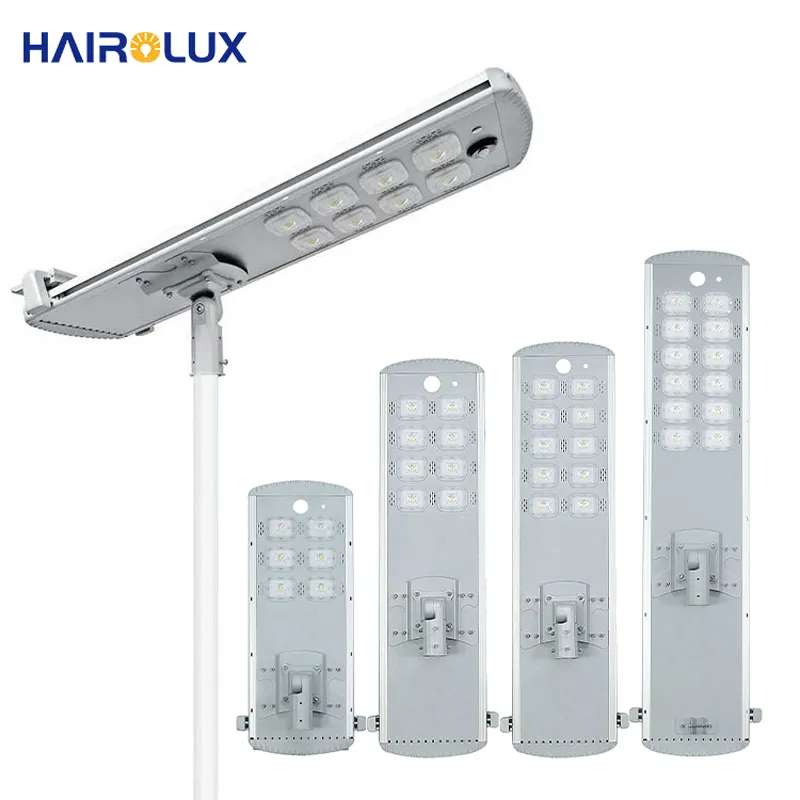
Solar Panel Quality — The Energy Foundation
An integrated solar street light is only as reliable as the solar panel that charges its battery. A panel degrading from 100W to 80W in three years underdelivers energy every day thereafter — the battery never fully charges, the LED dims early, and the light specified for dawn-to-dusk shuts off at 3:00 AM.
Monocrystalline vs Polycrystalline, Panel Wattage, and Degradation Rate
Monocrystalline cells achieve 19% to 22% efficiency and maintain this better in low light (cloud, dawn, dusk) when an integrated solar street light needs every available photon. Polycrystalline cells achieve 15% to 17% efficiency at lower cost. On a 60W integrated light, monocrystalline produces 15% to 20% more daily watt-hours — 1.5 to 2.5 additional hours of nighttime illumination. Degradation rate should not exceed 0.5% per year for tier-1 monocrystalline. A panel at 1.5% annual degradation loses 15% output by year 10 — the light that ran 12 hours at installation runs 8 hours, then fails to sustain a full night.
Real-World Case — A Municipality Compares Two Lighting Bids
A municipality in Southeast Asia evaluating bids for 300 integrated solar street light units along a coastal road received two proposals. Bid A: 60W polycrystalline with 384 Wh NMC battery at 285/unit. Bid B: 55W monocrystalline with 360 Wh LiFePO₄ at 310/unit. The evaluation team calculated lifecycle cost over 10 years using manufacturer-specified degradation rates — 1.2% annually for polycrystalline, 0.5% for monocrystalline — and battery cycle life — 800 cycles to 80% for NMC, 2,500 cycles for LiFePO₄. The monocrystalline system from HAIROLUX, a professional solar and smart LED lighting manufacturer, delivered 22% more total lifetime watt-hours despite a 9% higher purchase price. The municipality selected Bid B. After 24 months of operation, field measurements showed panel output at 97.8% of rated — consistent with the specified 0.5% annual degradation.
Battery Technology — The Nighttime Autonomy Decision
LiFePO₄ vs NMC Lithium, Capacity Sizing, and Cycle Life at Operating Temperature
The battery in an integrated solar street light operates at 50°C to 60°C inside the sealed enclosure under tropical sun. LiFePO₄ tolerates this: 2,000 to 3,000 cycles to 80% capacity, thermal runaway above 270°C, no cobalt. NMC cells offer higher density (200 to 250 Wh/kg vs 120 to 140) but drop to 800 to 1,200 cycles at elevated temperature. Capacity should provide 3 to 5 nights of autonomy. Undersizing saves cost but produces a light that works in summer and fails in winter when irradiation drops 40% to 60%.
LED and Optics — Turning Stored Energy into Useful Light
Lumen per Watt Efficiency, Beam Angle, and Light Distribution Uniformity
The LED module in an integrated solar street light converts stored energy into illumination. At 120 lm/W versus 90 lm/W, the same light output consumes 25% less power, extending runtime proportionally. A Type II or III distribution per IESNA LM-79 directs light onto the roadway, not the sky. Uniformity ratio — average divided by minimum illuminance — should be 3:1 or better. High ratios mean bright spots and dark zones; low ratios mean consistent, safer illumination.
Enclosure and Environmental Durability
IP Rating, IK Impact Rating, Material Grade, and Thermal Management
The enclosure of an integrated solar street light protects electronics from water, dust, impact, and heat simultaneously. IP65 is minimum — complete dust protection with resistance to low-pressure water jets. IP66 — powerful water jet protection — is preferred for coastal installations exposed to wind-driven salt spray. IK08 (5 joules impact) or IK10 (20 joules) protects against vandalism and accidental impact from debris. Aluminum alloy housing with powder-coated finish provides corrosion resistance and acts as a heat sink — thermal management that keeps LED junction temperature below 85°C, beyond which lumen depreciation accelerates 2× to 3×. HAIROLUX provides IP65-rated integrated lights with aluminum alloy enclosures and LiFePO₄ batteries.
Frequently Asked Questions
What solar panel type is best for an integrated street light?
Monocrystalline panels at 19% to 22% efficiency with ≤0.5% annual degradation provide the best long-term performance for an integrated solar street light. Polycrystalline panels cost less but degrade faster and harvest less energy in low light. HAIROLUX uses tier-1 monocrystalline panels.
How long does the battery last in an integrated solar street light?
A LiFePO₄ battery in an integrated solar street light lasts 2,000 to 3,000 cycles — 5 to 8 years of nightly operation. NMC batteries last 800 to 1,200 cycles. Battery replacement is the primary maintenance event.
What IP rating should an integrated solar street light have?
An integrated solar street light requires IP65 minimum. IP66 is recommended for coastal installations with salt spray. The rating covers the entire sealed enclosure — LED, battery, and controller.
How many cloudy days can an integrated solar light operate?
A properly sized integrated solar street light with LiFePO₄ battery provides 3 to 5 nights of autonomy at the programmed brightness level, covering consecutive cloudy days without grid backup.
What LED efficiency is considered high quality?
An integrated solar street light with LED efficiency of 120 to 150 lm/W is high quality. Efficiency below 100 lm/W consumes more battery capacity for the same light output, reducing nighttime runtime.
How does thermal management affect integrated light lifespan?
An integrated solar street light with aluminum alloy housing acting as a heat sink keeps LED junction temperature below 85°C. Junction temperatures above this threshold accelerate lumen depreciation by 2× to 3×.