
 EN
EN



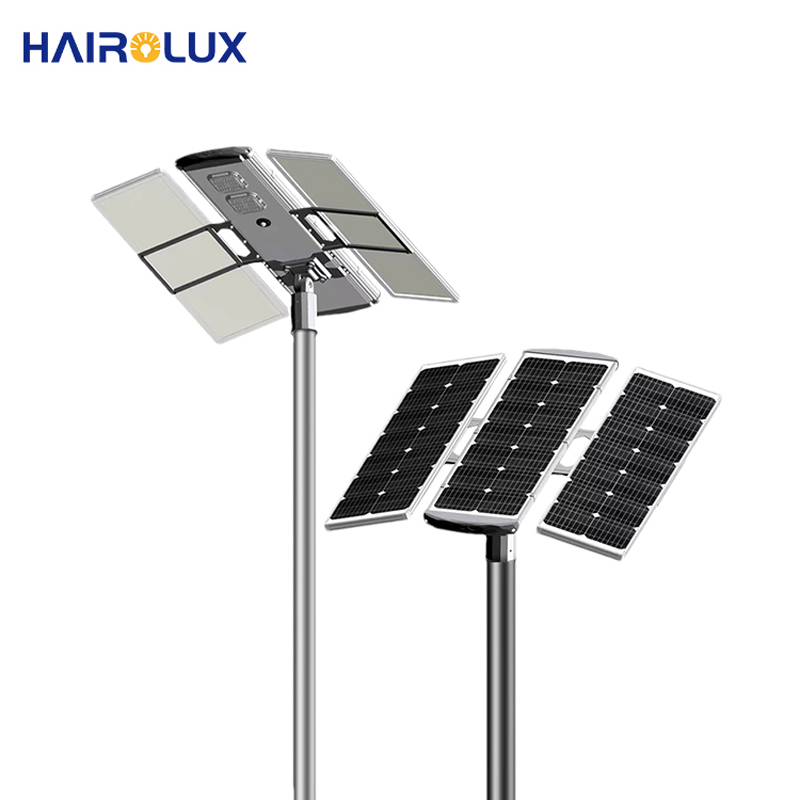
Why Wattage Alone Doesn’t Determine Solar Flood Light Performance for Parking Lots
The Misconception: Equating Higher Watts with Better Illumination
Many facility managers assume that a higher wattage solar flood light automatically delivers brighter, more effective parking lot coverage. In reality, wattage only measures how much electrical power the fixture consumes—not how much light it produces. LED technology has decoupled power draw from output: a well-engineered 30W solar flood light can generate over 4,500 lumens, while an older or poorly designed 50W model may deliver significantly fewer lumens per watt. This efficiency gap makes wattage a misleading shortcut. Buyers who ignore lumens and beam design risk paying for unused capacity—energy drawn but never converted into usable illumination. The real value lies in how effectively the fixture converts stored solar energy into visible light, not in the label on the housing.
Lumens, Lux, and Beam Angle—The Real Metrics for Effective Parking Lot Coverage
To evaluate a solar flood light for parking lots, focus on three interconnected metrics. Lumens measure total light output; a fixture emitting 6,000 lumens will spread more light than one delivering 3,000 lumens—assuming identical beam angles. Lux measures light intensity on the surface, which directly impacts safety and compliance—e.g., meeting minimum ground-level illumination requirements for pedestrian detection and surveillance. Beam angle determines spatial distribution: wide angles (120° or more) support even coverage across lanes and stalls, while narrow beams create glare, hotspots, and dangerous shadows. The most effective solar flood lights balance all three—delivering sufficient lumens for the lot size, achieving required lux levels at grade, and using an optimized beam pattern to eliminate dark corners. Relying solely on wattage overlooks these performance drivers entirely.
Optimal Solar Flood Light Wattage by Parking Lot Scale and Function
Selecting the appropriate solar flood light wattage requires matching system output to parking lot size and operational demands. Wattage alone doesn’t dictate effectiveness; instead, it must align with lumen output, coverage area, and security requirements to ensure adequate illumination without energy waste.
Small Lots (<50 Vehicles): 30W–60W Solar Flood Lights with ≥4,500 Lumens
For compact lots, 30W–60W solar flood lights delivering ≥4,500 lumens provide sufficient coverage. These systems efficiently illuminate pedestrian walkways and tight vehicle areas, typically featuring integrated batteries supporting 1–2 nights of backup operation. Industry standards confirm this range balances visibility needs with minimal energy consumption—ideal for retail centers, small offices, or residential complexes.
Medium Commercial Lots (50–200 Vehicles): 60W–100W Solar Flood Lights Delivering 6,000–12,000 Lumens
Lots accommodating 50–200 vehicles need 60W–100W systems producing 6,000–12,000 lumens. This wattage range ensures uniform light distribution across driving lanes and perimeter zones. Enhanced luminosity supports critical functions like license plate recognition and security monitoring. Systems in this category commonly use 20Ah–30Ah lithium batteries to sustain consistent dusk-to-dawn operation year-round, including during shorter winter days and extended cloudy periods.
Large or High-Security Lots (>200 Vehicles): 100W+ Systems with Smart Controls and Extended Battery Backup
High-traffic or security-sensitive lots exceeding 200 vehicles require 100W+ solar flood lights. These high-output systems deliver >12,000 lumens—often via multi-fixture configurations—to cover expansive areas without compromising uniformity. Key features include motion-activated dimming, remote monitoring capabilities, and 48Ah+ batteries for extended autonomy. Such configurations reduce dark spots while meeting ANSI/IES RP-20-14 lighting standards for vehicular pathways.
Essential Supporting Features for Reliable Solar Flood Light Deployment
IP65+ Ingress Protection and Thermal Management for All-Weather Durability
A solar flood light installed in an outdoor parking lot must endure rain, dust, snow, and extreme temperature swings. An IP65 rating or higher ensures the enclosure is dust-tight and protected against low-pressure water jets—preventing moisture ingress that could damage internal electronics or create electrical hazards. Equally important is thermal management: high-power LEDs generate heat that, if not dissipated, accelerates lumen depreciation and shortens lifespan. Quality fixtures use aluminum alloy heatsinks to draw heat away from LED chips. A robust solar flood light with proper thermal design operates reliably across ambient temperatures from −20°C to 50°C—maintaining consistent light output and longevity year after year.
Battery Capacity, Panel Efficiency, and Smart Dimming to Maximize Runtime and ROI
Runtime dependability hinges on three interconnected components: the solar panel, battery, and controller. Monocrystalline photovoltaic panels with 18–22% efficiency convert more sunlight into electricity, enabling smaller panels to fully charge lithium-ion or LiFePO₄ batteries—even on overcast days. Battery capacity, measured in watt-hours, must be sized to store enough energy for at least two consecutive cloudy nights. Smart dimming further extends autonomy: motion-sensor-equipped fixtures can maintain 30% brightness during idle hours and instantly ramp to full output when movement is detected. This strategy reduces daily energy consumption by up to 60%, improving return on investment while satisfying safety and surveillance requirements.
Compliance, Safety, and Long-Term Value: Selecting the Right Solar Flood Light
Selecting the appropriate solar flood light for parking lots requires balancing compliance standards, safety protocols, and lifetime value. Municipal codes often mandate specific illumination levels—typically 5–10 lux for general areas and 20+ lux near entrances—to ensure pedestrian visibility and accident prevention. Safety extends beyond brightness: IP65+ rated enclosures prevent water and dust ingress, while passive thermal management maintains stable LED operation across extreme temperatures (−30°C to 50°C).
Long-term ROI emerges through component durability: quality lithium batteries last 3–5 years before replacement, while monocrystalline panels retain >80% efficiency after 20 years. Corrosion-resistant aluminum housings withstand salted winter roads, reducing maintenance costs by 40% compared to conventional steel fixtures. Smart controls—such as scheduled dimming during low-traffic hours—can extend nightly runtime by 30% while preserving battery health. Collectively, these features deliver up to 50% lower total ownership costs versus wired alternatives over a 10-year period.
FAQ
What is the difference between lumens and watts?
Lumens measure the total light output, while watts measure how much electrical power the light consumes. Lumens are a more accurate indicator of brightness.
How do I determine the right beam angle for my parking lot?
A wide beam angle (120° or more) works best for even coverage in larger areas, while narrow angles may create glare or shadows in specific regions.
Why is IP65+ protection important for solar floodlights?
IP65+ ensures the fixture is resistant to dust and water, making it durable in outdoor conditions like rain, snow, and extreme temperatures.
What is the significance of smart dimming?
Smart dimming extends battery life by reducing brightness during low-traffic hours and increasing it when motion is detected, improving energy efficiency.
How long do the components of solar flood lights typically last?
High-quality lithium batteries last 3–5 years, while monocrystalline panels can maintain over 80% efficiency for up to 20 years.
Table of Contents
- Why Wattage Alone Doesn’t Determine Solar Flood Light Performance for Parking Lots
- Optimal Solar Flood Light Wattage by Parking Lot Scale and Function
- Essential Supporting Features for Reliable Solar Flood Light Deployment
- Compliance, Safety, and Long-Term Value: Selecting the Right Solar Flood Light
- FAQ