
 EN
EN



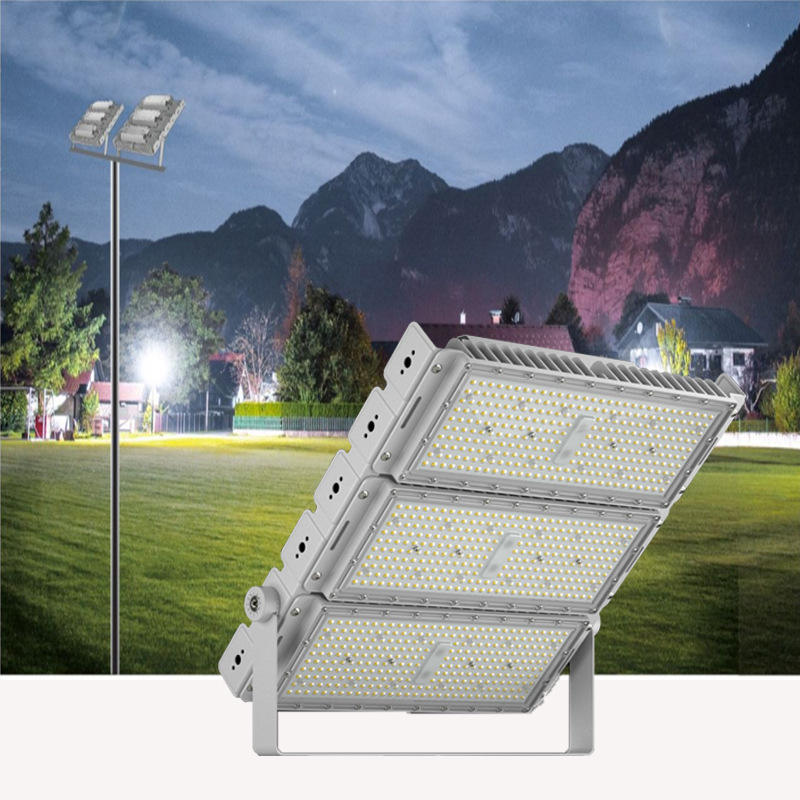
Precision Beam Control: The Role of Asymmetric and TIR Optics in Glare-Free LED Stadium Lighting
NEMA Beam Pattern Classifications and Asymmetric Optics
Asymmetric lense design helps to direct about 70 to 80 percent of the light output straight down the center line of the playing field. This helps significantly aid in the progression of the actual game wihile preventing light spill outside of the field. This light focusing technology is what NEMA (National Electrical Manufacturers Association) classifies. Most commonly seen class Type III to Type V in sports lighting applications because these types of beam patterns focus light only in the areas intended to be illuminated. When lighting designers implement these types of systems over creating a full flood light effect, there is a significant improvement in lighting uniformity and vertical plane illumination. Studies show a greater than 0.8 uniformity rate and players experience a 40% reduction in glare. From the previously described locations, athletes can see clearly to make difficult maneuvers and plays without losing sight of the action in close proximity to him.
TIR Lenses for Tight and Uniform Beam Angles
TIR technology involves the use of polycarbonate prisms, resulting in a light bounce effect. This aids in the achievement of low beam angle spreads of less than 30 degrees, and minimal light spreads, resulting in greater than 15% light distribution. TIR lenses deliver approximately 95% lumen efficiency as compared to aluminum reflective lenses. Consequently, TIR lenses keep glare rate under 22 and help reduce the presence of bright blinding hotspots. Lighting uniformity in the center areas of fields is often tested and the variation is usually less than 10%. This uniformity is required by sport venues for the purpose of broadcasting and visibility. TIR technology reduces upward light output through the lighting fixture and consequently reduces upward light pollution by approximately 2/3 as compared to conventional floodlights.
Grilles, Visors, and Diffusers: Fixture-Level Glare Suppression
Integrated Anti-Glare Grilles and Micro-Prismatic Diffusion Plates
Micro-prismatic diffusion plates have structures built for the purpose of enhancing the diffusion of light across the surface to eliminate the presence of hot spots and source glare from point sources. Their effectiveness is further enhanced by the incorporation of anti-glare grilles, which are simply horizontal or vertical barriers to shield direct views of the LED sources. This combination can achieve a reduction of vertical illuminance (a measure of the potential glare reduction provided by the lighting) of approximately 25 to 40%. Typical materials, often high transmission polycarbonate, are able to keep light output degradation (transmission loss) to less than 10% and to create UGR (Unified Glare Rating) < 22. Most contemporary light fixtures have both of these functions built into the optical chambers. This combination is able to control glare while maintaining the light distribution, and meeting the performance levels, desired by the lighting designers.
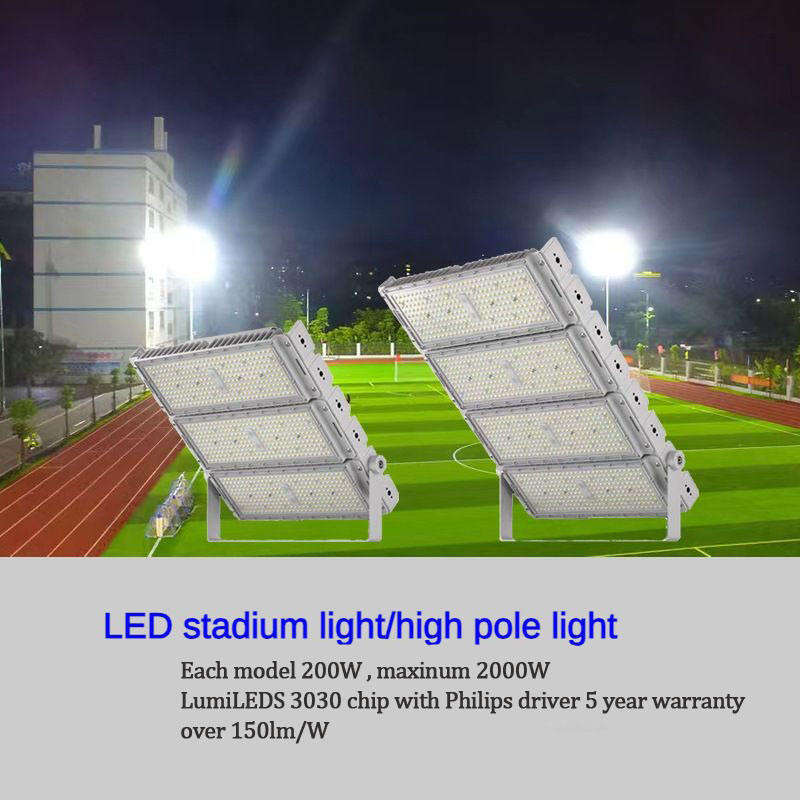
Optimized Visor Geometry: Shielding Angles (15°–25°) for IESNA RP-22 and UGR ≤ 22 Compliance
Visors featuring shielded angles of 15 to 25 degrees are able to shield high angled light sources that can annoy and distract spectators and light spill beyond the field area. The visor geometry is designed to achieve the IESNA RP-22 requirements for stadium lighting and light most appropriately to the active area of the field. With added micro prism diffusion, the UGR performance is consistently below 22, ideal for lighting design for television broadcasts and major sporting events. Field tests conducted in stadiums have demonstrated that glare problems are reduced by 60 percent with angled visors compared to standard visors, proving that effective physical shielding is still one of the most fundamental and effective ways to control glare in sporting venues.
Confirming Glare Effects: From Photometric Labs to Actual Deployment of LED Stadium Lights
UGR Measurement Large Scale Sports Venues Best Practices and Limitations
In direct glare measurement, Unified Glare Rating (UGR) is hence widely accepted but its application in stadia requires extra care and attention. As per IESNA RP-22, there is a stipulation that measurement takers should be about 1.75 m tall, approximately the height of an athlete's eyes during play. There are 15 degree measurement intervals between each measurement taken from multiple viewing positions. In arenas, large open spaces, this quickly becomes extremely complicated. In example, FIFA accredited soccer fields have a requirement of 96 measurement positions across the field and audience. Most of the lab measurements are done under ideal conditions; in a dust free environment, perfectly installed fixtures, nothing is in motion. The real world is different. Measurement positions in tight crowds, wind will affect light positioning, visibility affected by humidity. Poor installation will cause glare to be more pronounced. In the end, computer modeling is not the answer to the real world evidence. Proper equipment is required to measure to see if UGR is under 22 from every possible fan viewing angle.
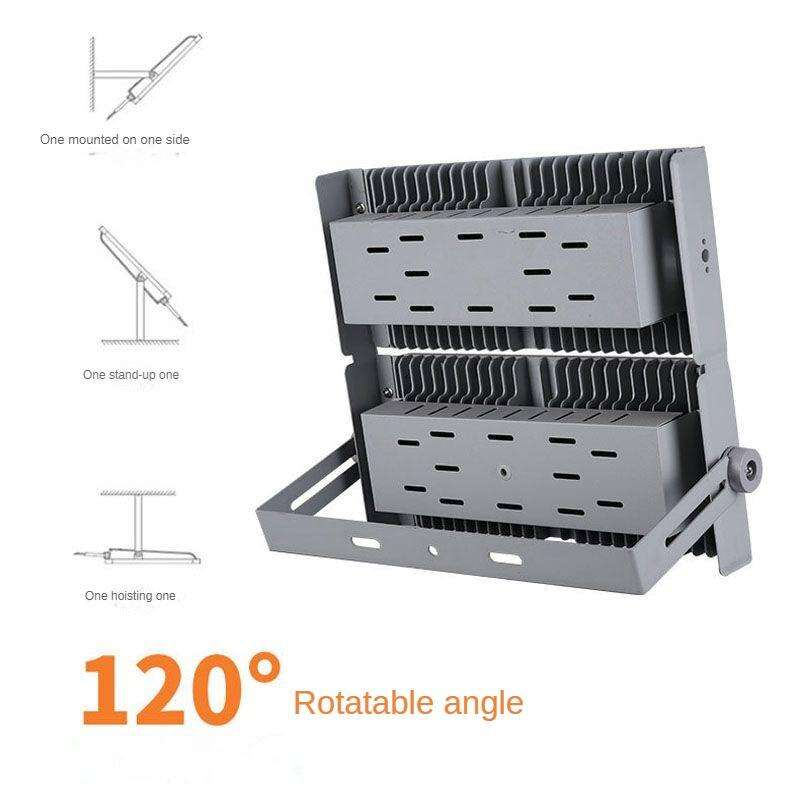
Beyond UGR: Spectral and Temporal Factors That Impact Visual Comfort in LED Stadium Light
The UGR only considers one aspect of how discomforted people can be with lighting. For first class sports venues, there is a whole host. Over a long period of time, the spectrum and stability of lighting colors can create a significant difference. Light with a Correlated Color Temperature of 4000K to 5000K keeps athletes alert and is ideal for late night games to avoid disrupting their body clocks. Don't forget the Color Rendering index. A CRI over 90 will help the audience track players and the ball, see the grass field and their colors, and will improve the quality of the broadcast. Stability is a key component of social comfort. Flickering lights can be a problem, and something like a high frequency drive can help reduce the issue. If the pulse width modulation is over 3000Hz, it will eliminate the strobe effect during panning shots. A 2023 study in the Journal of Photonics reported a 23% decrease in fan reports of headaches and eye strain after adhering to lighting specifications. Fans reported a 40% reduction in visual fatigue after the game. This is a 40% reduction in fatigue as compared to previous systems using older metal halide lights or basic LED lights. Visual fatigue during the game was 40% less using the new lighting systems than using the metal halide or basic LED systems.
FAQ
What advantages do asymmetric lenses have?
Asymmetric lenses create a more uniform and illuminated playing field by focusing light along the center of the field and reducing light spill.
What advantages do TIR lenses have to older lens technology?
TIR lenses reduce glare and unwanted sky glow due to their design of using polycarbonate prisms to create tighter, more efficient beam angles as opposed to older lens technologies that used reflective aluminum prisms.
What advantages do visors have?
Visors that are purpose designed are compliant with IESNA RP-22 guidelines and are intended to help keep gameplay and audience sight lines properly lit by reducing high-angle glare and light spill beyond a playing field.