
 EN
EN



Off-Grid Autonomy: Keeping Functionality and Reliability in Low-Light Remote Locations
How Autonomy Days and Battery Capacity Help Prevent Night Time Operational Failures
In areas where sunlight is sparse, solar street lights must be equipped with sufficient battery power to sustain operation during prolonged periods without sunlight. Critical to this is a concept known as autonomy days, or the number of consecutive nights the solar light can run without receiving solar charging. Most systems are designed to provide at least 3 autonomy days of backup power, resulting in the light remaining on for 72 hours straight without receiving solar charging. To accommodate for even the most inclement weather, some systems are designed to provide 5 autonomy days of backup power. Street lights equipped with 1 or 2 autonomy days of backup battery systems tend to run out of battery far more frequently during the rainy season. This has been evidenced in last year’s Energy Resilience Report and the result is due to the need for deep cycle batteries to absorb a sufficient amount of charge during daylight hours. It is imperative to find a battery of the appropriate size. This is accomplished through analysis of past sunlight data to determine the expected light consumption per night. This allows for operation even with prolonged periods of inclement weather.
Why 30% PV Oversizing + 7 Day Autonomy Sets the Standard for Remote Locations Such as the Himalayas.
Extreme climates such as the Himalayas, Arctic tundras, high desert plateaus, and areas with tropical cyclones must meet a more stringent design standard of 7 day autonomy with 30% over-sizing of the photovoltaic (PV) modules. This standard strategically addresses 3 interlinked critical design considerations.
Prolonged periods of low-light: Above 3,000m there are 5-7 consecutive overcast days on average 8 times a year.
Temperature derating: PV output decreases 18–25% in ambient conditions below zero.\n\nSnow cover: Untreated panel coverage can result in generation loss of 90–100% until panels are manually or thermally cleared.\n\nWhen equipment is oversized, it compensates for all those small efficiency losses that accumulate over time. Plus, batteries that can last seven days or more provide operational flexibility. Field testing of this strategy published in last year’s Alpine Energy Journal showed systems with this configuration had failure rates of less than 5%. This is significantly better than the 35% failure rate exhibited by three day systems. This is far from being an exotic configuration. It becomes the standard methodology in all situations where conventional grid access, or remote technician deployment becomes too costly.
Robust Construction: Weatherproofing and Field-Ready Durability for Solar Street Lights
IP66+ Enclosures and Thermal Sealing: Critical for Monsoon, Dust, and Freeze-Thaw Environments
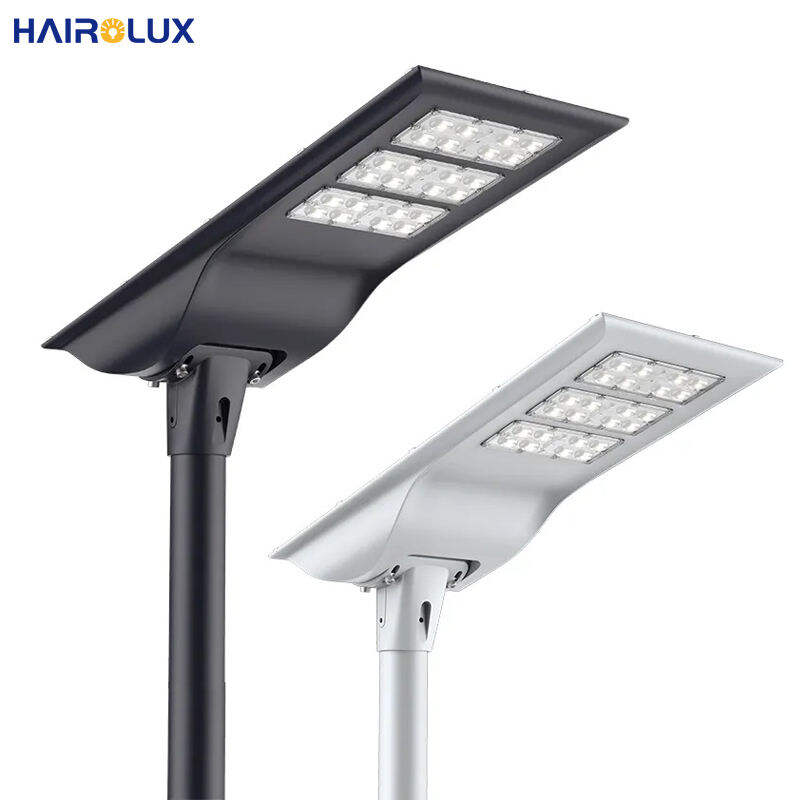
Reliability, particularly regarding adverse weather conditions, begins with physical resistance challenges and built materials. In serious contexts, acquiring an enclosure with an IP66 rating no longer constitutes desirable. Enclosures such as these are impermeable to water ingress for rain rates over 100 mm per hour, and defend against fine dust ingress due to closure. Additionally, thermal sealing is relevant to the enclosure. This means there will be no corrosion due to condensation, and no microcracking due to freeze/thaw cycles. We have witnessed temperature extremes of 30 degrees Celsius or more, and have seen regular housing materials fail day after day. The numbers support this. In high humidity, high elevation, or salt air conditions, unprotected components fail 47% more often. This begs the question, what are we doing to protect the components on the other side of the enclosure?
- Impact resistant polycarbonate lenses designed to survive hail and wind driven debris
- Marine grade stainless steel screws and nuts designed to resist salt corrosion and galvanic degradation
- Electronics protected by industrial grade potting compounds to resist humidity induced short circuits
The integrated strategy for ruggedness described above, removes the need for unplanned maintenance visits, thereby reducing total lifetime operational costs by 34% compared to alternatives that have not been designed for that purpose, particularly in locations that are difficult to reach.
Remote Solar Street Light Battery Chemistry
Cycle Life, Temperature Resilience, Real World ROI in Humid and Sub-Zero Environments: LiFePO4 vs Lead-Acid
The most critical aspect of remote solar street light batteries is chemistry. Lithium iron phosphate (LiFePO4) batteries, compared to standard lead-acid batteries, are superior in nearly every applicable environmental and economic consideration:
Cycle Life: LiFePO4: 2,000–5,000 cycles at 80% depth of discharge (DoD) compared to lead-acid: 300–500 cycles. Replacement is not feasible in difficult to access locations
Stable Temperature Operation: LiFePO4 batteries are functional in extreme environments, with operational functionality from -20 C to 60 C (retention at -10 C is greater than lead-acid: <50% capacity). Lead -acid batteries lose operational functionality and capacity below 0 C and lose operational functionality and greater than 40 C
ROI: LiFePO4 batteries are economically superior even with higher upfront costs in extreme environments (harsh climates) because there is zero maintenance, 8-10 year lifespan (compared to 2-4 years in Lead-acid), and consistent functionality during days of a monsoon (freeze-thaw weather cycles).
Performance Parameter LiFePO4 Lead -acid
Temperature operational Range -20 C to 60 C 0 C to 40 C (Optimal)
Cycle Life at 80% DoD 2,000-5,000 cycle 300-500 cycles
Capacity Retention at -10C >85% <50%
For remote deployments, LiFePO4 batteries are not only better in performance, but remain crucial in providing light while eliminating expensive and complex logistics associated with swapping batteries.
Correctly sizing solar panels for autonomous operation in areas with low sunlight is crucial for off-grid and remote operations. Designers of such systems must utilize actual solar data and avoid using generalized data for a region. Quality sources would be NASA's POWER data and official weather services data. Once data is obtained, a comparison can be made of the measured insolation to the required load demand (as an example, load demand could be the power consumption of a few LEDs, the total run time of LEDs, and consideration of losses in the controller and interconnecting wire). Most practitioners believe that for the load demand, there is a best practice of adding a 30% buffer to the demand calculation. In a variety of field tests across different regions of steep, alpine, and snowy terrains, this approach has been validated. The additional capacity of the system is a safe margin for real-world challenges such as unanticipated dust accumulation on the solar panels, sunlight angle during different seasons of the year, snow covering some cells of the PV array, and transient clouds. This solar panel buffer ensures that the battery does not run flat earlier than anticipated. For regions with a winter insolation of < 2 kWh/m2/day in every other season, proper solar panel buffer sizing results in systems avoiding failure for multiple days as opposed to continuous operation for long periods without supplemental power.
FAQs
What does autonomy refer to in solar street lights?
Autonomy refers to the number of consecutive nights that a solar street light can operate without solar charging. The lights will still operate even in the absence of sunlight for several days.
Why is 7-day autonomy and 30% PV oversizing necessary for extreme conditions?
7-day autonomy and 30% PV oversizing provide for all extremes of low light duration and temperature derating as well as snow to be present. This is vital for the Himalayas and Arctic tundra.
What is the significance of IP66+ enclosures and thermal sealing?
These features will ensure reliable operation in extreme conditions since they protect against water ingress and dust, and corrosion from condensation.
How do remote environments favor the use of LiFePO₄ batteries as opposed to lead-acid?
LiFePO₄ batteries are far superior in terms of cycle life, temperature tolerance, and overall lower lifetime cost as opposed to lead-acid batteries. This is even more true in remote environments.