
 EN
EN



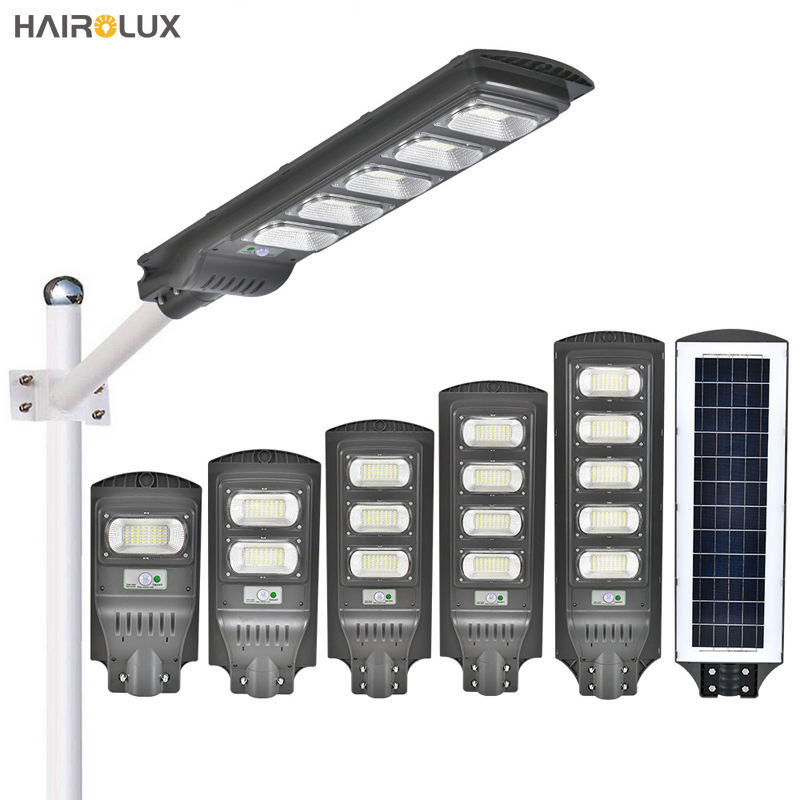
How Long Should a Qualified LED Street Lamp Actually Last?
The procurement specification for a municipal LED street lamp project typically demands a service life of 50,000 hours — approximately 11.4 years at 12 hours of nightly operation. That number appears on every LED street lamp datasheet, but what it actually means depends on which industry standard defines it. L70 — the most commonly cited lifespan metric — identifies the point at which the LED street lamp's lumen output has degraded to 70% of its initial brightness. An LED street lamp rated at 50,000 hours L70 does not stop working at 50,001 hours. It still produces light — but the light is 30% dimmer than when the LED street lamp was new, and roadway illumination levels calculated at design-brightness have fallen below the safety minimum specified in the original lighting plan.
Zhongshan HAIROLUX Lighting Technology, a national high-tech enterprise with 13+ years of LED outdoor lighting manufacturing experience serving 200+ countries, engineers its LED street lamp products to exceed the L70 benchmark at 50,000 hours by combining three longevity-determining components: LM-80-tested LED chips from brand manufacturers (the LM-80 standard measures lumen depreciation over 6,000–10,000 hours of continuous operation and extrapolates the L70 point), aluminum die-cast housing with integrated heat-dissipation fins that keep LED junction temperature below 85°C (the threshold above which lumen depreciation accelerates exponentially), and IP65/IP66-rated sealing that prevents moisture ingress — the second-most-common cause of premature LED street lamp failure after thermal degradation. A properly engineered LED street lamp with these three elements operating within specification will reach 50,000 hours at L70 and continue functioning past 80,000 hours before lumen output drops below usable levels for roadway applications.
What Kills an LED Street Lamp Early
The Junction Temperature Rule
Every 10°C reduction in LED junction temperature approximately doubles the LED's operational lifespan. An LED street lamp with a junction temperature of 85°C may deliver 50,000 hours to L70. The same LED operated at 75°C junction temperature can reach 100,000 hours — effectively doubling the LED street lamp's service life with no change to the LED components themselves. This is why heat dissipation design — the aluminum housing's fin geometry, the thermal interface material between the LED board and the heatsink, and the ambient air exposure of the luminaire housing — determines LED street lamp lifespan more than the LED brand. HAIROLUX's die-cast aluminum housings are specifically engineered for thermal management, with integrated heat-dissipation structures that maintain junction temperatures within the optimal range across the company's 30W–120W LED street lamp power range.
Real-World Application: A Highway Retrofit's Lifecycle Validation
A provincial highway authority in Southeast Asia replaced 800 aging high-pressure sodium (HPS) street lamps with HAIROLUX LED street lamp units rated at 100W with 150 lm/W efficacy and L70 at 50,000 hours. The HPS lamps had been averaging 18–24 months before requiring replacement — primarily from ballast failures rather than lamp burnout, at a maintenance cost of approximately $85 per lamp replacement including bucket-truck deployment and labor.
After 4 years of continuous operation (approximately 17,500 hours), the HAIROLUX LED street lamp installation had experienced a 2.3% failure rate — 18 units out of 800 required replacement, primarily from surge-damage events during monsoon lightning storms rather than gradual lumen depreciation. Photometric measurements at year 4 confirmed lumen output averaging 92% of initial brightness — on track for L70 beyond 50,000 hours. The highway authority calculated that the LED street lamp retrofit had eliminated approximately 500 HPS replacement events over the 4-year period — saving roughly $42,000 in maintenance costs while simultaneously reducing energy consumption by 62% compared to the HPS baseline.
Frequently Asked Questions
What does L70 mean for an LED street lamp?
L70 is the operating hour count at which the LED street lamp's light output has declined to 70% of its initial lumens. It is the industry-standard lifespan benchmark defined by IES LM-80 and TM-21 testing protocols. An LED street lamp rated 50,000 hours L70 will still function beyond this point but produces progressively less light.
How does LED street lamp lifespan compare to HPS?
HPS lamps typically last 12,000–24,000 hours with frequent ballast failures shortening effective life. An LED street lamp rated at 50,000–100,000 hours L70 provides 3–8× longer effective service life while maintaining higher color rendering (CRI 70+ vs. HPS CRI 20–30). HAIROLUX LED street lamp products combine LM-80-tested LEDs with thermal-optimized aluminum housings for extended longevity.
What causes an LED street lamp to fail before reaching rated lifespan?
Three primary causes: excessive LED junction temperature from inadequate heat dissipation (accelerates lumen depreciation), moisture ingress through failed seals (corrodes internal electronics), and surge damage from lightning or grid instability (destroys the LED driver). HAIROLUX addresses these through die-cast aluminum thermal management, IP65/IP66 waterproof sealing, and surge-protected driver designs.
Can LED street lamps be repaired or must they be replaced?
Most LED street lamp failures involve the LED driver (power supply) rather than the LED array itself. Driver replacement is possible if the luminaire design provides field-access to the driver compartment. LED array failures typically require full luminaire replacement. HAIROLUX designs for serviceability with accessible driver compartments.
How do I verify the claimed lifespan of an LED street lamp?
Request LM-80 test reports for the specific LED chips used in the luminaire and TM-21 projection calculations showing the L70 extrapolation. Verify that the luminaire manufacturer has tested the complete LED street lamp system (not just the LED component) for thermal performance at the rated ambient temperature. HAIROLUX provides certification documentation with every project quotation.
Does dimming extend LED street lamp lifespan?
Yes — operating an LED street lamp at reduced current lowers junction temperature, which extends LED lifespan. A 50% dimmed LED street lamp operating at half power may achieve 1.5–2× the rated L70 hours because the junction temperature drops 10–15°C at reduced current. Smart LED street lamp systems from HAIROLUX include scheduled dimming (e.g., full brightness 6pm–11pm, 50% brightness 11pm–5am) that extends luminaire life while reducing energy consumption.