
 EN
EN



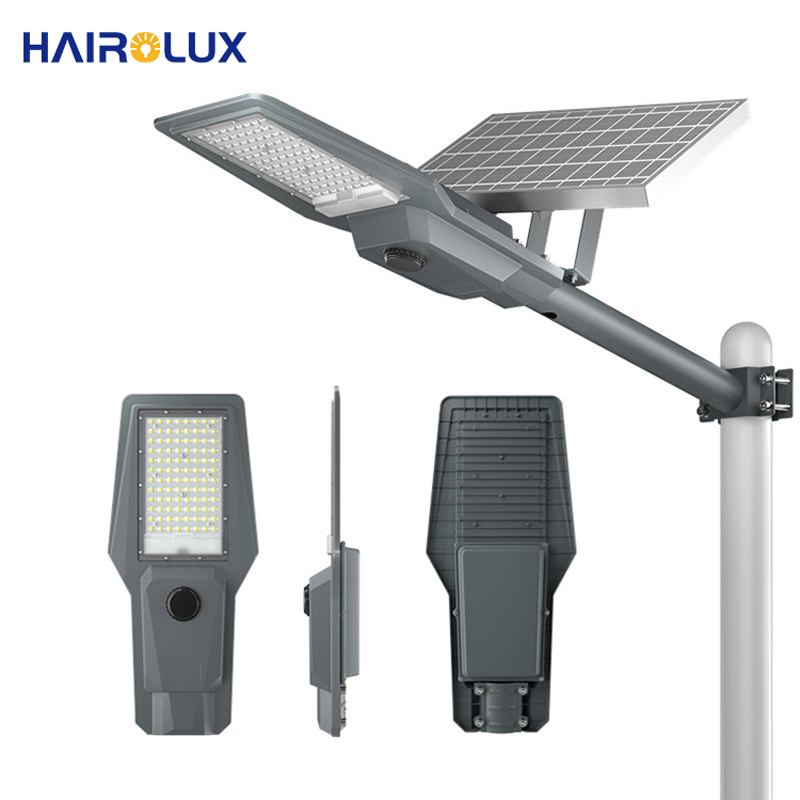
Solar Panel Efficiency and Site-Specific Energy Harvest for Reliable Solar Street Lights
Panel efficiency (18–24%) vs. real-world irradiance loss in low-sunlight regions
Solar panels lose energy due to so many factors beyond their efficiency rating that the operating yield of solar panels in places with little sunshine is likely to be 10–25% below nameplate due to diffuse light in the atmosphere, dust, and temperature related losses. For example, panels at 45°C degrade by ~15% from the standard test conditions of 25°C and 0.1kW/m². Northern Europe, for example, sees 850–950 kWh/kWp/yr, while the sunbelt does nt see 1,200 kWh/kWp/yr. In order to attain dusk till dawn reliability, solar street lights in these regions require a system change based on the finer meteorological data and system oversizing by 20 to 30% is the common practice.
Monocrystalline PERC panels: 25+ year lifespan with <0.45% annual degradation (IEC 61215:2016)
Monocrystalline Passivated Emitter and Rear Cell (PERC) panels are the most durable solar street lights. They are the most long-lasting proven field products. They are less than 0.45% of annual degradation due to decay. PERC certified panels to IEC 61215:2016 thermal cycling and humidity-freeze, and long term data deploy. 92% of long term deploy manufacturers guarantee >80% output for 25 years. They also have stable performance and excellent charge discharge cycle which make public systems maintenance easy.
Orientation (with South facing ±15° tilt as optimal in Northern Hemisphere) shading, Tilt, and Optimization analysis
Configuration Factor Impact on Yield Optimization Method
Shading Up to 70% loss LiDAR/solar pathfinder scans
Tilt angle ±10% variance Latitude-based seasonal adjustment
Orientation 15–20% difference True south alignment ±15°
Effective site planning requires modeling obstructions (i.e., buildings, trees, terrain) in 3D or using solar pathfinder tools. NREL studies show that panels can be tilted at latitude +10° to increase the winter harvest by 12% as compared to the un-tilted scenario. Deviation from true south by ±15° in the northern hemisphere results in a disproportionate drop in yields, thus, precision mounting hardware is critical to off-grid solutions.
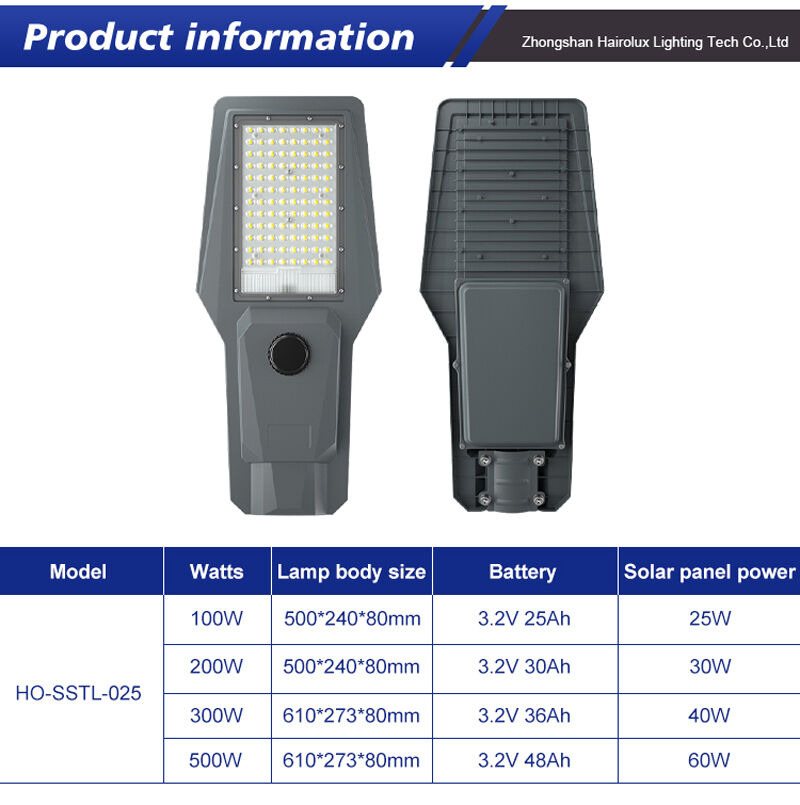
Selection of batteries and guaranteeing the operational time of solar street lights in all weathers
Comparison of Lithium batteries (Murphy 2022) and thermal endurance of batteries, Their Safety as a function of the Ambient Temperature between -20 and 60 degrees Celsius
Solar street lights that need to be operational all year round can only use lithium iron phosphate (LiFePO₄) chemistry because of the long life cycle (between 4,000 and 6,000 cycles) and operational temperatures of -20 to 60 degrees. Ternary lithium jump chemistry has a life of only 1,500–2,500 cycles and temperatures below 10 degrees Celsius lead to a quick self discharging. Lead acid is the lowest quality with only 500–800 cycles and has a primary failure mode of being below freezing. LiFePO₄ batteries have a oevr all construction of Olivine crystals which provide a zero- thermal runaway characteristic to the batteries and thus, there is no need for any elaborate thermal protection to prevent the cells from becoming a combustion hazard. Lead acid construction batteries can leak electrolyte and ternary lithium requires protection circuits to prevent from exploding.
3-5 nights autonomy validated from IEC 62619 testing for low temperature discharging and load cycling
The battery needs to have enough autonomy to last 3-5 nights to support full loads for the longest stretch of cloudy/stormy weather possible. This requires accurately estimating the daily watt-hour needs from the load, seasonality of the local cloud cover, and discharge depth limits. LiFePO₄ is 80% vs. lead-acid 50%. There is IEC 62619 certification for resilience of 500+ charge-discharge cycles of 80% capacity retention for 10 years, and -20°C for discharge performance. This rigor gives the confidence that during the stormy winter season when solar input is the lowest, we will still have the lighting we need during the winter storms and the monsoon season.
LED Performance, Optical Design, and Weatherproof Reliability of Solar Street Lights
IES LM-79 certified 130-180 (lm/W) efficacy, and Type III/IV where average (IES LM-79) certified
The utilization of high-efficacy LEDs is what allows the solar street light to offer maximally efficient lumen output at minimal drain on the limited battery capacity (130-180 lm/W). Precision optical design and uniformity ratios > 0.8 eliminates dark zones and glare. IES Type III (rectangular) and Type IV (semi-circular) distributions combined with independent LM-79 standards for luminous flux, electrical characteristics, and chromaticity, ensure even roadway coverage. Encasing of the fixtures with hermetically sealed, and corrosion resistant materials to IP65+/IP67 standards means that the fixtures will withstand salt spray and heavy rain and extreme temperatures. The thermal management design will ensure LED's temperatures with -40°C to 50°C ambient range. This will lead to less lumen depreciation and reduction in service temperatures.
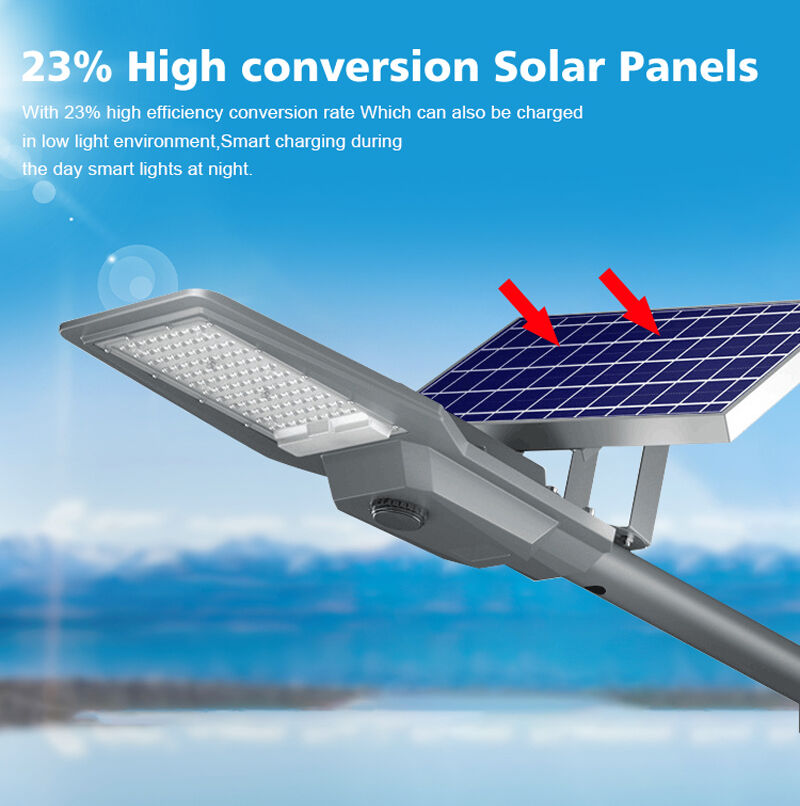
Smart Controller Features and Protection Systems for Standalone Solar Street Lights
MPPT controllers (>98% efficiency) with overcharge, deep-discharge, short-circuit, and lightning surge protection
For solar street lights, Maximum Power Point Tracking (MPPT) controllers are essential and remain unrivaled in conversion efficiency (>98%). MPPT controllers adjust the voltage of the solar panel to match the state of the battery to optimize the charge, which is critical when there is partial shading or changes in temperature. In addition to capturing efficiency gains, these smart controllers come with multiple forms of protection: Overcharge protection preserves the health of the battery. Deep-discharge protection cuts off the current to avoid irreversible loss. Short-circuit protection isolates the circuitry. Lightning surge protectors designed per the IEC 61643-11 standard, with the capacity to take 10kV, are extremely important for open pole mounted systems. In combination with dimming schedules through IoT, and remote fault diagnostics, these controllers have shown to reduce field maintenance costs by 30% over multiple years of city deployments.
FAQ
Why is the efficiency of solar panels in the field lower than the rated efficiency?
The efficiency of solar panels is reduced by 10% to 25% from the rated efficiency due to real-life conditions such as atmospheric diffusion, dust, and elevated temperature.
What is the life expectancy of the monocrystalline PERC panels?
PERC panels made of monocrystalline cells have an expected life of over 25 years at less than 0.45% annual degradation.
Why are lithium iron phosphate (LiFePO₄) batteries preferred for solar street lights?
LiFePO₄ batteries are preferred for solar street lights because they have a cycle life of 4,000 to 6,000, an operating temperature range of -20°C to 60°C, and a stable olivine crystal structure that makes them non-combustible.
What is the impact of shading, tilt, and orientation on energy yield?
Shading can cause a yield reduction of 70%, negative impact of tilt can be up to 10%, for orientation the negative impact is 15–20%. Therefore, the importance of analysis and setup cannot be overstated.
What are MPPT controllers and what is their significance?
MPPT controllers are state-of-the-art solar controllers that provide protections and convert solar energy using a unique process that sustains over 98% efficiency.