
 EN
EN



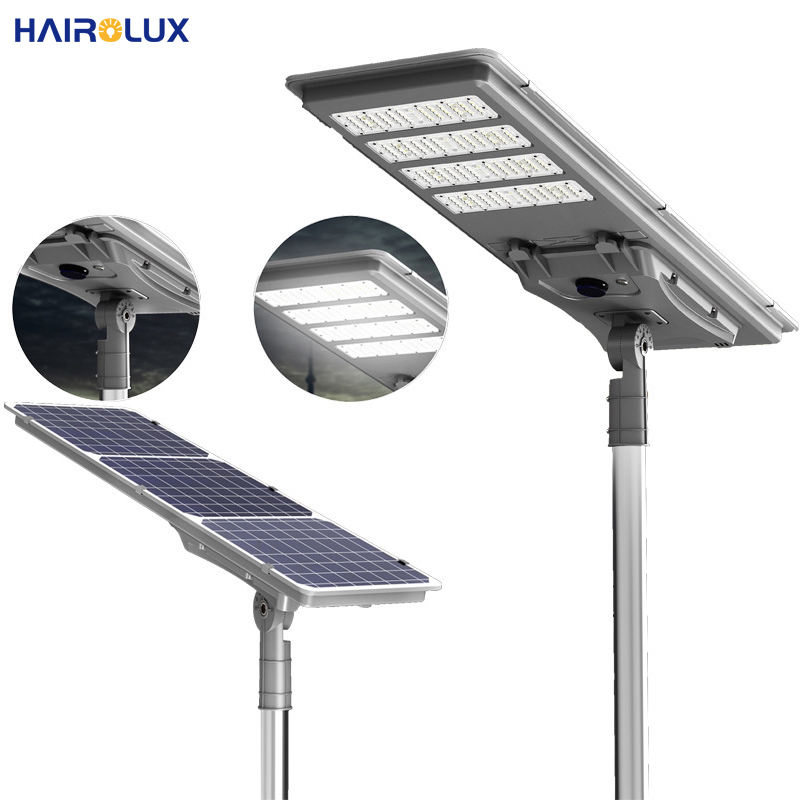
Superior Energy Efficiency and Municipal Cost Savings
How LED street light technology cuts energy use by 40–60% vs. HPS and metal halide
Adoption of energy-efficient LED street lighting represents a fundamental shift in how municipalities consume power. Unlike legacy technologies that waste significant energy as heat, LED luminaires convert a far higher percentage of electricity directly into usable light—thanks to solid-state design, instant-on operation, and precise directional optics that minimize skyglow and spill light. The performance gap is clear:
| Technology | Typical Efficacy (lm/W) | Lifespan (hours) | Color Rendering (CRI) |
|---|---|---|---|
| LED | 130+ | 50,000–100,000 | >70 |
| HPS | 100–110 | 24,000 | ~25 |
| Metal Halide | 80–90 | 15,000–20,000 | ~65 |
Because each LED fixture delivers equal or greater lumen output while drawing 40–60% less wattage, cities managing tens of thousands of units realize immediate, sustained reductions in kilowatt-hour consumption—and corresponding utility bill savings.
Quantifying ROI: Reduced electricity bills, faster payback (2–4 years), and robust long-term budget resilience
The financial case for LED upgrades is grounded in predictable, near-term returns. A city with 50,000 fixtures could save approximately $65,000 annually per 1,000 units in electricity costs alone, according to the U.S. Department of Energy’s 2024 Municipal Lighting Report. When combined with utility rebates and sharply reduced maintenance labor—driven by LEDs’ 15–20 year lifespan and lack of routine lamp replacement—the typical project achieves full payback in two to four years. Beyond break-even, every retained dollar strengthens fiscal flexibility: consistent lumen output over decades insulates budgets from volatile energy pricing and eliminates the recurring capital expense of corridor-wide re-lamping cycles.
Extended Lifespan and Dramatically Lower Maintenance Burden
LED street light durability: 50,000–100,000 hours (15–20 years) with minimal lumen depreciation
LED street lights deliver exceptional operational longevity—50,000 to 100,000 hours under standard nightly operation—far exceeding high-pressure sodium (10,000–24,000 hours) and metal halide (15,000–20,000 hours). Critically, quality LEDs maintain at least 70% of initial light output throughout their rated life (L70), ensuring consistent roadway illumination without the abrupt failures or rapid dimming common in older technologies. This reliability defers major capital replacement for nearly two decades.
Fewer truck rolls, reduced labor costs, and simplified inventory for municipal operations
Extended lifespan directly translates to fewer maintenance interventions. Municipal crews dispatch trucks less often for emergency replacements—cutting fuel, labor, and overtime costs. Inventory simplifies dramatically: instead of stocking multiple lamp types, ballasts, and ignitors across aging fleets, cities can standardize on a single, future-proof LED SKU. A 2023 Infrastructure Management Review found that extending asset life by 60% reduced annual repair visits by 28%, freeing staff and budget for higher-priority infrastructure work. Fewer bucket trucks also mean fewer traffic disruptions and improved safety for both crews and the public.
Improved Public Safety Through Reliable, High-Quality Illumination
Upgrading to LED technology directly enhances public safety—not just by increasing brightness, but by improving visual clarity and spatial consistency. Poor lighting creates hazardous contrast between glare and shadow; modern LED systems eliminate those gaps through uniform distribution and daylight-like color fidelity.
Superior color rendering (CRI >70) and uniform light distribution enhancing nighttime visibility and driver response time
LED street lights with CRI >70 render colors more naturally than traditional sources, enabling drivers and pedestrians to distinguish road markings, clothing, signage, and facial features more quickly. Coupled with precision-engineered optics that distribute light evenly across lanes and sidewalks—rather than concentrating it in isolated pools—they reduce visual fatigue and shorten reaction times. Obstacles, cyclists, and animals become visible earlier and more reliably. For municipalities, specifying fixtures with proven photometric performance and CRI ≥70 is a low-risk, high-impact safety investment.
Evidence linking well-designed LED street light deployment to reduced pedestrian accidents and opportunistic crime
Research confirms measurable public safety gains from strategic LED deployment. A large-scale U.S. study documented a 36% reduction in nighttime crime following citywide LED replacement. Similarly, a Department of Justice systematic review found that improved street lighting correlated with a 20% average decline in crime across treated areas versus controls. For pedestrian safety, well-illuminated crosswalks and intersections significantly lower fatal accident risk by extending drivers’ detection-to-stop time. The mechanism is straightforward: brighter, more natural illumination removes concealment opportunities and supports informal surveillance—making LED upgrades a data-backed component of evidence-based urban safety planning.
Smart City Readiness: Scalable Control and Data Integration
Modern LED street light infrastructure is inherently designed for scalable control and data integration—making it the most practical and cost-effective entry point for smart city initiatives. Each luminaire functions as an addressable node on secure, self-healing mesh networks, supporting dynamic dimming, adaptive scheduling, and real-time remote monitoring without rewiring. A single gateway can manage up to 300 nodes within a 1,000-meter radius, allowing phased, budget-conscious rollouts. This architecture seamlessly integrates with motion sensors, traffic cameras, air quality monitors, and other IoT devices—creating a unified data layer that improves responsiveness, enables predictive maintenance, and reduces energy use through demand-responsive lighting.
Sustainability Advantages: Lower Carbon Emissions and Responsible Light Management
LED street lights advance sustainability goals not only through energy efficiency—but also via intelligent light management that protects ecological and human health.
Carbon footprint reduction per LED street light unit—and the cumulative impact across urban fleets
Each LED street light reduces carbon emissions by 30–50% compared to HPS or metal halide equivalents—primarily by cutting electricity demand, especially in fossil-fuel-dependent grids. At scale, these gains compound: full fleet conversions consistently yield 40–65% reductions in lighting-related CO₂e emissions, accelerating municipal climate action without requiring new infrastructure.
Mitigating light pollution: Full-cutoff optics, adaptive dimming, and dark-sky compliant LED street light design
Responsible LED deployment prioritizes environmental stewardship. Leading fixtures incorporate three key safeguards: full-cutoff optics that eliminate uplight and glare; adaptive dimming protocols that reduce output during low-traffic hours; and designs certified by the International Dark-Sky Association. Together, these features cut skyglow by up to 60% while maintaining safety-compliant illumination levels—protecting nocturnal wildlife, preserving astronomical observation, and reducing energy waste.
FAQ
Q: How do LED street lights save energy compared to traditional lighting systems?
A: LED street lights convert a higher percentage of electricity into usable light, using 40–60% less energy than HPS and metal halide systems. This is achieved through solid-state design, instant-on operation, and directional optics.
Q: What is the typical lifespan of LED street lights?
A: LED street lights have a lifespan of 50,000–100,000 hours (15–20 years), significantly exceeding the 10,000–24,000 hours of high-pressure sodium lights and 15,000–20,000 hours of metal halide lights.
Q: How do LEDs improve public safety in urban areas?
A: LED street lights provide better visibility through higher color rendering (CRI >70) and uniform light distribution, which reduces glare and shadows. This enhances driver response times, reduces accidents, and deters crime through improved lighting.
Q: Can LED street lights support smart city initiatives?
A: Yes, modern LED infrastructure integrates with IoT devices and supports dynamic dimming, adaptive scheduling, and real-time monitoring through secure, self-healing mesh networks.
Q: How do LED street lights contribute to sustainability?
A: LEDs lower carbon emissions by 30–50% per unit and reduce overall fleet emissions by 40–65%. They also reduce light pollution via full-cutoff optics, adaptive dimming, and dark-sky compliance.
Table of Contents
- Superior Energy Efficiency and Municipal Cost Savings
- Extended Lifespan and Dramatically Lower Maintenance Burden
- Improved Public Safety Through Reliable, High-Quality Illumination
- Smart City Readiness: Scalable Control and Data Integration
- Sustainability Advantages: Lower Carbon Emissions and Responsible Light Management
- FAQ