
 EN
EN



Sunlight Availability: Irradiance, Duration, and Spectral Quality
Direct Versus Indirect Sunlight and Spectral Mismatch Impact on Solar Lamp Panel Absorption
Direct sunlight allows for nearly 30% more energy conversion in solar lamps than diffuse (or indirect) sunlight due to perpendicular photon incidence at higher irradiance. Panel efficiency in direct sunlight is reduced by 15%-25% due to spectral mismatch, where ambient light exists outside of a solar panel's optimal absorption wavelengths. The absorption of infrared light (760-1400 nm) in the morning and evening generating lower-voltage than the absorption of the visible light at midday. Monocrystalline panels experience less of a negative effect of spectral variation, but still experience 8-12% losses at low-irradiance.
Dependable operation of solar lamps with seasonal and geographical variations in daily solar irradiance.
The level of autonomy of a solar lamp varies with seasonal and geographic location. The equatorial region averages 5.2 peak sun hours whereas 45° latitude only receives 2.8 peak sun hours. Even in temperate zones, the winter sun is less than optimal and can reduce output by 40-70%. The global horizontal irradiance (GHI) in Toronto's summer is 5.6 kWh/m²/day, while December sees GHI drop to just 1.9 kWh/m²/day. At high latitudes, diffuse irradiance is most common. Finland's December GHI sees 85% of GHI come from diffuse light, meaning very low panel output. In order to rely on solar panels in geographically and seasonally deficient locations, the panels need to be sized 20-35% larger.
Environmental Challenges: Shading, Soiling, and Orientation of the Panels
Accumulation of dust, grime, and moisture: Quantifying the losses due to soiling on the solar lamp panels
Soiling blocks light and directly reduces the output of the panels. Especially in the dry and polluted environment, the annual soiling losses go up to 15 to 20% in flat-mounted panels, which face the most self-cleaning. The moisture makes the situation worse by forming a sticky residue which traps particulates. An inclination of the panels by 10 to 15 degrees can improve wash effectiveness. For performance maintenance, cleaning is done quarterly. Neglected maintenance can reduce the annual energy yield by up to 25% soiling is one of the most preventable yet frequently causes the loss of self-autonomy of the solar lamps.
Effects of Temperature and Degradation Charging of Solar Lamps of Solar Lamps
Impact of Ambient Temperature on Lithium-ion and Lead-acid Batteries in Solar Lamps
Temperature has a significant influence on the battery response of solar lamps. Lithium-ion batteries suffer accelerated cycling degradation above ambient temperatures of 25oC (77oF). For example, the capacity loss after 200 cycles increases from around 3.3% at 25oC to 6.7% at 45oC (113oF) as a result of the growth of the solid-electrolyte interface (SEI). For lead-acid batteries, the degradation effect of low temperatures is worse. At ambient temperatures below 20oC (68oF), charge acceptance drops substantially, and at –20oC (–4oF), the capacity that can be used is reduced by 50%. Therefore, as a result of these opposing thermal sensitivities, lithium-ion batteries are optimal for hot climates, whereas specially formulated lead-acid batteries remain preferable in sustained cold environments.
The Impact of Battery Aging and Cycle Life on the Autonomy of Solar Lamps
All solar lamp batteries undergo irreversible electrochemical aging with each charge/discharge cycle. A standard lithium-ion battery, for example, retains only 70-80% of its original capacity after 500 full cycles, which can translate to 1–2 hours less illumination in a year. There are three primary reasons for the loss of capacity by lithium-ion batteries:
Li-ion batteries are in a net passive state of lithium during one or more cycles
The decomposition of the battery-electrolyte that leads to increased internal resistance of the battery
The formation of solid-ion-separation interfaces
Thermal stress accelerates the aging process and as a result of thermal stress the aging process, batteries at 35oC (95oF) will age roughly at twice the rate than batteries at 25oC (77oF). In hot climates with high cycles, the useable life before replacement is generally no greater than a two (2) year replacement interval; in milder climates with lower use, the replacement interval is generally no less than a four (4) year interval.
Solar Lamp System Design: Panel Technology, Angle, and Charge Control
Optimum tilt and azimuth of solar lamp panels by latitude and purpose
Irradiance definable capture for any installed solar lamp panel depends on proper orientation. For any fixed turnable tilt panels, setting to latitude plus/minus 15° captures the most energy obtainable annually. Steeper in winter and shallower in summer. Azimuth alignment should be with true south or true north depending on the hemisphere. Vertical clearance in streets lamps re stricted by building shadows. With seasonal tilt changes garden or pathway lamps can benefit from lamps in summer/winter position. Optimized alignment based on latitude can allow 20% energy harvesting in day based on validated models versus flat mounting.
Panel technology and lamp efficiency
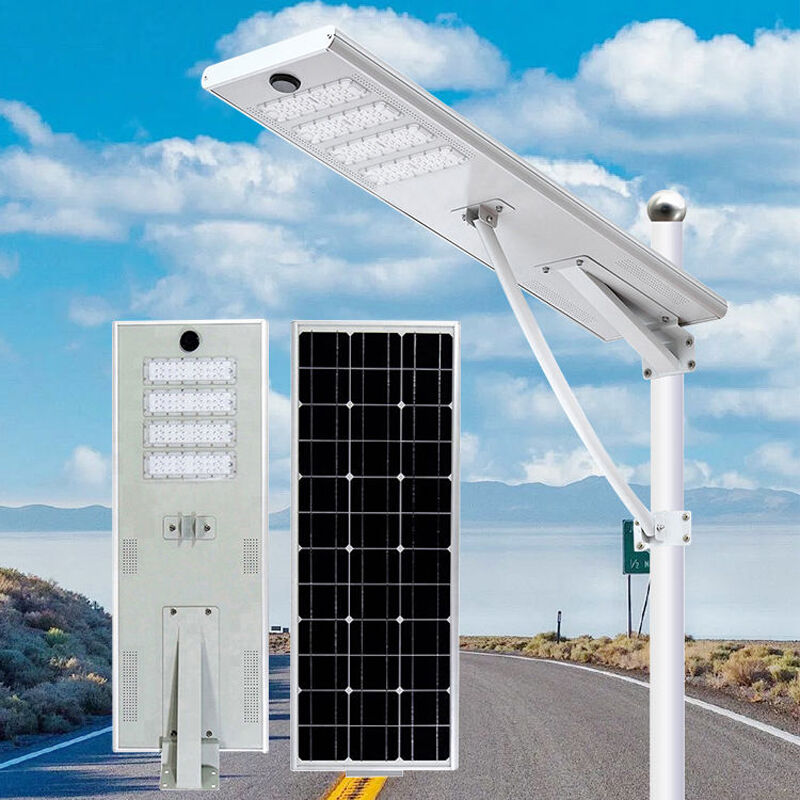
Solar lamp ingenious design integrates planning and panel technology and charge controls. MPPT controllers outclass any standard charge control under dissipated/variable light conditions like partial shading cloud cover low light mornings. Due to greater efficiency MPPT controllers can yield 25 to 30% greater energy. MPPT charge control is needed in almost all deployments including a small (<50W) systems. Dependable enough to justify the cost of MPPT charge controller versus standard charge control.
Component PWM Controllers MPPT Controllers Monocrystalline Panels Polycrystalline Panels
Efficiency 70–80% 92–98% 22–27% (2025) 15–22% (2025)
Cost Lower ($5–$20) Higher ($20–$100) Premium Budget-friendly
Best For Small systems (<50W) Variable-light conditions Space-constrained setups Larger panel areas
Key Advantage Simplicity 30%+ energy harvest gain Better low-light performance Lower cost per watt
Monocrystalline panels excel in efficiency, especially in low-light, making them perfect for high-performance solar lamps where space is limited. For applications where absolute efficiency is not the top concern, polycrystalline panels act as a cost-effective solution as long as there is space available.
FAQ
What are the main factors affecting solar lamp efficiency?
Efficiency is dependent on the available sunlight, obstacles in the environment (such as shading and soiling), and the thermal and battery performance of the system. Direct sunlight, good panel alignment, and a clear system improve performance.
How does shading affect solar lamp output?
The output of solar systems is heavily dependent on the amount of sunlight available. Even a small amount of shading can severely reduce total output.
Why is regular cleaning important for solar panels?
In areas with a lot of dust, the solar panels can become dirty and this can greatly reduce the energy output of the panels. This is especially important in dry and polluted regions.
What is the difference between MPPT and PWM charge controllers?
MPPT charge controllers have the ability to work at maximum efficiency by tracking the maximum power point from the solar panels, while PWM controllers are a cheaper option for smaller systems, though their efficiency is affected by variable-light conditions.
What is the battery performance in solar lamps relative to temperature changes?
Extreme environmental conditions lead to faster deterioration of lithium-ion batteries at high temperature and slower deterioration at low temperature in lead-acid batteries. Thus, battery technology should be tailored down to the specific climate.