
 EN



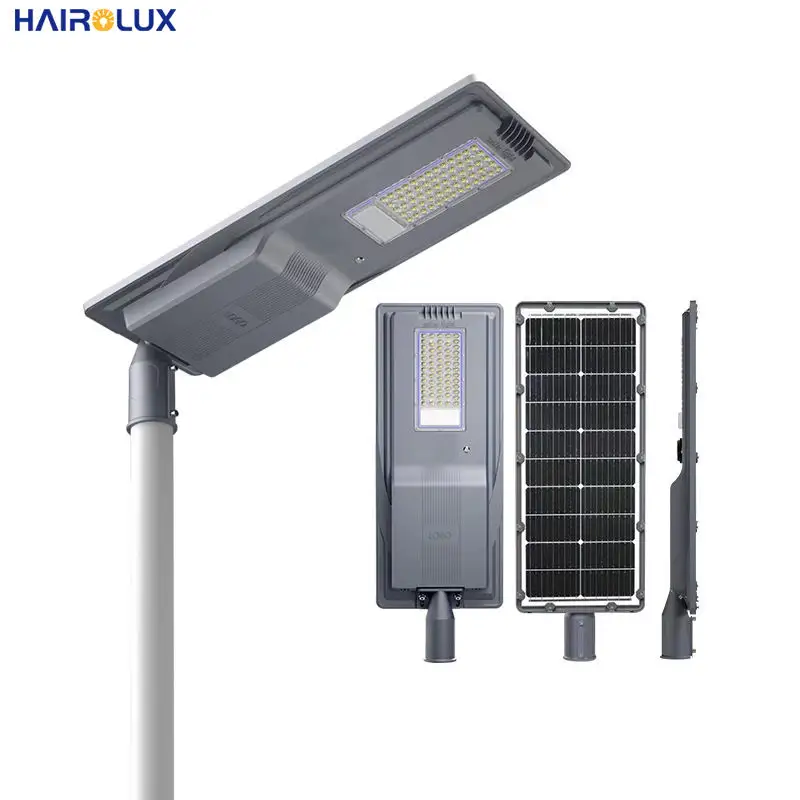
Why LED Street Lamps Are the Standard for Modern Infrastructure
Municipal and commercial projects are moving away from high-pressure sodium (HPS) and metal halide (MH) systems—legacy sources that waste energy, distort color, and degrade rapidly. LED street lamps address these weaknesses with higher luminous efficacy, a rated lifespan of 50,000 to 100,000 hours, and superior color rendering that enhances nighttime visibility and public safety. According to the U.S. Department of Energy, LED roadway lighting cuts energy use by 50% or more compared with HPS while lasting two to four times longer . Unlike HPS lamps—which dim and shift toward orange over time—LED fixtures maintain consistent output and start instantly in cold weather. This reliability reduces maintenance trips, lowers operating budgets, and advances municipal climate goals. Grid-tied LED retrofits are now the default replacement for aging corridors, and many cities are further boosting resilience with smart controls and solar-ready designs. For project owners, LED street lamps deliver measurable gains in safety, operational reliability, and total cost of ownership.
Key Technical Specifications to Evaluate in LED Street Lamps
Selecting the right LED street lamp requires balancing photometric performance, environmental resilience, and electrical reliability. A fixture that excels in only one area can still create dark spots or fail prematurely in real-world conditions.
Luminous Efficacy, Color Rendering, and Correlated Color Temperature
Luminous efficacy—measured in lumens per watt (lm/W)—directly influences energy consumption. Municipal projects should target at least 130 lm/W to ensure low operating costs. A color rendering index (CRI) of 70 or higher supports accurate identification of obstacles, signage, and road markings. Correlated color temperature (CCT) affects visual comfort: 4000K is ideal for urban corridors, while 5000K may improve contrast and detection on highways. Higher efficacy also reduces heat generation, easing thermal design demands. Crucially, optics must distribute light uniformly across the roadway—not just directly beneath the pole—to meet IESNA RP-8 and local lighting standards.
IP Rating, Thermal Management, and Driver Quality
Ingress protection (IP) rating reflects resistance to dust and moisture. IP66 is standard for most outdoor LED street lamps, but coastal, industrial, or high-dust environments may require IP67 or higher. Effective thermal management prevents LED chip lumen depreciation; aluminum housings with optimized heat-dissipating fins help maintain lower junction temperatures—critical for sustaining rated lifespan. Driver quality often determines overall system longevity, as driver failure is the most common cause of premature fixture outage. Prioritize drivers rated for ≥50,000 hours, with surge protection calibrated to regional lightning risk. If smart controls are planned, verify dimming compatibility (e.g., DALI-2, 0–10V) and ensure drivers support flicker-free operation across the full dimming range.
Smart Features and Integration Capabilities for Future-Ready Deployment
Modern infrastructure planning treats an LED street lamp as a connected asset—not a standalone light source. Municipal and commercial projects now evaluate smart capabilities at the specification stage, because retrofitting intelligence post-installation typically costs more than the original luminaire. A well-designed intelligent lighting network integrates efficient hardware with software for adaptive scheduling, granular energy reporting, and proactive fault detection—while avoiding vendor lock-in through open, interoperable architecture.
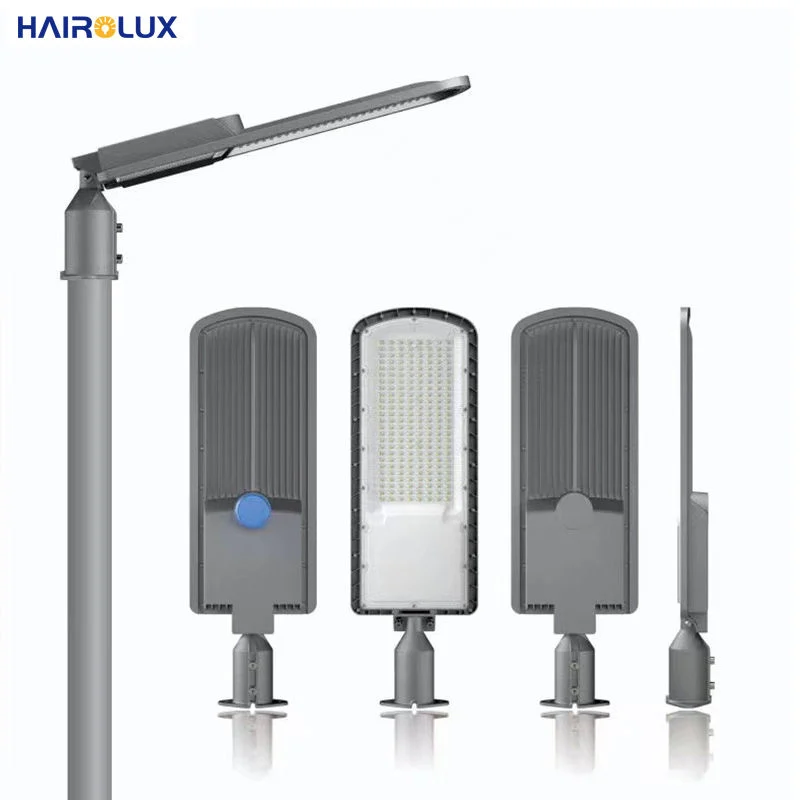
IoT Connectivity, Dimming Protocols, and Remote Monitoring
Future-ready luminaires support standardized dimming interfaces such as DALI-2 or 0–10V, enabling seamless integration with building management and municipal control systems. Wireless connectivity options—including LoRaWAN, NB-IoT, and LTE-M—offer flexibility across coverage needs and existing infrastructure. Remote monitoring platforms allow operations teams to detect outages, voltage anomalies, and thermal events from a central dashboard, reducing night patrols and accelerating repairs. When paired with motion sensors and adaptive dimming, these systems can cut lighting energy use by 30–50% during low-traffic periods U.S. DOE, 2026. Open APIs and standardized data formats (e.g., MQTT, JSON) simplify integration with GIS, SCADA, and enterprise asset-management systems. Security must be embedded at the network layer—via TLS encryption, secure boot, and role-based access controls—to safeguard critical municipal infrastructure.
Total Cost of Ownership: Energy Savings, Maintenance, and Lifespan Analysis
When procurement teams evaluate an LED street lamp, total cost of ownership (TCO) matters more than the initial fixture price. LED street lamps consume 50–70% less energy than HPS or MH equivalents U.S. DOE, 2026, delivering immediate utility savings—even before accounting for extended maintenance intervals. With rated lifespans of 50,000 to 100,000 hours—versus 15,000 to 24,000 for conventional lamps—LEDs drastically reduce relamping labor, traffic control expenses, and associated safety risks.
The table below summarizes how major cost components shift over a 15-year lifecycle.
| Cost category | Typical impact of LED street lamp | Notes |
|---|---|---|
| Electricity | 50–70% lower consumption | Primary source of payback |
| Relamping labor | 60–80% fewer replacement cycles | Driven by extended module life |
| Controls | 10–20% additional savings | From dimming and scheduling |
| Driver replacement | Typically required once around year 10–15 | Budgeted as a single mid-life event |
Smart dimming adds another 10–20% in energy savings, based on 2026 municipal case data. A robust TCO model should include procurement, installation, energy, routine cleaning, driver replacement, and end-of-life disposal. By focusing on these lifecycle costs—not upfront price—project owners select fixtures engineered for economic and operational performance over 15 years or more.
Frequently Asked Questions (FAQ)
What are the main advantages of LED street lamps over traditional HPS systems?
LED street lamps offer higher energy efficiency, better color rendering, longer lifespans, and lower maintenance costs. Additionally, they provide consistent light output and are more reliable in cold weather compared to HPS systems.
What key factors should be considered while selecting an LED street lamp?
Important factors include luminous efficacy, color rendering index (CRI), correlated color temperature (CCT), ingress protection (IP) rating, thermal management, and driver quality. Smart integration capabilities and future-proofing features should also be considered.
How much energy savings can be expected with LED street lamps?
LED street lamps typically consume 50–70% less energy compared to high-pressure sodium (HPS) or metal halide (MH) lighting systems, resulting in significant utility cost savings.
What is the lifespan of LED street lamps?
LED street lamps have a rated lifespan of 50,000 to 100,000 hours, significantly longer than the 15,000 to 24,000 hours typical for conventional lighting systems.
Can LED street lamps integrate with smart city infrastructure?
Yes, modern LED street lamps often come with IoT connectivity, standardized dimming protocols, and remote monitoring capabilities, making them easily integrated with smart city systems for efficient operation and management.
Table of Contents
- Why LED Street Lamps Are the Standard for Modern Infrastructure
- Key Technical Specifications to Evaluate in LED Street Lamps
- Smart Features and Integration Capabilities for Future-Ready Deployment
- Total Cost of Ownership: Energy Savings, Maintenance, and Lifespan Analysis
-
Frequently Asked Questions (FAQ)
- What are the main advantages of LED street lamps over traditional HPS systems?
- What key factors should be considered while selecting an LED street lamp?
- How much energy savings can be expected with LED street lamps?
- What is the lifespan of LED street lamps?
- Can LED street lamps integrate with smart city infrastructure?